
Export Incentive Schemes in India: A Complete Guide for Exporters and SMEs
 AuthorMehul Jagwani
 Reviewed ByMadhav Bhayani



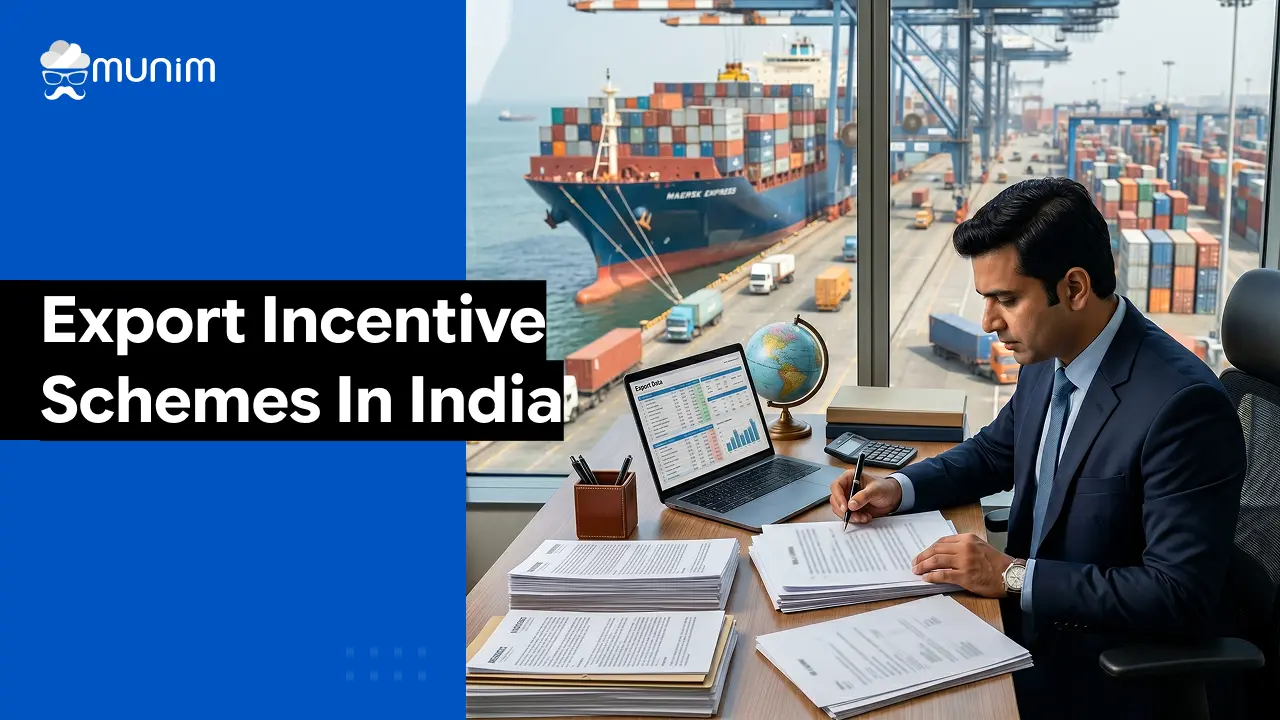
An export incentive scheme is not just another bureaucratic requirement. It is your direct gateway to reduced costs, faster cash recovery, and increased profit margins. The government has designed multiple export schemes and incentives to help businesses lower their effective export costs while maintaining international competitiveness. Whether you are a first-time exporter or an established manufacturer shipping thousands of containers each month, understanding the right export incentive schemes can save your business lakhs of rupees every year.
This comprehensive guide walks you through the major schemes, eligibility criteria, benefits, and the simple steps to claim your dues.
Major Export Incentive Schemes Available in India
1. Remission of Duties and Taxes on Exported Products (RoDTEP)
RoDTEP is the current flagship export incentive scheme for most merchandise exporters. It directly reimburses the embedded duties and taxes paid during the production and export process.
What RoDTEP Covers: RoDTEP reimburses central, state, and local taxes and levies paid on inputs used in manufacturing export products. These include excise duties, VAT, state GST components, and various local cess and taxes.
RoDTEP Rates by Product Category: The scheme specifies reimbursement rates for different product categories, ranging from 0.5% to 7% of the FOB value. For example:
- Leather and leather products: 4.9%
- Textiles: 5% to 6%
- Agricultural products: 0.5% to 1.2%
- Chemicals and pharmaceuticals: 1% to 3%
- Engineering goods: 2% to 4%
How to Claim RoDTEP: RoDTEP is claimed through the Customs portal at the time of export. Authorized dealers submit the claim through the Bill of Export (BE) in ICEGATE, and the benefit is credited to the exporter’s GST return as a refund or utilised towards future tax liability.
Key Advantages of RoDTEP: RoDTEP is more transparent than its predecessor MEIS. Claims are processed faster, and the rates are published publicly. There is no cap on the total reimbursement as long as the rate applied to your product category is correct.
To verify the RoDTEP rate applicable to your product, cross-check your HSN code against the GST rates list India to ensure you are claiming the correct reimbursement percentage.
2. Scheme for Rebate of State and Central Taxes and Levies (RoSCTL)
RoSCTL is specifically designed for exporters in sectors where RoDTEP rates are insufficient to cover all embedded taxes.
When RoSCTL Applies: If your product category is eligible for RoDTEP and the reimbursement does not fully cover the embedded taxes, you can apply to the government for additional relief under RoSCTL.
RoSCTL Application Process: Applications are submitted to the Directorate General of Foreign Trade (DGFT) with supporting documents showing the actual taxes paid and the shortfall between paid taxes and RoDTEP reimbursement.
RoSCTL Sector Eligibility: RoSCTL has been extended to sectors like textiles, leather, and certain agricultural products where tax burdens are particularly heavy.
3. Service Exports from India Scheme (SEIS)
While MEIS applied to merchandise goods, SEIS extends incentive support to exporters of services, including software, IT services, business process outsourcing, consulting, and more.
SEIS Duty Credit Mechanism: SEIS provided duty credit scrips at rates ranging from 2% to 5% of the FOB value of exported services. These credits could be used to pay basic customs duties on imports related to providing those services.
Current Status of SEIS: SEIS was discontinued in March 2021 and is being transitioned to an alternative incentive framework. However, businesses with ongoing service contracts under SEIS can still claim benefits for the contracted period.
Transition Path for Service Exporters: Service exporters are now encouraged to apply for benefits under other schemes such as FTP incentives for Special Economic Zones (SEZs) or individual exemptions granted by the Ministry of Commerce.
Designed for Modern Tax Professionals
A premium filing solution for CAs and tax consultants who need speed, scale, and operational clarity.
 Handle multiple clients with ease
- Reconcile and validate with confidence
- Overcome the limitations of the GST portal
 Handle multiple clients with ease
4. Technology Upgradation Fund Scheme (TUFS)
Though primarily focused on technology upgradation, TUFS carries indirect benefits for exporters by reducing production costs through modernized equipment and processes.
What TUFS Subsidizes: TUFS provides capital subsidies and interest-free loans for purchasing new machinery, computers, and software to modernize manufacturing facilities.
TUFS Scope: TUFS is specifically for textiles and textile machinery manufacturers aiming to export.
Current Status: TUFS has been extended multiple times and continues to support exporters in the textile industry.
5. Focus Product Scheme (FPS)
FPS identifies specific products and sectors that the government wants to promote in international markets.
FPS Benefits: Products under FPS receive enhanced incentive support, including subsidized credit, promotional support, and duty benefits.
FPS Product Categories: Current FPS products include specific agricultural commodities, processed foods, and high-value textiles. The list is updated periodically.
How to Check if Your Product is Under FPS: The DGFT website lists all current FPS products. Check the commodity code of your export goods against the published list.
6. Focus Market Scheme (FMS)
FMS targets specific geographical markets deemed strategically important for India’s export expansion.
FMS Mechanism: Exporters sending products to FMS-designated markets receive incentives like subsidized credit and partial relief on transport costs.
FMS Markets: Target markets include African nations, ASEAN countries, Latin America, and other emerging markets.
FMS Benefit Claiming: FMS benefits are typically claimed through designated banks that provide subsidized credit, and the subsidy is later reimbursed by the government.
Closing Notes
Export incentive schemes are not optional extras for exporters in India. They are essential tools to compete globally, improve cash flow, and maximize profitability. Whether you qualify for RoDTEP, RoSCTL, or other schemes, each rupee claimed is a rupee saved on production costs that can be reinvested in quality, innovation, or growth.
The key to maximizing benefits is three-fold: first, understand which schemes apply to your business and products; second, maintain meticulous documentation from the moment goods are manufactured through to the realization of export proceeds; third, use integrated systems to track and file claims without manual errors.
FAQs: Export Incentive Schemes in India
1. What is the difference between RoDTEP and MEIS?
MEIS was replaced by RoDTEP in March 2021. MEIS provided duty credit scrips (tradeable vouchers), while RoDTEP directly reimburses embedded taxes. RoDTEP is more transparent, faster to process, and aligns better with WTO rules.
2. Can I claim both RoDTEP and RoSCTL for the same export?
Yes, but only if RoDTEP does not fully cover your embedded taxes. RoSCTL reimburses the shortfall. You must first claim RoDTEP, then apply for RoSCTL for the remaining amount.
3. Is the IEC registration fee mandatory?
No. IEC registration is free of cost and you can check out IEC code application process online. IEC is issued by the DGFT digitally within minutes of online application. Any intermediary charging a fee is operating illegally.
4. What documentation do I need to keep for export incentive audits?
Maintain: commercial invoices, packing lists, shipping bills, bills of lading, GST invoices, proof of raw material purchases, customs clearance documents, proof of export proceeds realization, and bank statements. Retain all documents for at least 6 years.
5. Are export incentives subject to GST?
No. RoDTEP refunds and RoSCTL reimbursements are not taxable as business income. They are treated as reimbursements of embedded taxes, not as revenue.
Disclaimer: "This blog post is for informational purposes only. For specific tax advice related to your business, please consult a qualified Chartered Accountant or GST practitioner."
About the author

Mehul is a seasoned content writer with a passion for simplifying complex accounting and GST topics. With a keen interest in entrepreneurship and business management, he specializes in creating informative and engaging content for themunim.com. His goal is to help businesses understand and implement accounting and GST software solutions effectively. When he's not crafting content, Mehul enjoys exploring new places and spending time with his Golden Retriever.
Related Articles
Explore the latest market news, useful resources for business, and Munim updates.