PM Modi Asks Indians to Work From Home, Save Petrol, and Avoid Buying Gold — Here’s Why
 AuthorMehul Jagwani
 Reviewed ByMadhav Bhayani



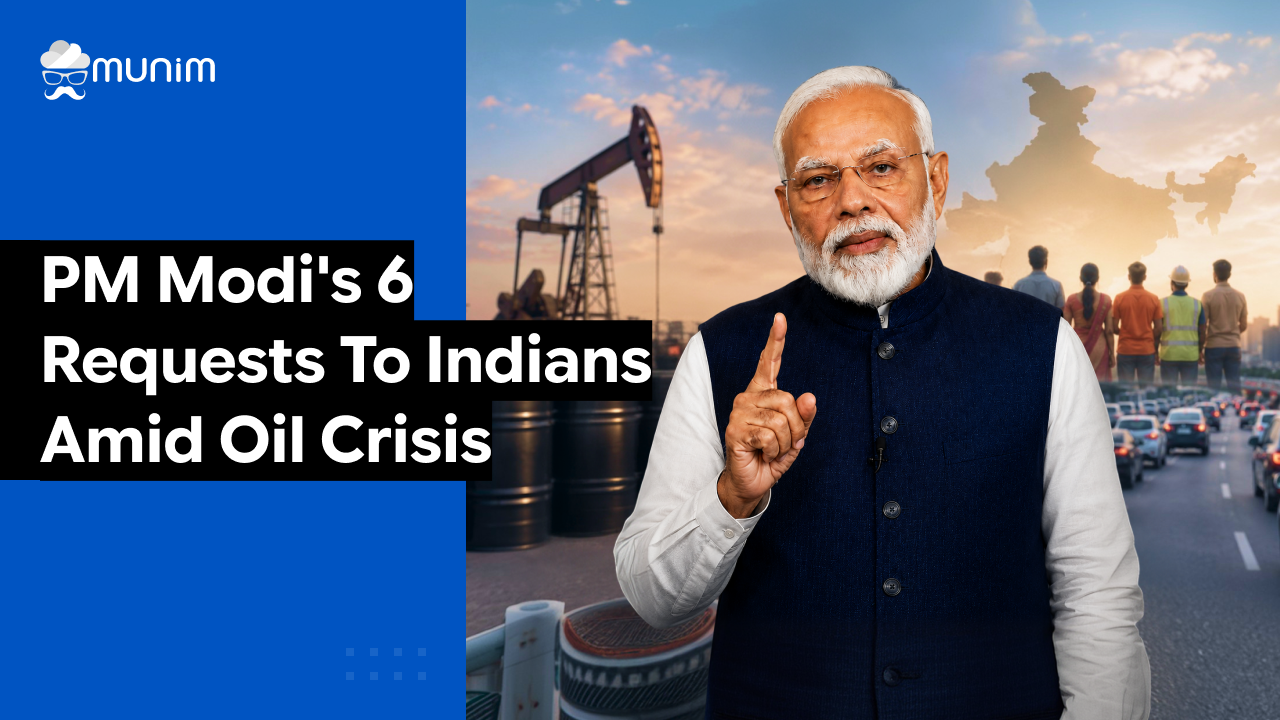
PM Modi’s direct appeal to ordinary Indians — to change habits, cut fuel consumption, and hold off on big purchases like gold for weddings. Speaking at an event in Secunderabad, Telangana, Prime Minister Narendra Modi connected everyday decisions to the health of India’s economy. The backdrop is a sharp surge in global crude prices driven by the ongoing West Asia conflict. And the implications for Indian households, businesses, and even tax and compliance planning are worth understanding clearly.
What Exactly Did PM Modi Ask Indians to Do?
On May 10, 2026, Prime Minister Modi addressed citizens with a series of specific appeals. This was not vague advice. He named exact actions and explained why each one matters to India’s foreign exchange reserves and national treasury.
Here is a breakdown of his key requests:
1. Revive Work From Home
“During the Corona period, we adopted work from home, online meetings, video conferences and developed many such systems. We have also become accustomed to them,” PM Modi said.
“Today, the need of the hour is that we restart those practices, as it would be in the national interest, and we must once again give them priority.”
Work from home directly reduces the number of vehicles on the road. Fewer vehicles means less petrol and diesel consumed daily. At the national scale, even a modest reduction in fuel demand can meaningfully ease pressure on oil imports and foreign exchange outflows.
2. Conserve Petrol and Diesel
The Prime Minister was direct on this. “Petrol-diesel has become so expensive across the world. It is the responsibility of all of us that the foreign exchange spent on purchasing petrol-diesel should also be saved by conserving petrol-diesel,” he said.
India imports a very large share of its crude oil requirements. Every litre saved is foreign currency retained within the country. This is not just rhetoric. With crude prices hitting USD 126 per barrel, the cost of India’s import bill is rising steeply every single month.
Designed for Modern Tax Professionals
A premium filing solution for CAs and tax consultants who need speed, scale, and operational clarity.
 Handle multiple clients with ease
- Reconcile and validate with confidence
- Overcome the limitations of the GST portal
 Handle multiple clients with ease
3. Avoid Buying Gold for Weddings for One Year
This was perhaps the most striking part of the speech. “I would appeal to people not to buy gold for weddings for one year,” PM Modi said.
India is one of the world’s largest importers of gold. The metal is a massive contributor to the country’s import bill, especially during peak wedding seasons. Reducing gold purchases, even temporarily, could help protect India’s foreign exchange reserves at a time when the rupee faces pressure from rising crude costs.
Also, Know latest GST rate on Gold in India
4. Reduce Edible Oil Consumption
“The same is true for edible oil. We have to spend foreign currency on its import,” the Prime Minister said. “If every household reduces the use of edible oil, it is a huge contribution to patriotism. This will improve the health of the national treasury and the health of every family member.”
5. Cut Dependence on Imported Chemical Fertilisers
Addressing farmers specifically, PM Modi said, “We should reduce our consumption of chemical fertilisers by half and move towards natural farming. This way, we can save foreign currency and protect our farms and Mother Earth.”
6. Avoid Non-Essential Foreign Travel for One Year
In an appeal aimed squarely at the middle class, PM Modi asked citizens to temporarily hold off on overseas vacations, destination weddings abroad, and any non-essential foreign travel for at least a year.
The reasoning is straightforward. Every foreign trip involves spending foreign currency — on flights, hotels, and daily expenses abroad. When millions of Indians travel internationally, the collective outflow of forex is significant.
At a time when India needs to protect its foreign exchange reserves against a rising crude import bill, reducing discretionary foreign spending is a meaningful contribution.
Why Is PM Modi Making These Requests Right Now?
To understand the urgency, it helps to look at what is happening globally and how it is affecting India.
The West Asia Conflict and Its Impact on Crude Price
The ongoing conflict in West Asia has caused significant disruption around the Strait of Hormuz, one of the most critical oil shipping corridors in the world. Nearly 20 percent of global oil trade passes through this route. When movement through the strait slows or is threatened, crude prices spike globally.
The result? Global crude has climbed from around USD 70 per barrel to nearly USD 126 per barrel in a short period. That is close to a doubling of prices.
India imports a significant portion of its crude oil needs from this region. A sharp rise in crude price means the government and oil marketing companies either raise pump prices or absorb the difference as losses.
India’s Oil Companies Are Bleeding
According to The Hindu, India’s three major oil marketing companies — Indian Oil Corporation, Bharat Petroleum Corporation, and Hindustan Petroleum Corporation — are together facing under-recoveries of nearly Rs 30,000 crore every month.
At current international rates, the Centre and fuel retailers are absorbing approximately Rs 24 per litre on petrol and Rs 30 per litre on diesel to protect consumers from the full impact of global price surge.
How Does This Affect Businesses and the Economy?
India has so far avoided the severe shortages seen in some neighbouring countries. Bangladesh has introduced fuel rationing. Sri Lanka has reduced working days to lower energy consumption. India’s refineries are running at over 100 percent capacity, and crude sourcing has been diversified across Russia, the United States, and West Africa. LPG production has also been ramped up from 36,000 tonnes per day to 54,000 tonnes per day.
But absorbing losses at this scale is not sustainable for long.
For Indian businesses, especially SMEs and self-employed professionals, a fuel price hike has downstream effects. Logistics costs rise. Transport and delivery charges increase. Input costs for manufacturing go up. Monthly budgets need recalibration. Companies in the oil and gas sector face a particularly complex set of challenges — accounting software built for oil and gas businesses can help track these volatile input costs in real time.
What Should Indian Households and Businesses Do Right Now?
Whether or not PM Modi’s specific requests are followed, the broader message is clear. India is entering a period of higher energy costs and tighter resource discipline. Being prepared makes sense.
For households:
- Plan travel more efficiently and combine errands to reduce fuel trips
- Consider carpooling or public transport where available
- Delay discretionary large purchases if cash flow is a concern
- Monitor LPG and fuel expenses as part of monthly budgets
For small businesses and self-employed professionals:
- Review logistics and delivery costs and factor in a possible fuel price revision
- Update billing rates if fuel costs are a direct input to your services
- Keep GST filings and expense records current — compliance penalties during tight periods hurt more
- Use accounting software to track cost changes and adjust pricing proactively
Final Thoughts
PM Modi’s appeal to Indian citizens is not just a political speech. It is a reflection of a real and worsening global energy situation that is already reaching India’s doorstep. With crude prices close to doubling, India’s oil companies absorbing massive losses, and a fuel price revision looking increasingly likely before mid-May 2026, the message is straightforward: adapt now rather than absorb a shock later.
Working from home where possible, using vehicles less, reconsidering large import-linked purchases like gold, and cutting waste in edible oil and fertilizer use are all tangible ways Indian households and businesses can contribute to national stability while also protecting their own finances.
Frequently Asked Questions
Why did PM Modi ask Indians to work from home?
Work from home reduces daily commuting, which directly lowers petrol and diesel consumption. Fewer vehicles on the road means less fuel imported, which reduces India’s foreign exchange outflow at a time when crude prices are very high globally.
What is happening to global crude prices right now?
Global crude oil prices have risen from around USD 70 per barrel to nearly USD 126 per barrel due to the West Asia conflict. The Strait of Hormuz, through which nearly 20 percent of global oil trade passes, has seen severe disruption. This has driven prices sharply higher across all major benchmarks.
Why did PM Modi mention edible oil and chemical fertilisers?
Both edible oil and chemical fertilisers are major import items for India. Reducing dependence on these imports saves foreign currency. For farmers, the appeal was to shift towards natural farming, which would reduce the need for imported fertilisers over time.
Disclaimer: "This blog post is for informational purposes only. For specific tax advice related to your business, please consult a qualified Chartered Accountant or GST practitioner."
About the author

Mehul is a seasoned content writer with a passion for simplifying complex accounting and GST topics. With a keen interest in entrepreneurship and business management, he specializes in creating informative and engaging content for themunim.com. His goal is to help businesses understand and implement accounting and GST software solutions effectively. When he's not crafting content, Mehul enjoys exploring new places and spending time with his Golden Retriever.
Related Articles
Explore the latest market news, useful resources for business, and Munim updates.