E-Way Bill 2026 New Changes: Ship To GSTIN Mandatory and Closure Feature Explained
 AuthorMehul Jagwani
 Reviewed ByAjay Savani



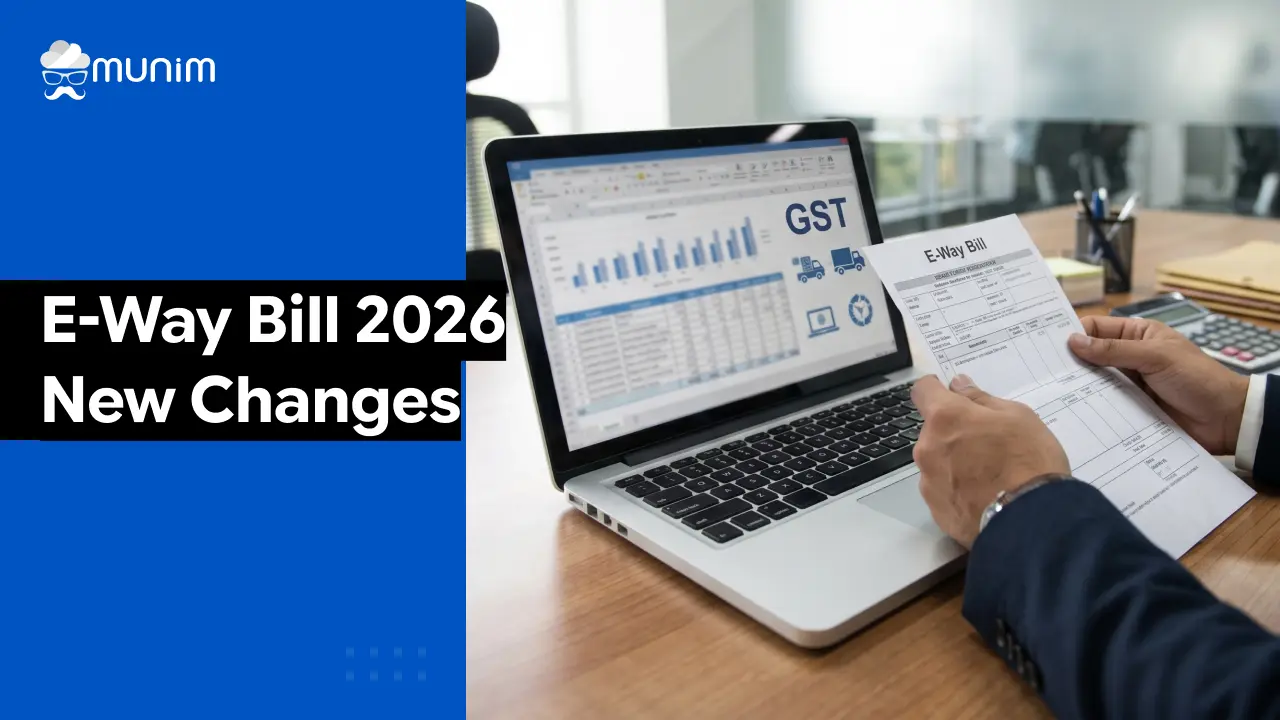
Two important e-way bill changes 2026 are set to go live on the national e-way bill portal from around mid-June. The first makes it mandatory to enter the recipient’s GSTIN in the “Ship To” section while generating an e-way bill. The second introduces a brand-new closure feature that lets businesses officially confirm delivery of goods. Both updates are practical steps toward tighter compliance and cleaner documentation in the GST ecosystem.
If your business involves regular movement of goods, understanding these changes is not optional. Read on for a clear breakdown of what is changing, who is affected, and what businesses need to do to stay compliant.
E-Way Bill Updates 2026: What Is Actually Changing?
The e-way bill portal is introducing two major updates from around mid-June 2026. Here is a clear look at each one.
Change 1: Mandatory “Ship To” GSTIN Entry
What is changing?
When generating an e-way bill, businesses must now mandatorily enter the recipient’s GSTIN in the “Ship To” field.
Until now, this field was either optional or not strictly enforced in all scenarios. From mid-June 2026, leaving it blank or skipping it will no longer be permitted for registered recipients.
What if the recipient is unregistered?
If the buyer or recipient does not have a GSTIN, the person generating the e-way bill should enter URP (Unregistered Person) in the GSTIN field. This handles the case of B2C transactions or sales to individuals and entities not registered under GST. Businesses that regularly deal with unregistered buyers should also be aware of Form ENR-03, which covers how to generate e-way bills for unregistered businesses.
Why has this change been introduced?
The mandatory “Ship To” GSTIN entry serves a clear purpose: it creates a direct, verifiable link between the e-way bill and the actual recipient of the goods. This reduces the scope for misuse, fake billing, and round-tripping of goods. It also ensures that tax authorities can cross-verify e-way bill data with GST return data more accurately.
Practical example:
A manufacturer in Surat dispatches goods worth Rs 2 lakh to a retailer in Ahmedabad. While generating the e-way bill, the manufacturer must now compulsorily enter the retailer’s GSTIN in the “Ship To” field. If the retailer is not registered under GST, entering “URP” is the accepted alternative.
Designed for Modern Tax Professionals
A premium filing solution for CAs and tax consultants who need speed, scale, and operational clarity.
 Handle multiple clients with ease
- Reconcile and validate with confidence
- Overcome the limitations of the GST portal
 Handle multiple clients with ease
Change 2: New E-Way Bill Closure Feature
What is the closure feature?
The second of the major e-way bill new changes is the introduction of a closure option on the portal. This allows the concerned parties to formally mark an e-way bill as closed once the goods have been successfully delivered.
This is a completely new concept in the e-way bill framework and must not be confused with cancellation.
Closure vs Cancellation: What Is the Difference?
This is one of the most important distinctions businesses need to understand.
| Situation | Action to Take |
| E-way bill was generated by mistake or with wrong details | Cancellation |
| Goods have been successfully delivered | Closure |
In simple terms:
- Cancellation means the bill itself was wrong or unnecessary.
- Closure means the purpose of the bill has been fulfilled. Goods reached the destination.
Many businesses also make errors during the generation stage itself — this list of 10 common mistakes to avoid while generating an e-way bill is worth reviewing to reduce the chances of needing a cancellation in the first place.
Who Can Close an E-Way Bill?
The following parties are authorised to perform the closure of an e-way bill:
- The supplier
- The recipient
- The transporter involved in the specific transaction
- An authorised person or driver whose mobile number has been registered for closure purposes
This means the process is not limited to just the person who generated the e-way bill. Any of the directly involved parties can initiate and complete the closure once delivery is confirmed.
How Can the Closure Be Performed?
The portal offers two modes for closing an e-way bill:
- E-Way Bill-wise: Close a specific e-way bill by entering its unique EWB number.
- Date-wise: Close multiple e-way bills generated within a particular date range in one go.
The date-wise option is particularly useful for businesses or transporters handling high volumes of daily dispatches, as it allows bulk closure instead of processing bills one by one.
Conclusion
The e-way bill updates 2026 are focused and practical. Making the “Ship To” GSTIN mandatory strengthens the link between goods movement and the actual buyer, helping reduce errors and misuse in the system. The closure feature fills a gap that has existed since the e-way bill framework was introduced. Until now, there was no formal way to confirm that goods had reached their destination. That changes with this update.
Businesses, transporters, and tax professionals should review their current processes and make the necessary adjustments before mid-June 2026. The changes are not complex but they do require prompt action.
Frequently Asked Questions
1. What are the new e-way bill changes in 2026?
From around mid-June 2026, the e-way bill portal is implementing two changes. First, entering the recipient’s GSTIN in the “Ship To” field is now mandatory. Second, a new closure feature has been added to mark an e-way bill as complete once goods have been delivered.
2. What is the “Ship To” GSTIN requirement in the e-way bill 2026 update?
The “Ship To” GSTIN is the GST registration number of the recipient of the goods. From mid-June 2026, this must be entered mandatorily while generating an e-way bill. If the recipient is not registered under GST, the value “URP” (Unregistered Person) should be entered in place of the GSTIN.
3. What is the e-way bill closure feature?
The closure feature is a new option on the e-way bill portal that allows the supplier, recipient, transporter, or an authorised person to mark an e-way bill as closed after the goods have been successfully delivered. It is different from cancellation, which is used when an e-way bill is generated by mistake.
4. What is the difference between e-way bill cancellation and closure?
Cancellation is used when an e-way bill was generated with wrong details or generated by mistake and goods have not moved. Closure is used after goods have been successfully delivered to confirm that the e-way bill has served its purpose. These are two separate actions and must not be confused with each other.
5. Who can close an e-way bill?
The supplier, the recipient, the transporter involved in the transaction, or an authorised person or driver whose mobile number is registered on the portal can close an e-way bill.
6. When will the e-way bill 2026 new changes go live?
The new updates are expected to go live from around mid-June 2026 on the national e-way bill portal.
7. Does the “Ship To” GSTIN requirement apply to intrastate movement as well?
Yes. The mandatory entry of the recipient’s GSTIN applies to e-way bills generated for both interstate and intrastate movement of goods.
8. What is URP in the context of an e-way bill?
URP stands for Unregistered Person. When the recipient of goods is not registered under GST and therefore does not have a GSTIN, the supplier should enter “URP” in the “Ship To” GSTIN field while generating the e-way bill. This is the accepted way to handle B2C transactions.
Disclaimer: "This blog post is for informational purposes only. For specific tax advice related to your business, please consult a qualified Chartered Accountant or GST practitioner."
About the author

Mehul is a seasoned content writer with a passion for simplifying complex accounting and GST topics. With a keen interest in entrepreneurship and business management, he specializes in creating informative and engaging content for themunim.com. His goal is to help businesses understand and implement accounting and GST software solutions effectively. When he's not crafting content, Mehul enjoys exploring new places and spending time with his Golden Retriever.
Related Articles
Explore the latest market news, useful resources for business, and Munim updates.