Best GSTR-2B Reconciliation Software: In-Depth Comparison
 AuthorMehul Jagwani
 Reviewed ByCA Ajay Savani
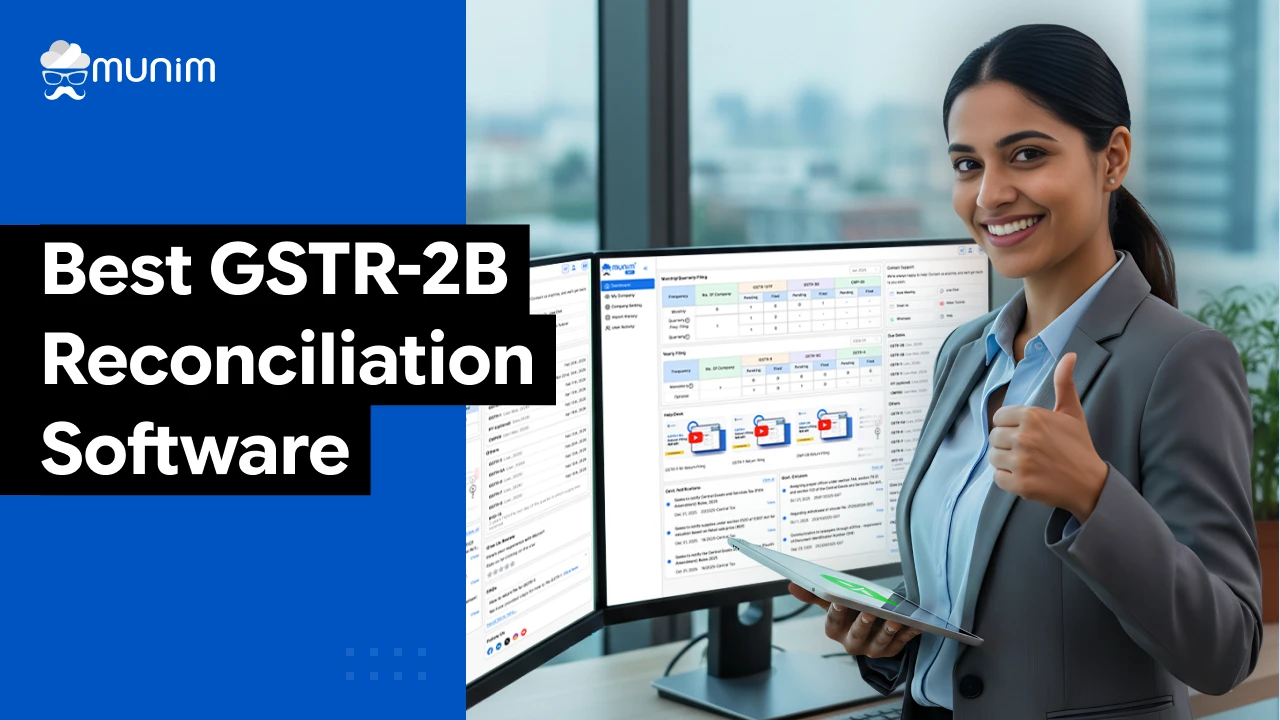
We know that you are done with manual GSTR-2B reconciliation, and now you are looking for the best GSTR-2B reconciliation software suitable for your requirements. To save your time and efforts in researching, we have compiled a list of top GSTR-2B reconciliation tools that help you in reconciling the data with maximum accuracy.
Top GST Reconciliation Software in India: Detailed Comparison
| Software | Best for | Key GSTR 2B reconciliation strengths | Deployment style | Reconciliation Buckets | Multi-GSTIN / Multi-client | Notes to keep in mind | Pricing |
| Munim | Indian SMEs and CAs/accountants who want accounting plus GST in one flow | Auto matching for GSTR 2B, practical exception handling, GST focused workflows, multi GSTIN handling | Web based + Desktop solution | Matched / Suggested match / Partially matched / Mismatch / Missing | Yes / Yes | Works well if you want reconciliation close to day to day billing and accounting | 500/Month |
| ClearTax GST | Businesses and CA firms managing multiple GSTINs | Strong reconciliation reports, multi GSTIN handling | Cloud based | Exact match / Suggested match / Mismatch / Missing | Yes / Yes | Good when you need process heavy compliance | Quote-based |
| TallyPrime | Businesses already running accounts in Tally | Reconciliation support within the accounting workflow, GST reporting aligned with books | Desktop first solution | Fully matched / Partially matched / Not in books / Not in portal | Yes / No | Best when you don’t want to switch the tool and your data is already in Tally | ₹750/month |
| Zoho Books | Growing SMEs that want modern accounting plus GST | Clean purchase matching, easy collaboration, GST workflow support | Cloud based | Matched / Mismatched / Missing in books / Missing in portal | Yes / No | Better fit for teams that prefer a modern UI and connected finance processes | ₹899/org/month; GSTIN add-on ₹599/month per GSTIN |
| ExpressGST | CA firms doing bulk client work | Bulk validations, faster exception lists, | Web based | Fully matched / Missing in books / Missing in portal / Mismatch | Yes / Yes | Best when you prioritize speed, and volume handling | ₹8000/month per user |
Common Challenges in Manual GST Reconciliation
Manual GST reconciliation may seem easy, just compare every purchase invoice to the data shown in GSTR-2B and check where the differences are. However, in cases where the volume of the invoice is huge, the process does not work efficiently.
The following is the list of common problems experienced by business owners and CAs while doing manual reconciliation:
Invoice Mismatches
Vendors may report an invoice with missing data or data mismatch, such as different data, GSTIN, and submit an invoice under a different name or address. In such cases, it is almost impossible to reconcile the data manually.
Last Minute Reconciliation Stress
A majority of companies only do the reconciliation of GSTR-2B a few days before submitting GSTR-3B. If discrepancies are identified after the reconciliation is completed, the company has no time to contact the supplier or make the necessary corrections.
Errors due to Manual Input
Since manual reconciliation is done using spreadsheets, the error gets compounded each month, and can create a huge variation in the final numbers. Mistakes such as transposing digits or misplaced decimal places are common in manual data entry.
Complexity of Multi-GSTIN
If you are a CA or a company operating in multiple states, you have to reconcile the data separately, which is time-consuming if done manually.
Essential Features of Modern GSTR‑2B Reconciliation Tools
Fortunately, technology can solve many of the issues faced in the manual GST reconciliation process. A modern GSTR-2B reconciliation software utilises automation, sophisticated algorithms, artificial intelligence (AI) and intelligent workflow to cross-verify the data with maximum accuracy.
The following are the desirable features of a GSTR-2B reconciliation software:
Automated Fetching and Matching of Data
GSTR-2B reconciliation software should automatically extract the data from GSTR-2B on the GST Portal and cross-verify the same with the purchase ledger of the company. Munim GST Return filing software directly retrieves GSTR-2B and matches it to the purchase entries in your company. Thus, it eliminates the manual download and upload of data.
Dashboards and Reports for Multi-GSTIN
If you manage multiple GSTINs or serve multiple clients, you want to ensure that your software offers unified dashboards and reports. This will help prevent compliance gaps across clients/branches.
Smart Categorization
Ideally, GSTR-2B reconciliation software is expected to sort entries into categories, such as matched, partially matched, only-in-books, only-in-portal, or mismatched. Rather than having to scan through long lists, you can focus on the specific issues.
Vendor‑wise Summary Views
The GSTR-2B reconciliation software should show patterns of vendors that frequently file late or incorrectly.
Seamless Integration with Accounting Software
Ideally, your software should seamlessly integrate with popular accounting software such as Munim Tally, Zoho Books, SAP, or ERPNext. Otherwise, you will find yourself repeatedly exporting and importing CSV files, thus defeating the purpose of automation.
Real-time Alerts
Look for GST reconciliation software that sends notifications in real-time when vendors miss deadlines or when new mismatches arise. Real-time processing allows you to fix these issues prior to the end of the month.
Role-based Access and Audit Trails
In order to comply with regulatory requirements and internal control policies, your software must record who made what changes and when. This is an important feature from an auditing perspective.
Closing Notes
We are hoping you have selected the best GSTR-2B reconciliation software based on your requirements. Still, if you are confused, we recommend that you sign up with Munim GST Return Filing software and get hands-on experience of reconciliation for free and then make your final decision.
Frequently Asked Questions on GSTR-2B Reconciliation
What is GST reconciliation?
GST reconciliation is the process of comparing your purchase and sales records to the purchase and sales records reported in the GST Portal. Businesses normally perform this reconciliation to verify invoice values, tax amounts, and the eligibility of ITC, thereby avoiding loss of eligible ITC or incorrect claiming of ITC.
How to do GST reconciliation?
Firstly, reconcile the books with the GST Portal data for the same time frame (GSTR 1 for sales and GSTR 2B for purchases) and identify any errors such as missing invoices, wrong GSTIN, difference in taxable value, or duplicate invoices. Then, rectify the errors in the books or contact the supplier to correct the errors made in their filings.
How to do GST reconciliation in Excel?
Export your Purchase Register from your accounting system, download your GSTR 2B data, and create an Excel sheet for each. Create common columns for Supplier GSTIN, Invoice Number, Invoice Date, Taxable Value, and GST Amount. Then, use VLOOKUP or XLOOKUP and filters to indicate if invoices are Matched, Missing in 2B, or Missing in Books.
What is GST reconciliation in Hindi?
GST Reconciliation का मतलब है आपके बिज़नेस की खरीद और बिक्री की एंट्री को GST पोर्टल पर उपलब्ध डेटा से मिलान करना। इससे पता चलता है कि कोई invoice छूटा तो नहीं, tax amount सही है या नहीं, और ITC सही तरीके से claim हो रहा है या नहीं।
What is a reconciliation statement in GST?
The reconciliation statement typically identifies mismatched invoices, missing entries, and indicates how much ITC you may be able to claim.
Disclaimer: This blog post is for informational purposes only. For specific tax advice related to your business, please consult a qualified Chartered Accountant or GST practitioner.
About the author

Related Articles
Explore the latest market news, useful resources for business, and Munim updates.