Consent Letter for GST Registration: Format, Sample & When You Need It
 AuthorMehul Jagwani
 Reviewed ByCA Madhav Bhayani



- What Is a Consent Letter for GST Registration?
- When Do You Need a Consent Letter for GST?
- Nature of Possession of Premises in GST: What Should You Select?
- Sample Consent Letter for GST Registration
- How to Make a GST Consent Letter PDF
- How to Upload the Consent Letter During GST Registration
- For CAs Managing Registered Clients in Munim GST
- Simplify GST Compliance With Munim GST
- FAQs on Consent Letter for GST
Summary:
A consent letter for GST is used when you want to register a business at premises owned by another person, such as a parent, spouse or relative, and there is no rent or lease arrangement. The owner can give the consent letter on plain paper. You should generally submit it with the consenter’s identity proof and one document establishing ownership of the premises.
You are applying for GST registration from your home, your parent’s property or other premises that you are allowed to use without paying rent. When you reach the nature of possession of premises in GST registration, the document requirements can become confusing.
Do you need a rent agreement? Is a GST NOC enough? Does the consent letter need stamp paper?
If you’re a CA or GST practitioner handling registrations for multiple clients, choosing the right documents is equally important to avoid clarification requests and registration delays.
In this guide, we’ll help you understand the requirements, choose the right documents and prepare a consent letter for GST registration.
What Is a Consent Letter for GST Registration?
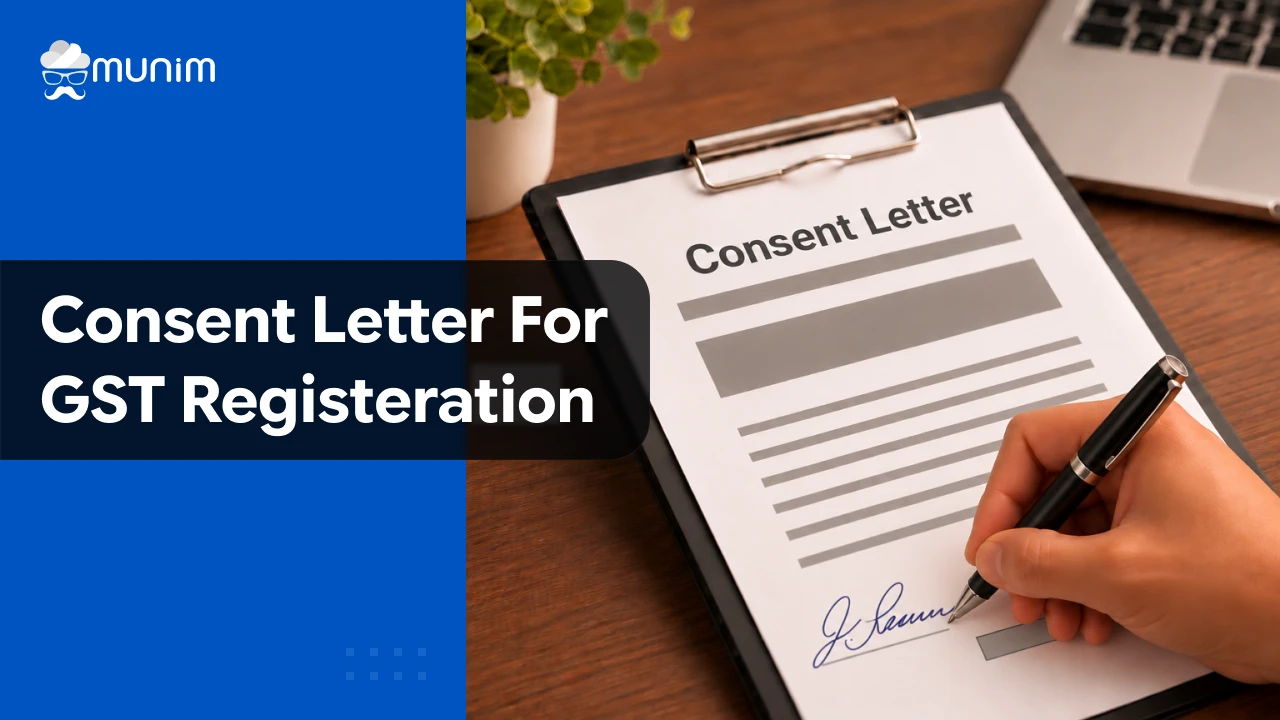
A consent letter for GST registration is written permission from the owner of a property allowing another person or business to use that address as its principal or additional place of business for GST purposes.
We generally recommend preparing a consent letter when:
- the business premises belong to your parent;
- the premises belong to your spouse or another relative;
- another owner is allowing you to operate from the property without a rent or lease agreement; or
- you are using certain shared premises without a rent or lease agreement.
Designed for Modern Tax Professionals
A premium filing solution for CAs and tax consultants who need speed, scale, and operational clarity.
 Handle multiple clients with ease
- Reconcile and validate with confidence
- Overcome the limitations of the GST portal
 Handle multiple clients with ease
When Do You Need a Consent Letter for GST?
The document you should provide depends on how you occupy the business premises. We recommend identifying the nature of possession first and then selecting the appropriate supporting documents.
| Situation | Documents generally required |
| You own the premises | One acceptable ownership document |
| Premises are rented/leased with a valid agreement | Rent/lease agreement + ownership proof of lessor |
| Premises belong to spouse, parent, relative or another person and are used with permission | Consent letter + consenter’s identity proof + ownership proof |
| Shared premises with rent/lease agreement | Agreement + ownership proof |
| Shared premises without rent/lease agreement | Consent letter + consenter’s identity proof + ownership proof |
| Premises are genuinely rented/leased but agreement is unavailable | Affidavit + acceptable proof of possession, as applicable |
Nature of Possession of Premises in GST: What Should You Select?
During GST registration, the Principal Place of Business section asks you to specify your nature of possession of premises and upload supporting documents.
Here’s how we recommend selecting the appropriate category:
- Own: You or the applicant entity owns the property.
- Rented/Leased: You occupy the premises under a rental or lease arrangement.
- Consent: Someone else owns the premises and permits you to use it without the normal rent/lease arrangement.
- Shared: You operate from premises shared with another person or business.
- Others: Used where the available categories do not appropriately describe the arrangement.
For co-working spaces, the GST Portal specifically advises selecting Shared unless you have a valid registered sub-let agreement with the provider.
Our advice: Always select the category that reflects your actual possession arrangement and matches your supporting documents.
Read more: How to Download GST Certificate
Sample Consent Letter for GST Registration
We’ve provided a sample consent letter below that you can customize according to your business details.
CONSENT LETTER / NO OBJECTION LETTER
Date: [DD/MM/YYYY]
To,
The Proper Officer
Goods and Services Tax Department
Subject: Consent for Use of Premises for GST Registration
I, [Full Name of Property Owner], am the owner of the premises situated at:
[Complete Address of the Property, including PIN Code]
I hereby give my consent and have no objection to [Name of Applicant / Legal Name of Business] using the above-mentioned premises as its [Principal Place of Business / Additional Place of Business] for carrying on business and for the purpose of obtaining registration under the Goods and Services Tax law.
I confirm that I have permitted the applicant to use the above premises for the stated business purpose.
Place: [City]
Date: [DD/MM/YYYY]
Signature of Property Owner: ____________________
Name of Property Owner: [Full Name]
Contact Number: [Optional]
Documents attached:
- Copy of identity proof of the property owner/consenter
- Copy of ownership proof of the premises
How to Make a GST Consent Letter PDF
If you need a GST consent letter PDF, we recommend following these steps:
- Copy the sample above into Word or Google Docs.
- Replace all placeholders with actual details.
- Print and obtain the property owner’s signature.
- Scan the signed letter clearly.
- Save the scanned document as PDF or JPEG.
- Keep the identity proof and property ownership document ready for upload.
We also suggest checking that the property address, owner’s name and applicant details are consistent across all documents before uploading them.
Read more: Types of GST Returns
How to Upload the Consent Letter During GST Registration
For a new GST registration, follow these steps on the GST Portal:
- Go to the GST Portal.
- Select Services > Registration > New Registration.
- Complete Part A and generate your Temporary Reference Number where applicable.
- Continue to Part B of FORM GST REG-01.
- Open the Principal Place of Business section.
- Enter the complete business address.
- Select the appropriate Nature of Possession of Premises.
- Upload the applicable proof of the Principal Place of Business.
- Complete the remaining registration details and verification.
Before submitting, we recommend reviewing the selected possession category and uploaded documents to avoid unnecessary clarification requests.
For CAs Managing Registered Clients in Munim GST
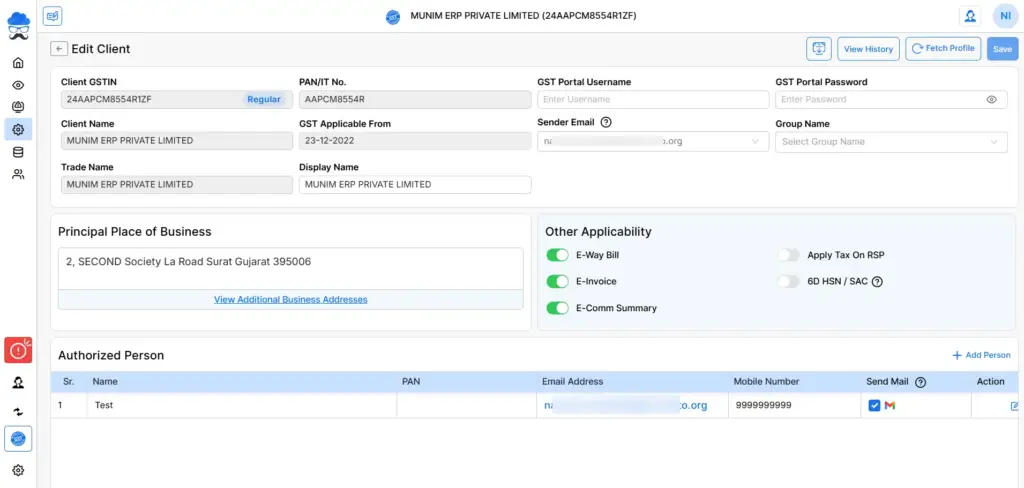
Once your client’s GST registration is active, you can use our Munim GST software to keep their registered information organised.
In Client Settings, you can view your client’s Principal Place of Business and additional business addresses. You can also use the Fetch Profile option to update the latest available client information from the GST Portal, wherever applicable.
For CA firms managing multiple GSTINs, our client management features can help you keep registered addresses and client information organised in one place.
Simplify GST Compliance With Munim GST
A correctly prepared consent letter helps you complete GST registration without unnecessary delays. But registration is just the beginning. Once your GSTIN is active, managing returns, reconciling purchase data and staying compliant become ongoing responsibilities.
With Munim GST, we help you simplify GST reconciliation, return filing and compliance management in one place.
Start your 7-day free trial and manage GST compliance with greater ease.
FAQs on Consent Letter for GST
1. Is a consent letter mandatory for GST registration?
No. A consent letter is required when you use someone else’s property for business purposes with their permission, without a rent or lease arrangement.
2. Does a GST consent letter need stamp paper?
No. As per CBIC’s April 2025 instructions, a GST consent letter can be prepared on plain paper.
3. Does a GST consent letter need to be notarised?
No. Notarisation is not required for a standard GST consent letter. A separate affidavit requirement applies to rented premises where a rent agreement is unavailable.
4. Can I take the GST registration at my parent’s property?
Yes. You can use your parent’s property with their written consent, identity proof and a valid ownership document.
5. Is an electricity bill enough with a GST consent letter?
Yes. An electricity bill along with a signed GST consent letter is enough for GST registration.
Disclaimer: "This blog post is for informational purposes only. For specific tax advice related to your business, please consult a qualified Chartered Accountant or GST practitioner."
About the author

Mehul is a seasoned content writer with a passion for simplifying complex accounting and GST topics. With a keen interest in entrepreneurship and business management, he specializes in creating informative and engaging content for themunim.com. His goal is to help businesses understand and implement accounting and GST software solutions effectively. When he's not crafting content, Mehul enjoys exploring new places and spending time with his Golden Retriever.
Related Articles
Explore the latest market news, useful resources for business, and Munim updates.