Vendor Invoice Management: Practical Tips and Real Advantages of Automating It
 AuthorMehul Jagwani
 Reviewed ByAjay Savani



Summary:
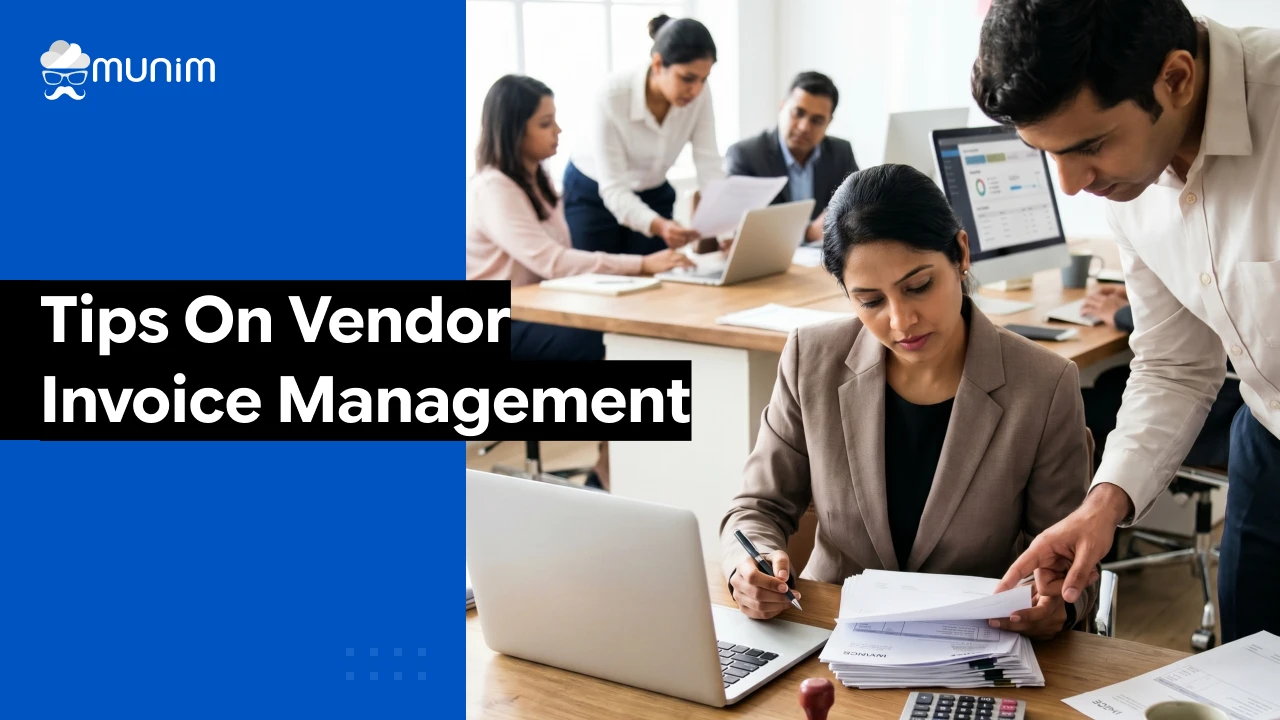
A vendor invoice is a formal payment request raised by a supplier after goods or services are delivered. For Indian SMEs and businesses dealing with multiple vendors, managing these invoices manually is time-consuming and error-prone. Automating vendor invoice management reduces processing time, eliminates data entry mistakes, and keeps ITC claims clean.
Managing vendor invoices is one of those tasks that looks simple on the surface but quietly eats into a finance team’s time every single day. For most Indian businesses, the process still runs on spreadsheets, email threads, and manual approvals. It works, until it does not. A missed invoice, a wrong GSTIN, a delayed approval, and suddenly there is a compliance gap or a strained vendor relationship.
This article breaks down what a vendor invoice is, what a proper vendor invoice format looks like, how vendor invoice management works in practice, and why automating the process makes sense for Indian SMEs and businesses dealing with multiple suppliers.
What Is a Vendor Invoice?
A vendor invoice is a document that a supplier or service provider sends to a buyer, requesting payment for goods delivered or services rendered. It acts as a formal record of the transaction between the two parties.
In the Indian business context, a vendor invoice is more than just a bill. It often carries GST details, HSN or SAC codes, GSTIN of both parties, and line-item breakdowns. These details matter for Input Tax Credit (ITC) claims, vendor reconciliation, and audit readiness.
Every business that buys goods or services from external vendors will receive vendor invoices. Managing them well is a basic but critical part of keeping accounts clean.
What Should a Standard Vendor Invoice Format Include?
Getting the vendor invoice format right is important for compliance and smooth payment processing. A standard vendor invoice in India should include the following fields:
- Invoice number and date — unique serial number and the date of issue
- Vendor’s name and address — full legal name and registered address
- Vendor’s GSTIN — mandatory for GST-registered suppliers
- Buyer’s name, address, and GSTIN — for ITC eligibility
- HSN or SAC code — based on the goods or services supplied
- Description of goods or services — item-wise with quantity and unit
- Taxable value — the base price before GST
- GST breakup — CGST, SGST, or IGST as applicable
- Total invoice amount — including all taxes
- Payment terms — due date, bank details, and mode of payment
- PAN of the vendor — relevant for TDS applicability
If any of these fields are missing, it can create problems during ITC reconciliation, GSTR-2B matching, or even statutory audits.
Simplify Your Business Operations
Designed to give you speed, control, and accuracy in daily accounting tasks.
 Save time with automated accounting workflows
- Get 35+ detailed business reports easily
- Access your business anytime, anywhere
 Save time with automated accounting workflows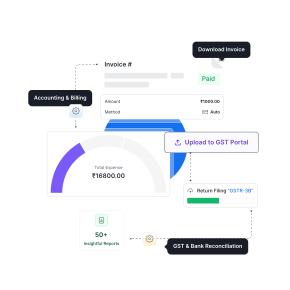
How Does Vendor Invoice Management Work?
Vendor invoice management is the end-to-end process of receiving, verifying, approving, recording, and paying vendor invoices. It involves multiple steps and, in most traditional setups, multiple people.
Here is how a typical invoice lifecycle works in an Indian business:
1. Invoice Receipt The vendor sends the invoice, either as a physical copy, email attachment, or through a vendor portal.
2. Invoice Verification The accounts team checks if the invoice matches the purchase order (PO) and goods receipt note (GRN). This is called a three-way match. Any discrepancy is sent back to the vendor.
3. Approval Workflow Depending on the invoice value or vendor type, it goes through one or more levels of internal approval.
4. Accounting Entry Once approved, the invoice is entered into the accounting system. The payable is recorded and matched against the relevant expense head.
5. Payment Processing The invoice is scheduled for payment based on agreed payment terms. NEFT, RTGS, or cheque payments are made accordingly.
6. Reconciliation The paid invoice is matched with bank entries and vendor ledger for clean reconciliation.
When this process runs on manual entries and email chains, errors creep in easily. Duplicate payments, missed invoices, wrong GSTIN entries — all of these are common pain points.
What Does Automating Vendor Invoices Actually Mean?
Automation of vendor invoices means using software to handle most of the repetitive, manual steps in invoice processing. At its core, it means the system:
- Captures invoice data automatically (from email, PDF, or direct upload)
- Validates the invoice against pre-set rules (PO match, GSTIN check, duplicate detection)
- Routes it through the approval workflow without manual handoffs
- Creates the accounting entry and records the payable
- Schedules and processes payment
- Updates the vendor ledger and prepares it for reconciliation
The person managing accounts does not have to key in data, chase approvals over WhatsApp, or manually check GSTR-2B mismatches. The system handles the workflow.
Frequently Asked Questions
Can a vendor invoice be raised without a purchase order?
Yes. Not every purchase goes through a formal PO process, especially in small businesses.
Is it mandatory to store vendor invoices in India?
Yes. Under GST law, registered businesses must retain records, including purchase invoices, for at least six years from the end of the relevant financial year.
What happens if a vendor invoice has wrong GSTIN details?
If the GSTIN on a vendor invoice is incorrect, the ITC claimed on that invoice may be disallowed during scrutiny. It also creates a mismatch in GSTR-2B reconciliation. The invoice should be corrected by the vendor through a revised invoice or debit-credit note.
Conclusion
Vendor invoices are part of every business’s daily operations. But managing them manually creates real problems — missed payments, ITC errors, compliance gaps, and unnecessary workload. Getting the vendor invoice format right and putting a structured vendor invoice management process in place is the foundation. Automation takes it further by removing the manual effort, enforcing compliance checks, and giving finance teams accurate, real-time visibility over payables.
For Indian businesses navigating GST compliance alongside day-to-day operations, this is not a luxury. It is a practical necessity.
Disclaimer: "This blog post is for informational purposes only. For specific tax advice related to your business, please consult a qualified Chartered Accountant or GST practitioner."
About the author

Mehul is a seasoned content writer with a passion for simplifying complex accounting and GST topics. With a keen interest in entrepreneurship and business management, he specializes in creating informative and engaging content for themunim.com. His goal is to help businesses understand and implement accounting and GST software solutions effectively. When he's not crafting content, Mehul enjoys exploring new places and spending time with his Golden Retriever.
Related Articles
Explore the latest market news, useful resources for business, and Munim updates.