
GST Rate for Beverage: What Changed from May 1, 2026?
 AuthorMehul Jagwani
 Reviewed ByMadhav Bhayani



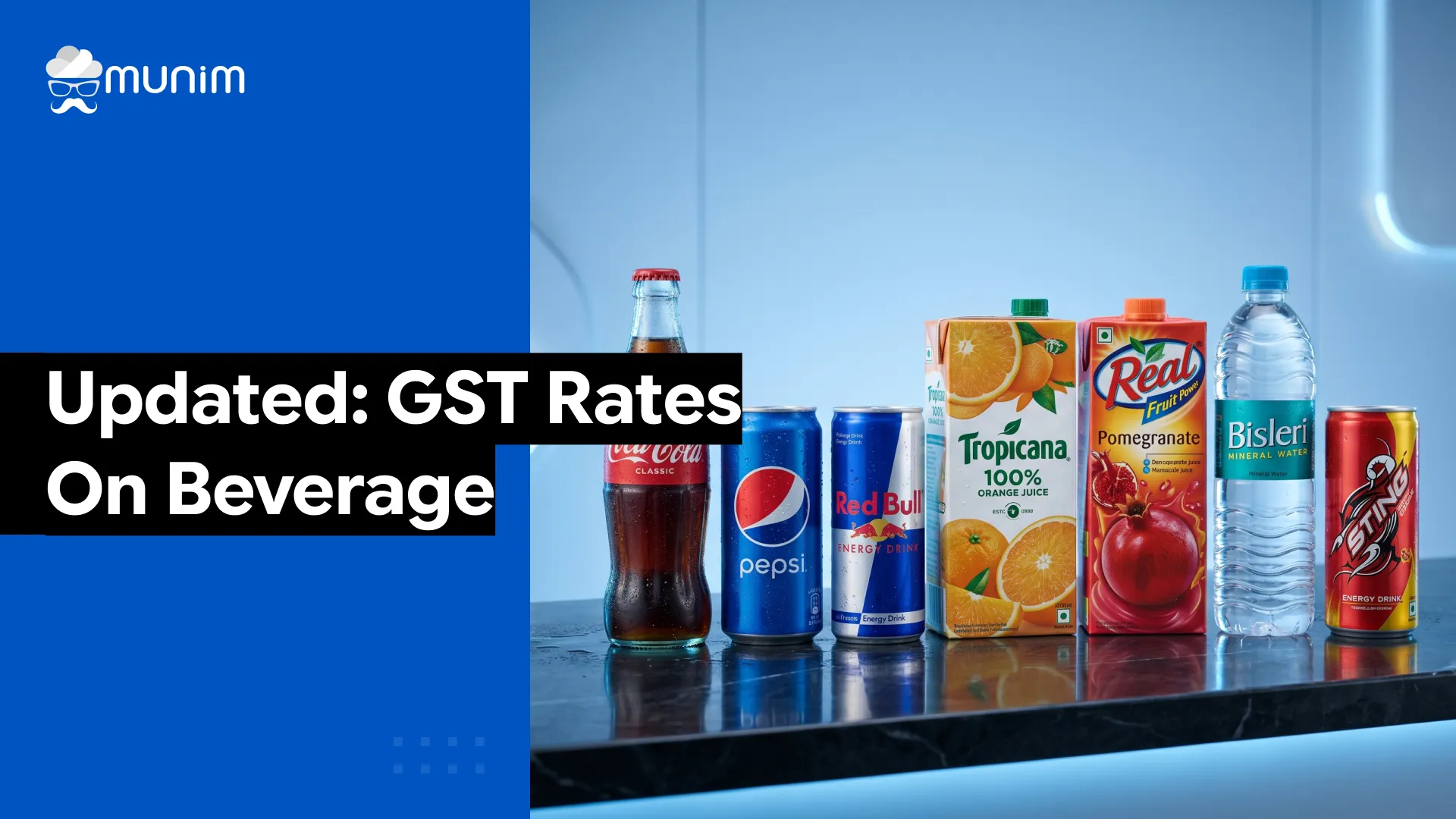
The Ministry of Finance issued Notification No. 01/2026-Central Tax (Rate) dated April 30, 2026 to amend the GST rate schedules applicable to certain beverage categories. The notification came into effect from May 1, 2026.
This is not a rate overhaul in the traditional sense. This notification does not introduce new tax rates. Instead, it clarifies and updates the classification of beverages under existing GST slabs.
That distinction matters. Businesses that were already applying broadly correct rates may still be non-compliant if they were using the wrong HSN sub-codes. The May 2026 notification tightens that classification, leaving no room for interpretation.
Why Did the Government Revise Beverage Classifications Under GST?
The short answer: too much ambiguity existed in how different beverages were being classified, and businesses were not always applying the right rate.
According to the Department of Revenue, the amendments are part of the Government’s broader tariff harmonisation exercise aimed at aligning GST schedules with revised Customs Tariff classifications and eliminating classification-related ambiguities in the beverage sector. Before diving into the rate changes, it helps to understand how HSN codes work in GST and why getting the sub-code right is critical for compliance.
Which Beverages Attract 5% GST Now?
Under Schedule I of the GST rate structure, the following non-alcoholic beverage categories attract a GST rate of 5%:
Fruit Pulp and Fruit Juice-Based Drinks (Excluding Carbonated)
Against Serial Number 150, the tariff entries have been revised to include “2202 99 21” and “2202 99 29”, covering fruit pulp or fruit juice-based drinks other than carbonated beverages of fruit drink or carbonated beverages with fruit juice.
This is an important carve-out. A regular packaged fruit juice drink, say a mango or guava-based drink without carbonation, sits at 5%. But the moment that same drink is carbonated, it moves to a completely different and much higher tax bracket.
Designed for Modern Tax Professionals
A premium filing solution for CAs and tax consultants who need speed, scale, and operational clarity.
 Handle multiple clients with ease
- Reconcile and validate with confidence
- Overcome the limitations of the GST portal
 Handle multiple clients with ease
Milk-Based Beverages
Against Serial Number 151, the tariff entries have been substituted with “2202 99 31” and “2202 99 39”, relating to beverages containing milk.
This covers products like flavored milk drinks, plant-based milk beverages, and soya milk drinks. Plant-based ready-to-drink milk beverages and soya milk drinks were moved to a lower GST rate bracket. These products now clearly fall at 5%, giving manufacturers and traders a precise HSN sub-code to work with.
Which Beverages Attract 40% GST?
The 40% slab applies to beverages considered non-essential or categorized as “sin goods” under the current GST framework. This covers two broad categories:
Other Non-Alcoholic Beverages
Against Serial Number 2, the revised tariff entries now include “2202 99 90, 2202 99 91, and 2202 99 99”, covering other non-alcoholic beverages not specified under Schedule I.
Any beverage that does not fall under the specifically listed 5% categories ends up here. This includes aerated beverages, carbonated drinks with added sugars or flavouring, and a wide range of processed non-alcoholic beverages that do not qualify as fruit juice or milk-based products.
Caffeinated Beverages
Against Serial Number 3, the tariff entries “2202 99 91 and 2202 99 99” have been specified for caffeinated beverages, which will continue to attract GST at the rate of 40%.
Energy drinks, caffeinated soft drinks, and similar products sit in this category. The 40% rate on these products is not new. The earlier 28% GST plus 12% compensation cess on aerated drinks is now consolidated into a single 40% GST slab. The May 2026 notification simply updates the specific HSN codes that trigger this rate, following the Customs Tariff revision.
Quick Reference: GST Rate for Non-Alcoholic Beverages Under HSN 2202
| Beverage Type | HSN Sub-Codes | Applicable GST Rate |
| Fruit pulp or fruit juice-based drinks (non-carbonated) | 2202 99 21, 2202 99 29 | 5% |
| Beverages containing milk (incl. plant-based, soya milk) | 2202 99 31, 2202 99 39 | 5% |
| Other non-alcoholic beverages (not in Schedule I) | 2202 99 90, 2202 99 91, 2202 99 99 | 40% |
| Caffeinated beverages | 2202 99 91, 2202 99 99 | 40% |
Final Thoughts
The May 2026 GST rate update for beverages is primarily a classification exercise, but its compliance implications are real and immediate. Businesses dealing in any product under HSN heading 2202 need to review their HSN sub-codes, update their invoicing systems, and ensure that the correct rate is being applied from May 1, 2026 onwards.
The principle is straightforward: natural, non-carbonated drinks at 5%, and caffeinated or non-specified beverages at 40%. The nuance lies in making sure the right HSN sub-code is in place to support that classification on every invoice.
FAQs: GST Rate for Beverage
1. What is the GST rate on energy drinks and caffeinated beverages?
Energy drinks and caffeinated beverages attract 40% GST in India under the revised structure. They fall under HSN sub-codes 2202 99 91 and 2202 99 99.
2. When did the new GST rate for beverages come into effect?
The revised GST classification for beverages under Notification No. 01/2026-Central Tax (Rate) came into effect on May 1, 2026.
3. Does the May 2026 GST notification introduce new tax rates for beverages?
No. The May 2026 notification does not introduce new rates. It updates the specific HSN sub-codes under existing slabs to align with the revised Customs Tariff classifications, providing greater clarity in how beverages are classified for GST purposes.
4. Can a business claim Input Tax Credit on beverages purchased for resale?
Yes. A registered business purchasing taxable beverages for resale can claim ITC on the GST paid, provided the purchase is used for taxable outward supplies and all conditions under Section 16 of the CGST Act are met.
5. What is the GST rate on packaged coconut water?
Packaged coconut water, if it qualifies as a natural fruit-based drink without carbonation, may attract 5% GST. However, the specific HSN classification must be verified against the product’s composition and the updated sub-code entries to determine the exact applicable rate.
Disclaimer: "This blog post is for informational purposes only. For specific tax advice related to your business, please consult a qualified Chartered Accountant or GST practitioner."
About the author

Mehul is a seasoned content writer with a passion for simplifying complex accounting and GST topics. With a keen interest in entrepreneurship and business management, he specializes in creating informative and engaging content for themunim.com. His goal is to help businesses understand and implement accounting and GST software solutions effectively. When he's not crafting content, Mehul enjoys exploring new places and spending time with his Golden Retriever.
Related Articles
Explore the latest market news, useful resources for business, and Munim updates.