What Is Invoice Processing? Steps, Process, and Everything a Business Needs to Know
 AuthorMehul Jagwani
 Reviewed ByAjay Savani



Summary:
Invoice processing is the end-to-end workflow a business follows when it receives a vendor or supplier invoice, verifies it, and finally makes the payment. It sits at the heart of accounts payable and directly affects cash flow, vendor relationships, and financial accuracy.
Every time a business buys something from a vendor, a supplier, or a service provider, an invoice follows. And that invoice does not pay itself. Someone has to receive it, check it, approve it, record it, and make sure the payment goes out correctly and on time. That entire workflow is called invoice processing.
For most Indian SMEs, this still happens manually — paper invoices, email attachments, entries in spreadsheets, and a lot of follow-ups. It works, until it does not. A missed invoice, a duplicate payment, or a mismatch with a purchase order can quietly drain cash and create compliance headaches. Understanding invoice processing properly — what it is, what the steps are, and where it connects with accounts payable — helps a business stay in control of its finances.
What Is Invoice Processing?
Invoice processing refers to the complete cycle of managing a vendor invoice from the moment it is received to the moment it is paid and recorded in the books.
It is not just about making a payment. It covers verification, approval, accounting entries, and documentation — all in the correct sequence. A well-run invoice processing system ensures that:
- The business pays only for what it actually ordered and received
- Payments go out on time, avoiding late fees and vendor disputes
- Every transaction is recorded accurately for GST compliance and audit purposes
- Duplicate or fraudulent invoices are caught before they cause damage
In simple terms, invoice processing is the back-office engine that keeps a company’s spending organised and accountable.
What Is Invoice Processing in Accounts Payable?
Invoice processing in accounts payable (AP) refers specifically to how the finance or accounts team handles incoming invoices from vendors and suppliers. Accounts payable is the part of accounting that tracks what a business owes to outsiders. Invoice processing is the operational work that feeds into that ledger.
When a vendor sends an invoice, the AP team is responsible for:
- Receiving the invoice (physical, email, or digital format)
- Verifying that the invoice is accurate and matches the original purchase
- Getting internal approval from the concerned department or manager
- Posting the entry in the accounting books
- Scheduling and releasing the payment
- Archiving the invoice for future reference and audits
Streamline your invoicing process with fully automated invoice workflows. Read More
Why Does Invoice Processing Matter for Indian Businesses?
Indian businesses, especially SMEs, deal with high volumes of vendor invoices across raw materials, services, logistics, and overheads. Poor invoice management leads to predictable problems:
Duplicate payments. The same invoice gets paid twice because no one tracked it properly. Small amounts go unnoticed until a reconciliation months later.
Delayed payments. An invoice sits in someone’s inbox waiting for approval. The vendor follows up, the relationship sours, and future credit terms get tighter.
ITC mismatches. Under GST, if an invoice is not accounted for correctly or if the supplier’s GSTIN details are wrong, the buyer risks losing the input tax credit during GST return filing.
Audit gaps. Tax authorities or statutory auditors expect a clean paper trail. Missing or poorly filed invoices create compliance risks during assessments.
Simplify Your Business Operations
Designed to give you speed, control, and accuracy in daily accounting tasks.
 Save time with automated accounting workflows
- Get 35+ detailed business reports easily
- Access your business anytime, anywhere
 Save time with automated accounting workflows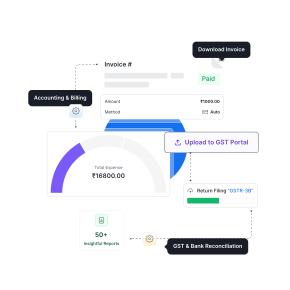
Invoice Processing Steps: A Complete Walkthrough
The invoice processing steps may vary slightly depending on a business’s size and industry, but the core flow is consistent. Here is how it typically works:
Step 1: Invoice Receipt
The process begins when a vendor sends an invoice. It may arrive as:
- A physical paper bill (common with local vendors)
- An email attachment (PDF or Word format)
- A structured e-invoice from the GST portal (for businesses under the e-invoicing mandate)
- Through a supplier portal or accounting software
All incoming invoices need to be logged centrally so nothing gets lost.
Step 2: Invoice Capture and Data Entry
Once received, the invoice details are captured — either manually by an accounts team member or automatically through software. The key data points include:
- Vendor name, GSTIN, and address
- Invoice number and date
- Description of goods or services
- HSN or SAC code (as applicable)
- Taxable amount, GST rate, CGST, SGST, or IGST breakup
- Total payable amount
- Payment due date
Getting this right at the entry stage prevents errors downstream.
Step 3: Purchase Order (PO) Matching
For businesses that raise purchase orders before buying, this step involves comparing the invoice against the original PO. The check is called three-way matching — it verifies that the PO, the goods receipt note (GRN), and the invoice all agree on quantity, price, and other terms.
If there is a mismatch, the invoice goes back to the vendor for correction before it moves forward. No payment happens until the match is confirmed.
Ensure 100% accuracy with automated three-way invoice matching. Know More
Step 4: Invoice Verification and Validation
Beyond PO matching, the team verifies additional details:
- Is the vendor’s GSTIN valid and active?
- Are the GST tax rates correct for the items or services billed?
- Is the invoice number unique and not a duplicate?
- Is the billing entity correct — is the invoice addressed to the right company or branch?
Step 5: Internal Approval
Most organisations have an approval hierarchy. An invoice below a certain amount might need only one manager’s sign-off. A large capital expenditure might need approval from the finance head or the business owner.
This step ensures that no payment goes out without the right authorisation. In manual setups, approvals happen over email or in person. In software-driven setups, the approval workflow is built in, with automated reminders and audit logs.
Step 6: Accounting Entry (Posting)
Once approved, the invoice is posted in the accounting system. The standard accounting entry records:
- Debit: The expense or asset account (e.g., raw material purchases, office expenses)
- Credit: The accounts payable ledger (amount owed to the vendor)
If GST is involved, the input tax credit is also recorded in the appropriate ITC ledger. This entry affects the balance sheet and the P&L, so accuracy here is essential.
Step 7: Payment Processing
The finance team schedules payment based on the invoice due date and the company’s cash flow position. Payment can be made via:
- NEFT or RTGS (most common for B2B transactions)
- UPI or payment apps
- Cheque (still used in some traditional trade setups)
Once the payment is made, the accounts payable entry is settled, and the vendor receives a payment confirmation.
Step 8: Record Keeping and Archival
The final step is filing and storing the invoice along with supporting documents — the PO, GRN, approval trail, and payment receipt. Under the GST law, businesses are required to maintain records for at least six years from the due date of filing the annual return. This makes organised invoice archival a legal requirement, not just good practice.
Types of Invoices Businesses Typically Process
Not every invoice is the same. Here are the main types that come through in a typical accounts payable workflow:
Supplier Invoice: The standard bill from a goods or service provider.
Pro Forma Invoice: A preliminary invoice sent before delivery, used to confirm order details. It is not a demand for payment.
Credit Note: Issued by the supplier to reduce the invoice amount, usually due to a return or error. It reduces the amount payable.
Debit Note: Issued by the buyer to the supplier when the buyer wants to return goods or claim a reduction. Under GST, debit and credit notes have specific reporting requirements in GSTR-1.
Recurring Invoice: For services billed on a regular schedule, like rent, retainer fees, or subscription services.
E-Invoice: Mandated under GST for businesses above a certain turnover threshold. The invoice is registered on the Invoice Registration Portal (IRP), and a unique Invoice Reference Number (IRN) is generated along with a QR code.
Final Thoughts
Invoice processing is one of those business functions that rarely gets attention until something goes wrong. A missed payment, a duplicate entry, an ITC mismatch — these are often symptoms of a broken or loosely managed invoice process underneath.
For Indian businesses navigating GST compliance alongside routine bookkeeping, having a structured invoice processing workflow is not optional. It is what keeps accounts payable clean, vendors satisfied, and the finance team audit-ready.
The good news is that getting this right does not require a large team or complex systems. A clear process, consistent habits, and the right accounting tool are enough for most SMEs to manage invoice processing efficiently.
Upgrade your accounting system and simplify invoice processing with Munim ERP. Read More
Frequently Asked Questions (FAQs)
How does invoice processing affect GST compliance in India?
Under GST, input tax credit can only be claimed for invoices that appear in GSTR-2B. If an invoice is not properly received, verified, and matched with GSTR-2B, the buyer risks losing the ITC for that transaction.
What is three-way matching in invoice processing?
Three-way matching is a verification check where the invoice is compared against the purchase order and the goods receipt note. All three documents must agree on quantity, price, and terms before the invoice is approved for payment.
How long should invoice records be kept in India?
Under the GST law, a registered business must maintain invoice records for at least six years from the date of filing the relevant annual return.
Disclaimer: "This blog post is for informational purposes only. For specific tax advice related to your business, please consult a qualified Chartered Accountant or GST practitioner."
About the author

Mehul is a seasoned content writer with a passion for simplifying complex accounting and GST topics. With a keen interest in entrepreneurship and business management, he specializes in creating informative and engaging content for themunim.com. His goal is to help businesses understand and implement accounting and GST software solutions effectively. When he's not crafting content, Mehul enjoys exploring new places and spending time with his Golden Retriever.
Related Articles
Explore the latest market news, useful resources for business, and Munim updates.