How to Find Missing ITC Before Filing GSTR-3B with Munim GST
 AuthorMehul Jagwani
 Reviewed ByMadhav Bhayani



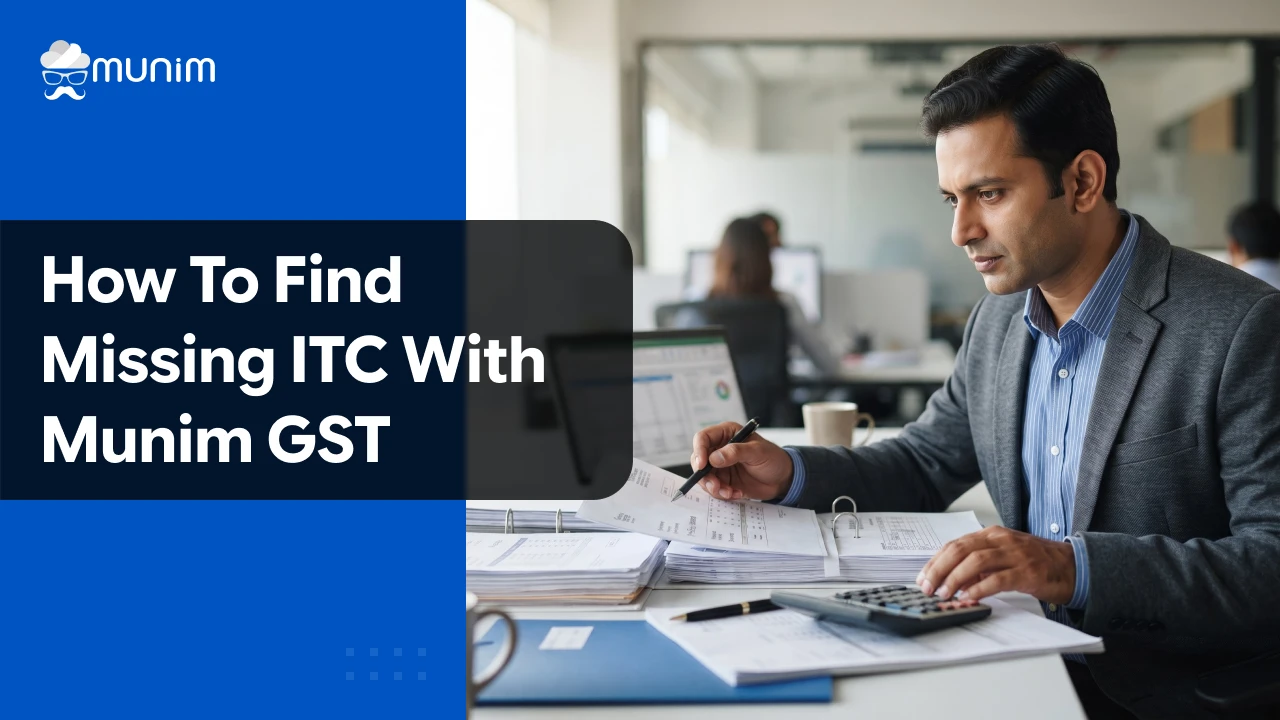
Before filing GSTR-3B, your purchase register may show ITC that does not appear in GSTR-2B. The difference could be due to an unreported invoice, incorrect invoice details, a tax amount mismatch, an amendment or a reporting delay.
For example, if your books show ₹18,000 of ITC but the invoice is missing from GSTR-2B, you need to identify the reason, verify the invoice and supplier details, and track the credit before claiming it.
When purchase records run into hundreds of invoices or multiple GSTINs, doing this manually becomes difficult. A purchase register vs GSTR-2B reconciliation helps identify the specific invoices that need attention before GSTR-3B.
What Does Missing ITC Mean?
Missing ITC means a purchase invoice is recorded in the business’s books, but the related tax credit does not appear in GSTR-2B. For the accounts team or CA, this means extra time spent finding the affected invoice, checking its details and following up with the supplier before filing GSTR-3B.
Why Is ITC Missing?
ITC may be missing because the supplier:
- Did not upload the invoice
- Filed GSTR-1 or IFF late
- Entered an incorrect GSTIN
- Reported the invoice as B2C instead of B2B
- Entered the wrong invoice number, date or tax amount
- Reported the invoice in a different tax period
Until the error is corrected and the credit becomes available, the business may need to keep the ITC pending and pay more tax in cash.
Designed for Modern Tax Professionals
A premium filing solution for CAs and tax consultants who need speed, scale, and operational clarity.
 Handle multiple clients with ease
- Reconcile and validate with confidence
- Overcome the limitations of the GST portal
 Handle multiple clients with ease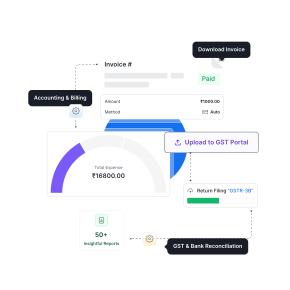
Complete Journey of a ₹18,000 Missing ITC Invoice
Consider a GST-registered furniture manufacturer in Ahmedabad.
The business purchases raw material worth ₹1,00,000 from a registered supplier. The supplier charges 18% GST, so the purchase register records ₹18,000 as expected ITC.
Purchase Invoice
| Particular | Amount |
| Taxable value | ₹1,00,000 |
| CGST at 9% | ₹9,000 |
| SGST at 9% | ₹9,000 |
| Invoice total | ₹1,18,000 |
| Expected ITC | ₹18,000 |
The accounts team records invoice RM/246 correctly in the purchase register.
When the purchase data is compared with GSTR-2B, however, the invoice is not found.
| Record | Purchase Register | GSTR-2B | Result |
| Invoice RM/246 | ₹18,000 ITC | Not found | Missing in 2B |
At this point, the ₹18,000 should not simply be included in the GSTR-3B claim because it exists in the purchase register. The team first needs to find out why the invoice is missing and verify whether the ITC can be claimed.
What should the team check?
- Confirm the supplier GSTIN and invoice details.
- Check whether the supplier has reported the invoice.
- Compare the taxable value and GST amounts.
- Confirm that the goods or services were received.
- Check the applicable ITC eligibility conditions.
- Make sure the same ITC has not already been claimed.
If the supplier has not reported the invoice, the accounts team can follow up with the supplier and track the record until it becomes available through the applicable reporting process.
Until then, the ₹18,000 can be kept pending rather than treating the purchase-register entry alone as sufficient for the claim.
How Missing ITC Can Affect the Cash Tax Payment
Suppose the business has:
| Calculation | Amount |
| Output tax liability | ₹70,000 |
| Other eligible ITC | ₹40,000 |
| Missing ITC | ₹18,000 |
| Cash tax payable without the missing ITC | ₹30,000 |
| Cash tax payable if the ₹18,000 becomes available and is eligible | ₹12,000 |
In this simplified example, the unavailable ₹18,000 increases the cash tax payment from ₹12,000 to ₹30,000 for the period.
The actual tax payable will depend on the taxpayer’s complete ITC position, reversals and other applicable adjustments. The example shows why identifying missing ITC before finalising GSTR-3B can matter for cash-flow planning.
Why You Need a Better Way to Reconcile ITC
For a small purchase register, manual comparison may be manageable. The process becomes harder when you have hundreds of purchase records, multiple suppliers or several GSTINs.
A typical reconciliation involves:
- Updating the purchase register
- Downloading GSTR-2B
- Comparing invoice details and tax amounts
- Identifying missing and mismatched records
- Investigating exceptions and following up with suppliers
- Tracking pending or deferred ITC
The challenge is not just finding the difference. It is keeping track of which invoices need attention and what happens to them next.
This is where GST reconciliation software can make the process easier to manage.
Find Missing and Mismatched ITC With Munim GST
Manually checking every purchase invoice against GSTR-2B takes time. Munim GST’s Purchase v 2B reconciliation compares both datasets and highlights only the records that need attention.
The accounts team can follow this process:
- Go to My Clients > Reports > Purchase > Purchase v 2B.
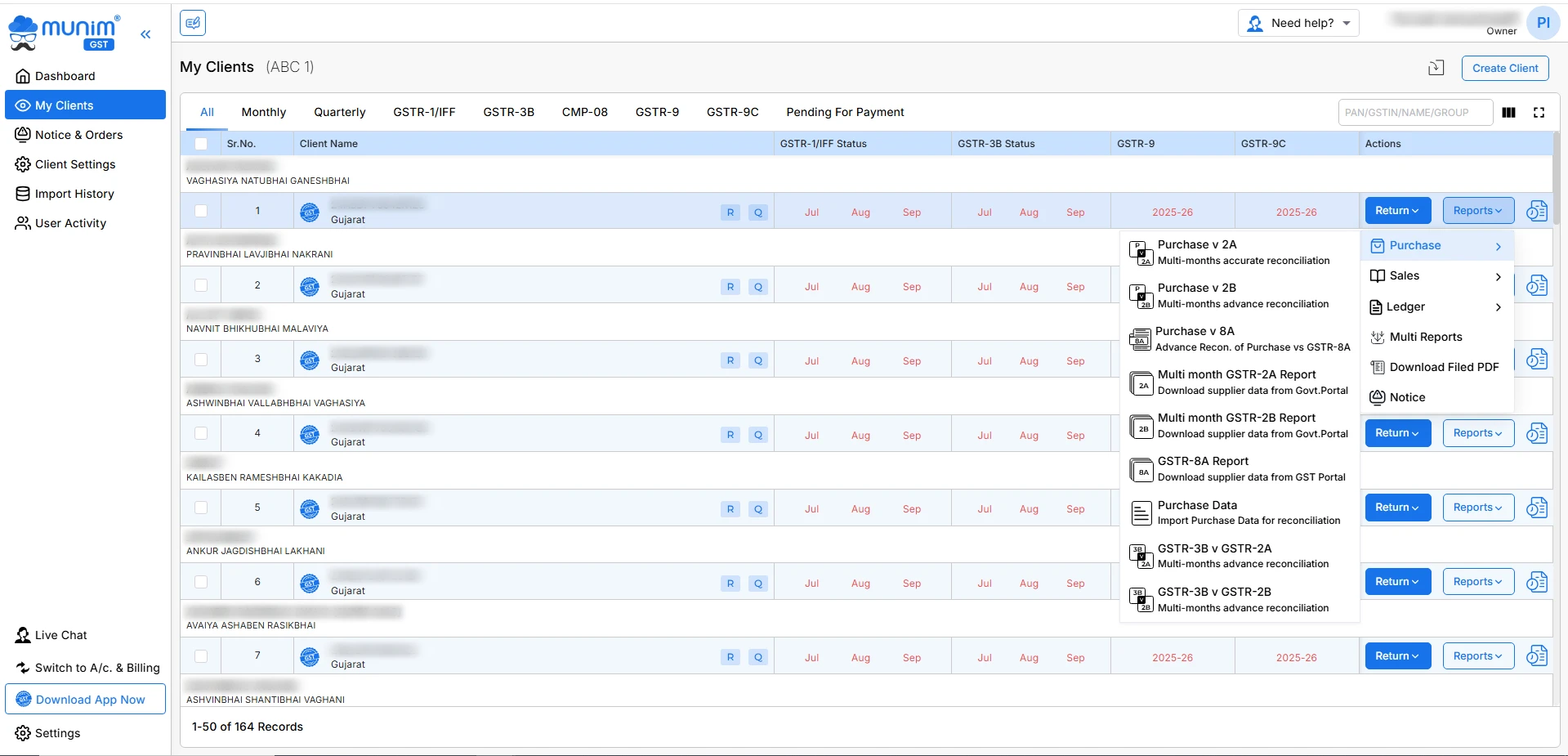
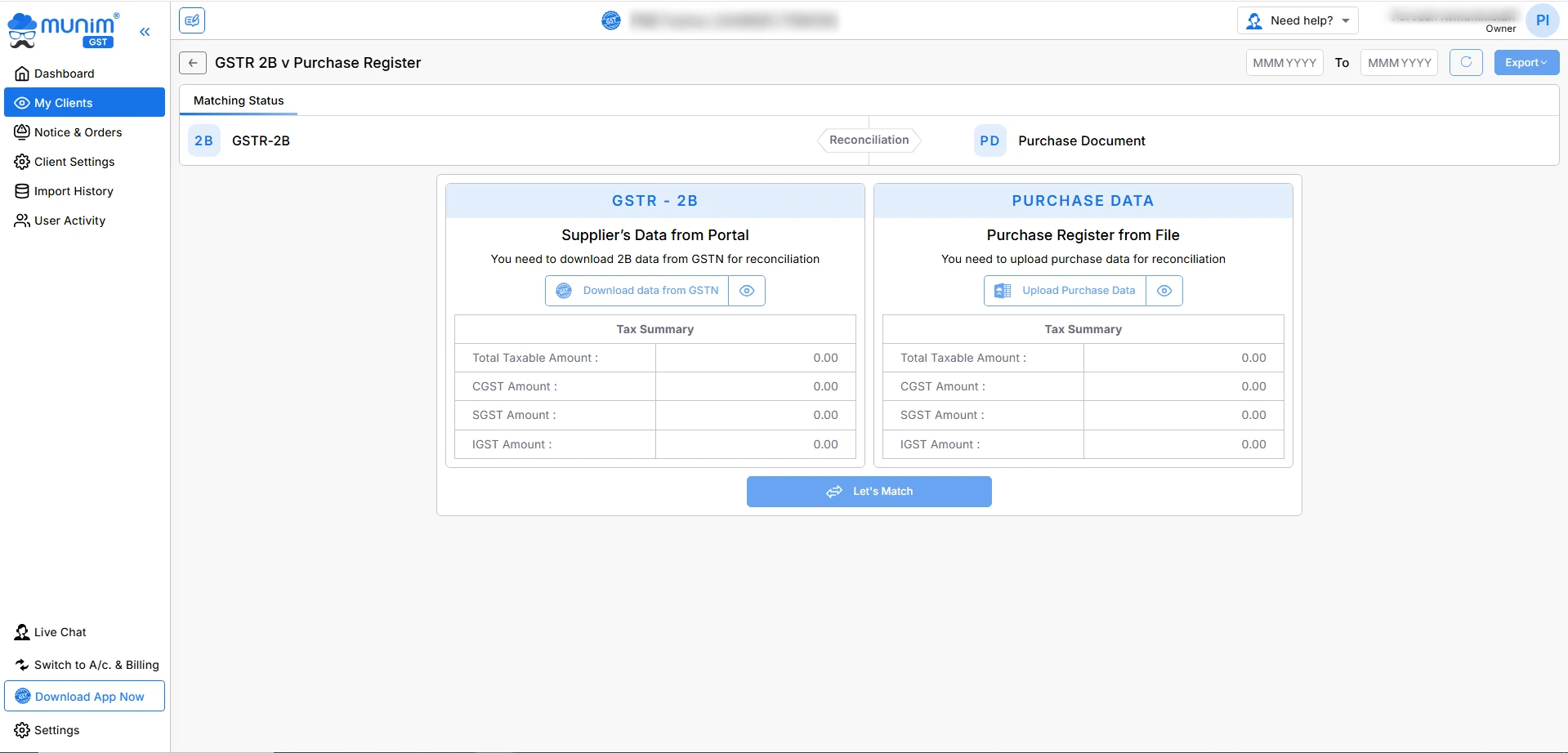
- Select the return period and download GSTR-2B data from GSTN.
- Upload the purchase register in Excel format.
- Select Let’s Match and set an acceptable difference value, if required.
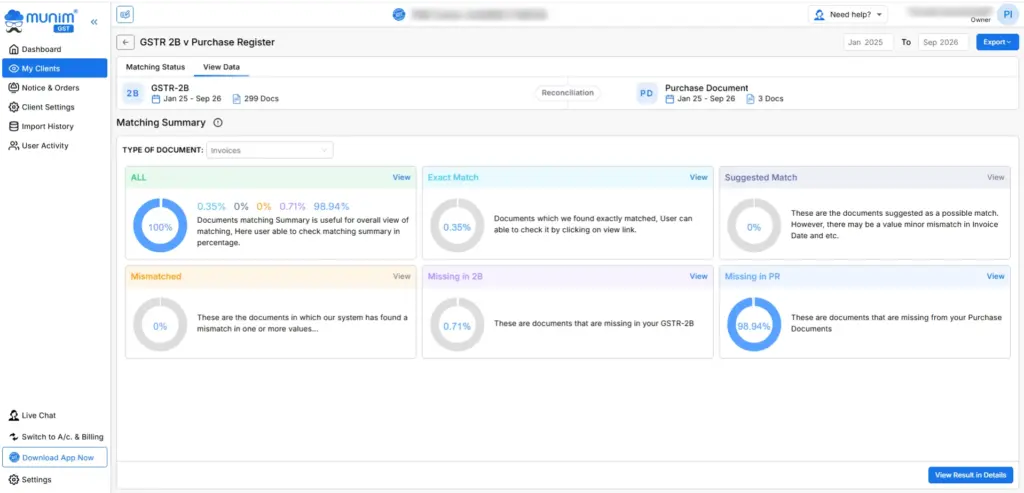
- Review the matching summary under:
- Exact Match: Both records match.
- Suggested Match: A possible match needs review.
- Mismatched: The invoice exists in both records, but some details differ.
- Missing in 2B: The invoice is in the purchase register but not in GSTR-2B.
- Missing in PR: The invoice is in GSTR-2B but not in the purchase register.
- Review the results through Supplier View or Document View.
- Mark records as Claimed, Pending Claimed, Deferred or Blocked ITC. The team can also add remarks and the claim month.
- Download the reconciliation report or ITC register for review
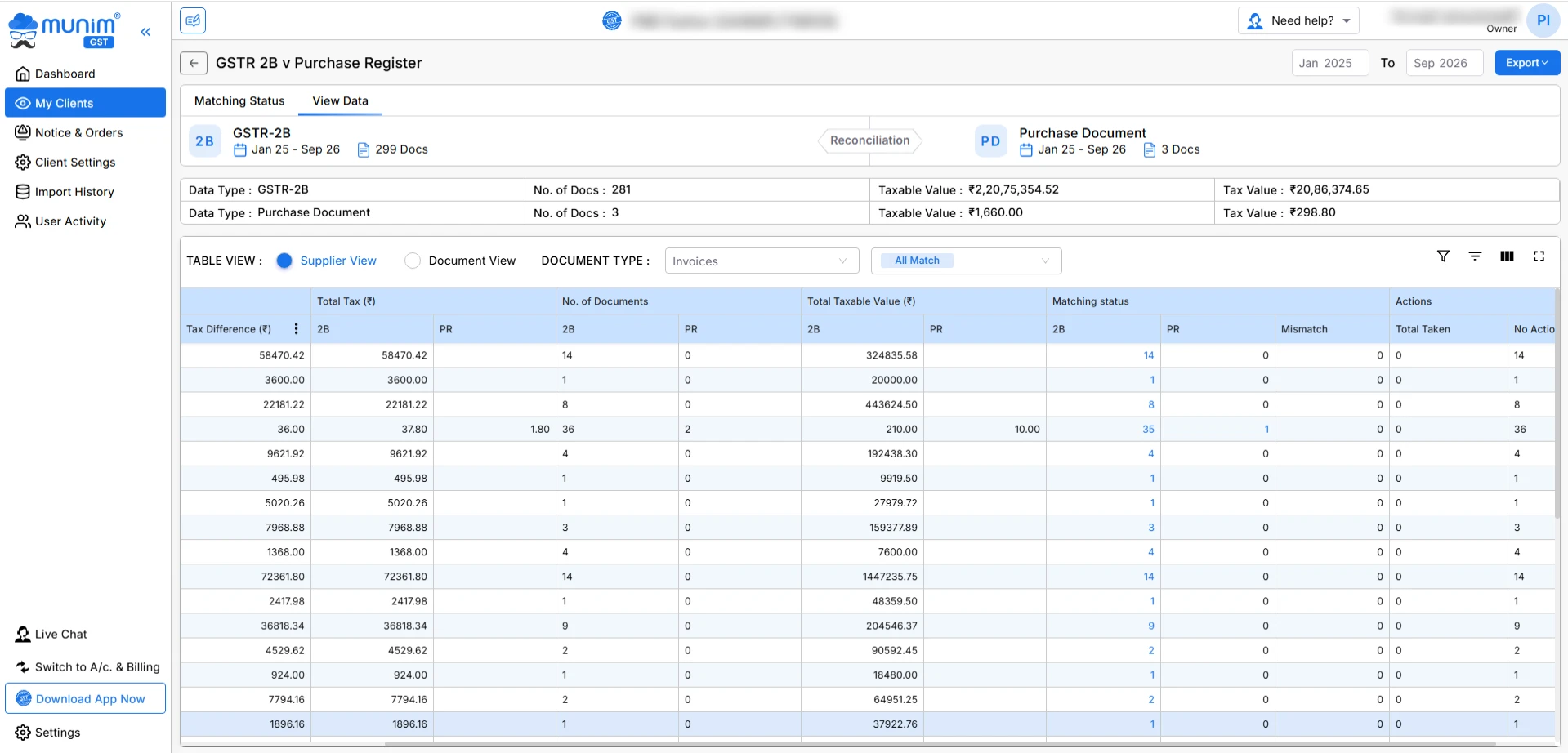
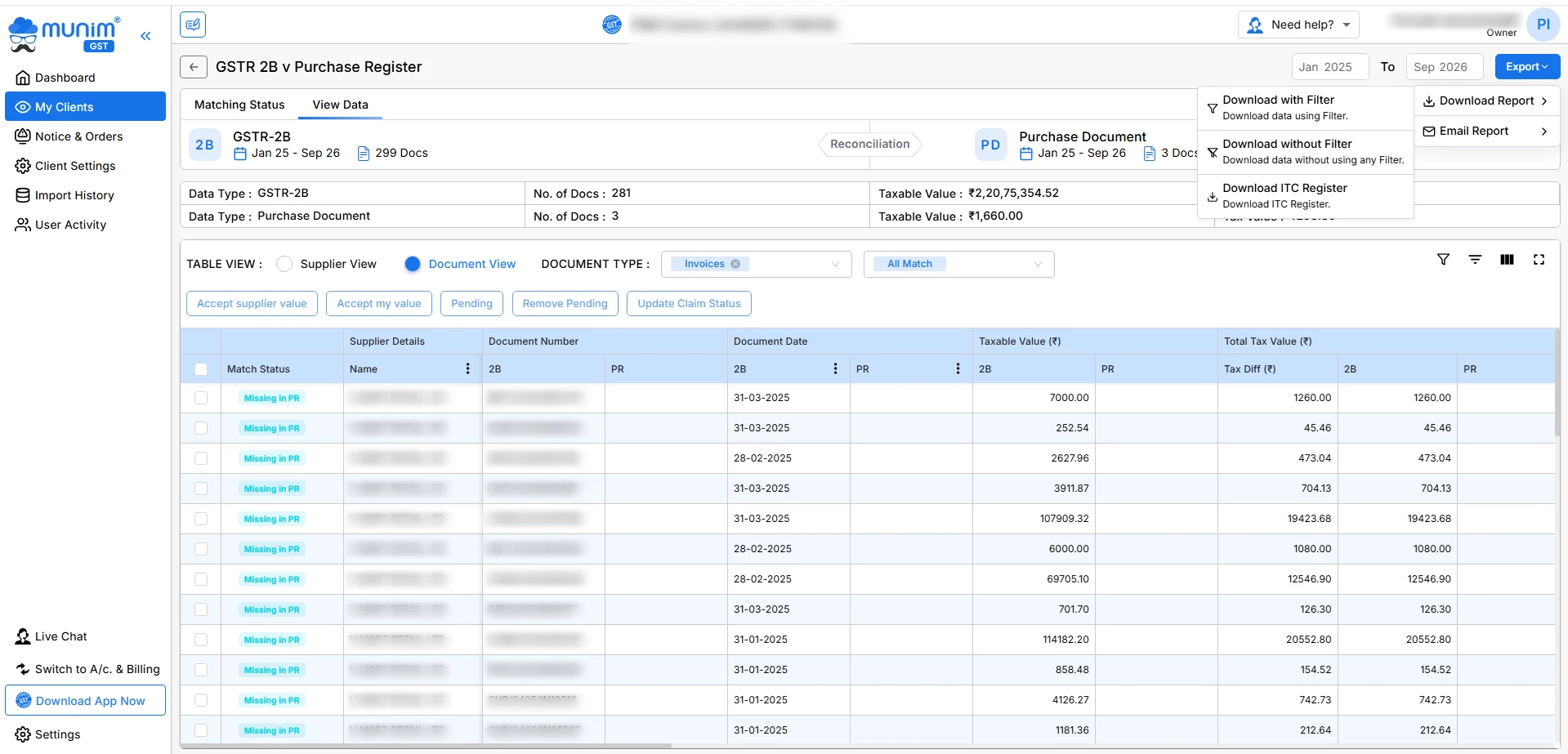
For example, if invoice RM/246 appears under Missing in 2B, the accounts team can investigate that specific invoice instead of searching the entire purchase register. This exception-based approach makes it easier to identify the invoices causing the ITC difference before filing GSTR-3B.
The final claim status should still be verified against supporting documents and GST eligibility rules.
Frequently Asked Questions
How can a business find missing ITC?
A business can find missing ITC by matching its purchase register with GSTR-2B at the invoice level.
Can ITC be claimed if an invoice is in the books but not in GSTR-2B?
The credit should generally not be claimed merely because the invoice appears in the purchase books.
Does an invoice appearing in GSTR-2B automatically qualify for ITC?
No. GSTR-2B availability does not override conditions relating to receipt of goods or services, blocked credit, business use, payment, documentation and the statutory time limit.
Can missing ITC be claimed in a later month?
Yes, eligible ITC may generally be claimed in a later GSTR-3B after the invoice appears through the applicable reporting process and all conditions are satisfied.
What is the time limit for claiming an invoice from FY 2025-26?
The general deadline is 30 November 2026 or the date of filing the relevant annual return, whichever is earlier.
Does rejecting an invoice in IMS remove it from GSTR-2B?
A rejected record is generally excluded from the recipient’s eligible GSTR-2B computation according to the applicable IMS process.
Disclaimer: "This blog post is for informational purposes only. For specific tax advice related to your business, please consult a qualified Chartered Accountant or GST practitioner."
Related Articles
Explore the latest market news, useful resources for business, and Munim updates.