
3 Golden Rules Of Accounting – Rules with Best Examples
 AuthorSagarika Das
 Reviewed ByAjay Savani



- The Foundation of the 3 Golden Rules of Accounting
- Understanding the 3 Rules of Accounting with Examples
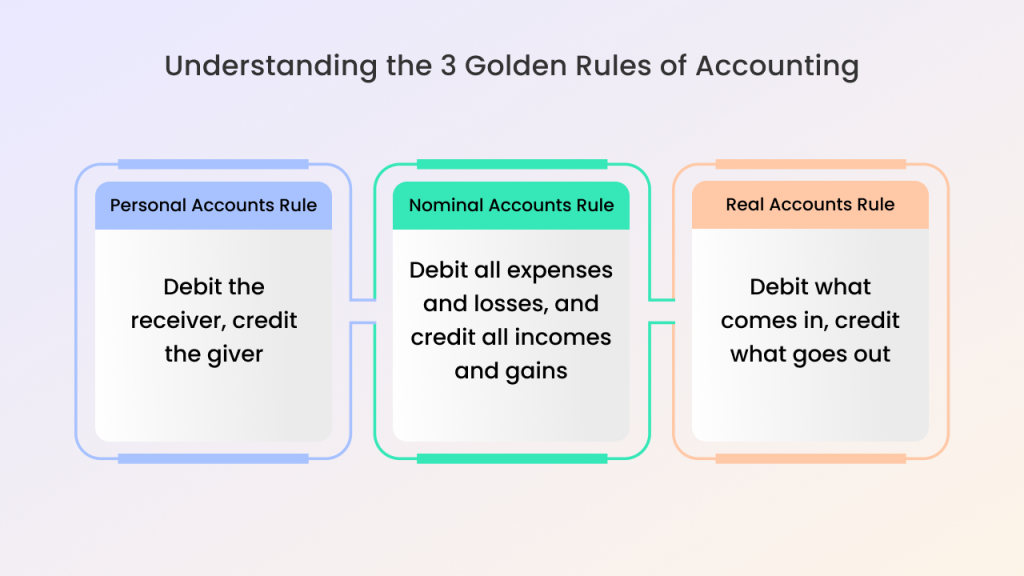
- Rule 1: Debit the receiver, Credit the giver
- Rule 2: Debit all expenses and losses, Credit all incomes and gain
- Rule 3: Debit what comes in, Credit what goes out
- How to Apply These Golden Rules of Accounting in Transaction?
- Quick Reference Guide to Golden Rules of Accounting
- It’s Time To Conclude!
- FAQs

Struggling to make sense of debits and credits? You’re not alone. The golden rules of accounting are your key to unlocking proper bookkeeping. Whether you’re a business owner, student, or accounting professional, these three fundamental principles will transform how you understand business transactions.
The Foundation of the 3 Golden Rules of Accounting
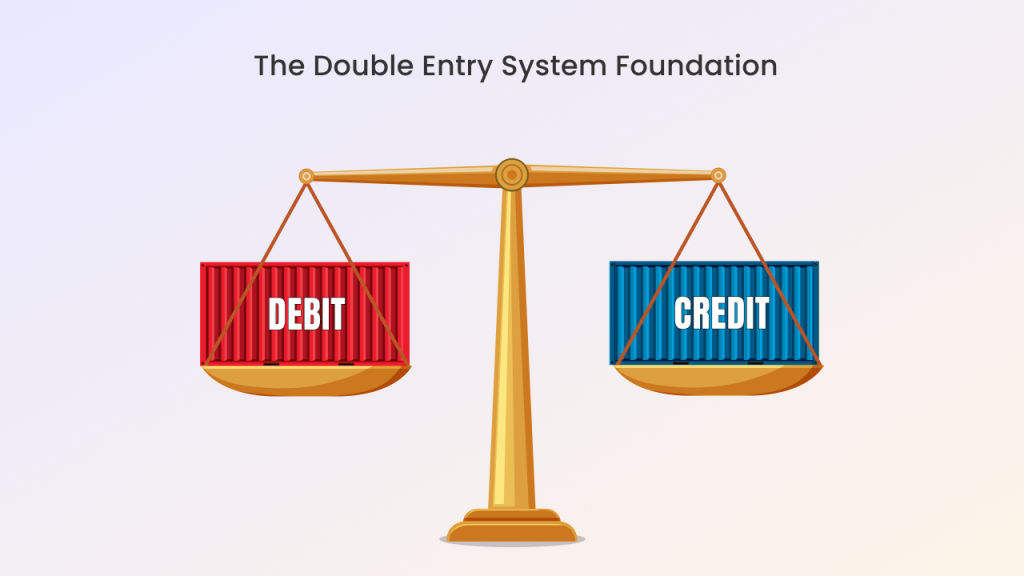
Before diving into what are the golden rules of accounting, let’s understand their foundation. The double-entry system that supports these rules ensures that:
- Every transaction affects at least two accounts
- Total debits always equal total credits
- There’s a clear trail of every business transaction
Understanding the 3 Rules of Accounting with Examples
The golden rules of accounting are fundamental principles that have stood the test of time. These rules provide a systematic framework for recording all financial transactions accurately and consistently.
Account Types in Golden Rules of Accounting
Before applying the 3 golden rules of accounting, you must correctly identify the three fundamental types of accounts. This classification is crucial for determining which rule applies to a particular transaction. Further, we will explain these golden rules of accounting with examples
1. Personal Accounts:
Accounts related to persons or organizations
- Natural Persons: Individual human beings (customers, employees, proprietors)
- Examples: John’s Account, Employee Salary Account, Owner’s Drawings Account
- Artificial Persons: Legal entities created by law (companies, organizations, government bodies)
- Examples: ABC Corporation Account, Municipal Corporation Account, Trust Account
- Representative Personal: Accounts representing a person or group of persons
- Examples: Outstanding Salary Account, Prepaid Insurance Account, Accrued Interest Account
- Key Characteristics: Can have relationships, can owe or be owed money, can provide or receive services
2. Real Accounts:
Accounts related to assets and properties
- Tangible Real Accounts: Physical assets that can be seen and touched
- Examples: Building Account, Cash Account, Machinery Account, Inventory Account, Vehicle Account
- Intangible Real Accounts: Non-physical assets with monetary value
- Examples: Goodwill Account, Patent Account, Trademark Account, Copyright Account, Software Account
- Key Characteristics: Represent actual business worth, can be owned, can be transferred, have economic value
3. Nominal Accounts:
Accounts related to expenses, losses, incomes, and gains
- Expense and Loss Accounts: All costs of doing business
- Examples: Rent Expense Account, Salary Expense Account, Electricity Expense Account, Bad Debts Account
- Income and Gain Accounts: All sources of business revenue
- Examples: Sales Account, Commission Income Account, Interest Received Account, Discount Received Account
- Key Characteristics: Temporary accounts, closed at year-end, determine profit/loss, show business performance
Rule 1: Debit the receiver, Credit the giver
This is a Personal Accounts Rule
From the 3 golden rules of accounting this rule states the below:
Personal accounts represent accounts of individuals, organizations, or entities that your business deals with. This includes:
- Customers who buy from you
- Suppliers who sell to you
- Banks where you have accounts
- Employees who work for you
- Other businesses you work with
The rule works because:
- When someone gives something to your business, they should be credited (thanked)
- When someone receives something from your business, they should be debited (charged)
Key Points to Remember:
- This rule applies to all dealings with people or organizations
- Focus on the other party’s perspective when applying this rule
- Every transaction has two sides – the giver and the receiver
- The rule applies to both money and goods given on credit
You may also be interested in learning about Debit Note and Credit Note.
Example Transactions:

Customer pays money:
| Cash Account (Debit) | ₹5,000 |
| Customer Account (Credit) | ₹5,000 |
You pay supplier:
| Supplier Account (Debit) | ₹10,000 |
| Bank Account (Credit) | ₹10,000 |
Rule 2: Debit all expenses and losses, Credit all incomes and gain
This is a Nominal Accounts Rule
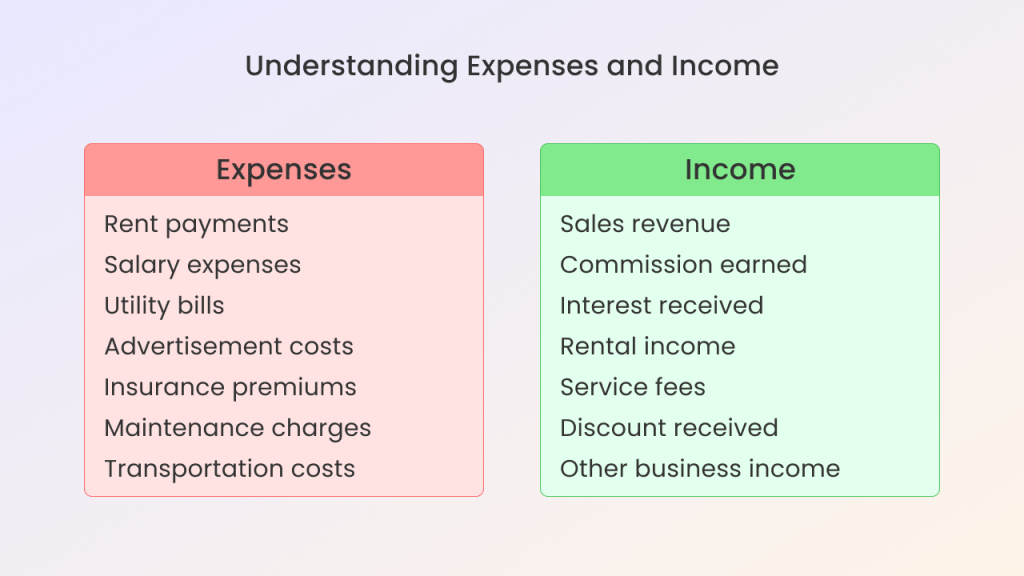
Nominal accounts are temporary accounts that close at the end of each accounting period. They track:
Why This Golden Rule of Accounting Works:
- Expenses reduce your business wealth (Debit)
- Income increases your business wealth (Credit)
- At year-end, comparing total debits and credits shows profit or loss
- Helps track business performance over time
Important Considerations:
- All expenses must be properly categorized
- Income should be recorded when earned
- Match expenses with related income
- Keep supporting documents for all entries
Read More: What Are Accounting Standards and Principles
Example Transactions:
Monthly Expenses:
| Rent Expense (Debit) | ₹5,000 |
| Electricity Expense (Debit) | ₹2,000 |
| Cash Account (Credit) | ₹7,000 |
Business Income:
| Cash Account (Debit) | ₹10,000 |
| Sales Revenue (Credit) | ₹10,000 |
Rule 3: Debit what comes in, Credit what goes out
This is a Real Accounts Rule
Real accounts represent assets and liabilities that carry forward to the next accounting period. These include:
Assets (Physical Items):
- Buildings
- Machinery
- Furniture
- Vehicles
- Computers
- Inventory
- Cash
Liabilities:
- Loans
- Mortgages
- Outstanding payments
How to Apply This Golden Rule of Accounting:
- For Physical Assets:
- When asset comes in: Debit the asset account
- When asset goes out: Credit the asset account
- For Cash:
- When cash comes in: Debit cash account
- When cash goes out: Credit cash account
Key Points:
- Real accounts continue from one year to next
- They show actual business worth
- Physical verification is possible
- Values may change due to depreciation
Example Transactions:
Buying New Equipment:
| Equipment Account (Debit) | ₹50,000 |
| Bank Account (Credit) | ₹50,000 |
Selling Old Furniture:
| Cash Account (Debit) | ₹15,000 |
| Furniture Account (Credit) | ₹15,000 |
How to Apply These Golden Rules of Accounting in Transaction?
Follow this step-by-step process to ensure accurate application of the 3 rules of accounting for every transaction:
1. Identify and Analyze All Accounts Involved:
- Determine each account affected by the transaction
- List all accounts that will need entries
- Consider both obvious and implicit accounts affected
- Review transaction documentation for all relevant accounts
2. Determine the Precise Account Types:
- Classify each account as Personal, Real, or Nominal
- For Personal: Identify if natural, artificial, or representative
- For Real: Determine if tangible or intangible
- For Nominal: Clarify if expense/loss or income/gain
3. Apply the Appropriate Golden Rule:
- For each account, apply its corresponding rule
- Consider the transaction from each account’s perspective
- Ensure the rule application matches the economic reality
- Reference the rule summary table when uncertain
4. Verify Equal Debits and Credits:
- Total all debit amounts from the transaction
- Total all credit amounts from the transaction
- Confirm that total debits equal total credits
- Check that each account has only one entry (debit or credit)
5. Create Proper Transaction Narration:
- Write a clear description of what happened
- Include relevant dates, invoice numbers, or reference documents
- Be specific enough that anyone can understand the transaction
- Avoid vague terms that could cause confusion later
6. Document Supporting Evidence:
- Attach or reference all supporting documents
- Note the location of physical documents if applicable
- Create clear audit trail connections
- Ensure compliance with document retention policies
7. Review for Special Considerations:
- Check if transaction has tax implications
- Verify if transaction affects financial ratios
- Consider impact on financial statements
- Identify any disclosure requirements
8. Record the Entry:
- Enter the transaction in accounting system
- Verify all amounts and accounts once more
- Assign proper transaction date
- Save or post the completed entry
Quick Reference Guide to Golden Rules of Accounting
This comprehensive guide will help you quickly apply the golden rules of accounting with examples to any business transaction with confidence and accuracy.
Golden Rules Summary Table with Examples
| Account Type | Golden Rule | Example Transaction | Journal Entry |
| Personal Accounts | Debit the receiver, Credit the giver | Customer pays outstanding invoice of ₹10,000 | Bank A/c Dr ₹10,000<br>To Customer A/c Cr ₹10,000 |
| Real Accounts | Debit what comes in, Credit what goes out | Purchase office furniture for ₹25,000 | Furniture A/c Dr ₹25,000<br>To Bank A/c Cr ₹25,000 |
| Nominal Accounts | Debit expenses/losses, Credit incomes/gains | Earn commission income of ₹5,000 | Bank A/c Dr ₹5,000<br>To Commission Income A/c Cr ₹5,000 |
Additional Rules to Remember:
- Assets = Liabilities + Owner’s Equity
- For every debit, there must be an equal credit
- Profit = Revenue – Expenses
- Cash basis records when money changes hands
- Accrual basis records when transaction occurs
It’s Time To Conclude!
The golden rules of accounting might seem complex at first, but they follow a logical pattern:
- Personal accounts focus on people
- Nominal accounts track business performance
- Real accounts show what you own and owe
Master these rules, and you’ll have a solid foundation for:
- Making better business decisions
- Maintaining accurate records
- Understanding your financial position
- Planning for future growth
Remember: Practice makes perfect. Start applying these golden rules of accounting with examples to your daily transactions, and soon they’ll become second nature.
Also, do you want to manage your accounting with these golden rules while handling billing and GST returns all in one place? Try Munim for 7 days free! It’s the simplest way to implement these golden rules in your day-to-day business operations.
FAQs
Q1: What are the golden rules of accounting in simple terms?
The three golden rules are:
- Personal Accounts: Debit the receiver, credit the giver
- Real Accounts: Debit what comes in, credit what goes out
- Nominal Accounts: Debit all expenses and losses, credit all incomes and gains
Q2: Why are the golden rules of accounting important?
The golden rules of accounting provide a framework for recording all business transactions correctly. They help maintain accurate books, prevent errors, and ensure that financial statements reflect the true picture of your business.
Q3: How do I know which among the 3 golden rules of accounting to apply?
First identify the type of account (Personal, Real, or Nominal). Then:
- If dealing with people/organizations → Use Personal Account rule
- If dealing with assets/property → Use Real Account rule
- If dealing with expenses/income → Use Nominal Account rule
Q4: Can different rules apply to the same transaction?
Yes! Many transactions involve multiple accounts. For example, when you sell goods to a customer:
- Personal Account rule for the customer account
- Nominal Account rule for the sales income
- Real Account rule for the inventory
Q5: What happens if I apply the wrong rule?
Applying the wrong rule leads to incorrect entries, which can cause:
- Imbalanced books
- Incorrect financial statements
- Difficulty in tracking money
- Problems during audits
Q6: How do these rules work with modern accounting software?
Modern accounting software automatically applies these rules in the background. However, understanding them helps you:
- Set up accounts correctly
- Spot errors quickly
- Make manual adjustments when needed
- Better understand your financial reports
Q7: Do these rules change for different types of businesses?
No, these rules remain the same regardless of business type. However, their application might vary depending on your business nature and the types of transactions you commonly handle.
Q8: How do I practice applying these rules?
Start with:
- Recording simple daily transactions
- Using practice exercises
- Maintaining a personal cash book
- Working with sample transactions
- Using accounting worksheets
Q9: How do digital payments and online transactions follow these rules?
Digital transactions follow the same rules as cash transactions. For example, when you receive money through online payment:
- Debit your bank account (money coming in)
- Credit the customer’s account (they’re giving money)
Disclaimer: "This blog post is for informational purposes only. For specific tax advice related to your business, please consult a qualified Chartered Accountant or GST practitioner."
About the author
Related Articles
Explore the latest market news, useful resources for business, and Munim updates.