Why MSME Loans Are the Best Option for Small Businesses: Schemes, Rates, and Eligibility
 AuthorJayant Surana
 Reviewed ByMadhav Bhayani



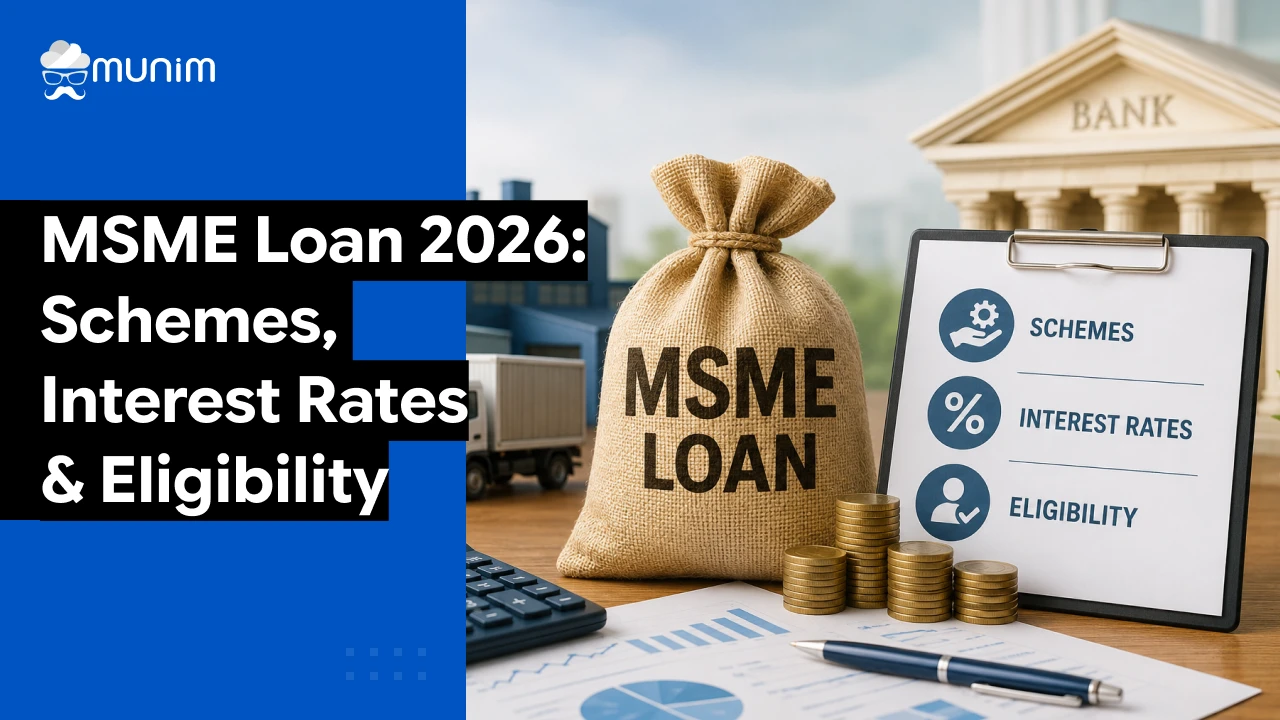
Every successful business starts with a vision, but turning that vision into reality requires capital. Whether you are expanding operations, upgrading machinery, or managing daily cash flow, finding the right financing is crucial.
For entrepreneurs, an MSME business loan is often the most reliable and cost-effective funding source available. But with so many financial products on the market, why is an MSME loan for small business the smartest choice?
In this comprehensive guide, we will break down everything you need to know. Right from understanding the core concepts to exploring the top government schemes. You will find out the current interest rates and eligibility rules for 2026.
What is MSME Loan? Meaning & Basics
In simple terms, an MSME loan is a specialised credit facility offered by banks, Non-Banking Financial Companies (NBFCs), and government bodies to Micro, Small, and Medium Enterprises.
These loans are designed to support the unique financial needs of smaller setups. It covers expenses such as infrastructure development, inventory purchases, and working capital. To fully grasp the MSME loan meaning, it is important to understand that these aren’t standard corporate loans.
MSME loans are structured with smaller ticket sizes, flexible repayment terms, and significant government backing. It helps ensure that small businesses are not crushed by high-interest debts.
Why is an MSME Business Loan the Best Option?
There are several reasons why these loans outshine traditional commercial credit for growing businesses:
- Collateral-Free Options: Thanks to government initiatives, many small businesses can access funding without pledging collateral such as property or machinery.
- Subsidised Interest Rates: Government-backed schemes often offer interest subventions (subsidies), making the overall cost of borrowing much lower.
- Fast-Track Processing: Specialised digital platforms (like the 59-Minute Loan portal) have drastically reduced approval times.
- Flexible End-Use: The funds can be used for almost any operational need. You can buy raw materials to expand your digital footprint and marketing efforts.
Simplify Your Business Operations
Designed to give you speed, control, and accuracy in daily accounting tasks.
 Save time with automated accounting workflows
- Get 35+ detailed business reports easily
- Access your business anytime, anywhere
 Save time with automated accounting workflows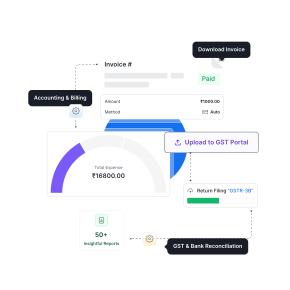
Top Government MSME Loan Schemes in 2026
The government continually introduces and updates programs to boost entrepreneurship. Choosing the right MSME loan scheme depends entirely on your specific business goals, industry, and size. Here are the leading options currently available:
| Scheme Name | Key Benefit | Target Audience |
| Mudra Yojana (PMMY) | Up to ₹10 Lakh (No collateral required) | Micro-enterprises & startups |
| CGTMSE | Guarantee cover up to ₹5 Crore | Small businesses lacking hard assets |
| PMEGP | 15% to 35% margin money subsidy | First-generation entrepreneurs |
| Stand-Up India | Loans from ₹10 Lakh to ₹1 Crore | Women & SC/ST entrepreneurs |
Mudra Loan Limits & CGTMSE Scheme Details (2026)
If your primary goal is securing a collateral free business loan, recent government updates have made it easier than ever. Most notably, the Mudra loan limit 2026 has been enhanced; entrepreneurs who have successfully repaid previous loans can now access up to ₹20 lakh under the newly introduced “Tarun Plus” category.
For businesses requiring higher capital, exploring the CGTMSE scheme details is vital. The Credit Guarantee Fund Trust for Micro and Small Enterprises now covers loans up to ₹5 Crore.
By guaranteeing up to 85% of the loan amount, the scheme completely shifts the risk from the bank to the government trust, allowing lenders to approve large sums without asking you to pledge property.
Current MSME Loan Interest Rate
The MSME loan interest rate you receive is not fixed across the board. It fluctuates based on the lender, your credit profile, and the specific scheme you apply for.
As of 2026, interest rates generally start around 7.00% to 8.50% annually at public sector banks and can go up to 18% with NBFCs for unsecured loans.
Factors that directly influence your final rate include:
- Credit Score: A CIBIL score above 750 secures the best rates and fastest approvals.
- Business Vintage: Established businesses (3+ years of operations) are viewed as lower risk by lenders.
- Financial Health: Consistent turnover, profitability, and clear GST filings lower the perceived risk.
- Collateral: Providing collateral always reduces the interest rate compared to unsecured options.
Working Capital And Securing a Loan Without ITR
Not all funding is meant for buying heavy machinery. Often, businesses just need a reliable working capital loan for MSMEs to bridge the gap between paying suppliers and receiving money from clients.
A common roadblock for very new micro-enterprises is a lack of financial history. While difficult, securing a business loan without ITR is possible. Many new-age NBFCs and digital lenders evaluate an application based on 12 months of bank statements or consistent GST filing data instead of traditional tax returns.
Regardless of the lender you choose, do not ignore your Udyam registration benefits. Holding an active Udyam certificate is mandatory for these loans. It also grants you access to priority sector lending rates and legal protection against delayed payments from buyers.
MSME Loan Eligibility Criteria
Lenders need assurance that your business is stable and capable of repayment. While specific requirements vary by scheme, standard MSME loan eligibility criteria include:
- Business Registration: You must possess a valid Udyam Registration Certificate and active GST registration.
- Age Limit: The applicant must generally be between 21 and 65 years old.
- Business Vintage: Most lenders require the business to be operational for at least 1 to 3 years (except for startup-specific schemes like Mudra Shishu).
- Financial Records: You will need to provide 6–12 months of bank statements and 1–2 years of Income Tax Returns (ITR).
- Credit History: A clean repayment record with no previous loan defaults is mandatory.
Before approaching any bank, you must officially register your MSME business.
Step-by-Step Guide: How to Apply for an MSME Loan
Knowing you are eligible is only half the battle; navigating the application process efficiently is what actually secures the funds. Follow these critical steps to ensure your application is approved without unnecessary delays:
Step 1: Obtain Your Udyam Registration
Before approaching any bank, you must officially register your business. Visit the government’s official Udyam Registration portal, enter your Aadhaar details, and generate your certificate. Doing it is mandatory for claiming priority sector benefits and government subsidies.
Step 2: Prepare a Robust Financial Profile and Business Plan
Lenders use rigorous credit risk assessment models to predict the likelihood of loan default. To pass this evaluation, organise your financial data meticulously. Gather the documents listed below:
- KYC Documents (Aadhaar, PAN)
- Business Address Proof (Utility bill, lease agreement)
- Udyam Registration Certificate
- GST Returns (last 12 months)
- Bank Statements (last 6-12 months)
If you are applying for a larger amount, include a detailed business plan with clear cash flow projections showing exactly how the loan will generate revenue.
Step 3: Select the Right Scheme and Lender
Do not apply to multiple banks simultaneously, as this can negatively impact your credit score. Instead, compare interest rates and match your specific need to the right program (e.g., PMEGP for manufacturing setups or Mudra for micro-retailers).
Funding limits often differ based on the sector. For instance, manufacturing businesses usually require higher capital for machinery compared to service-based businesses. Schemes like PMEGP have different project cost limits for each (₹50 lakh for manufacturing vs. ₹20 lakh for services).
Step 4: Apply Online via Official Portals
To streamline approvals, use government-backed digital infrastructure. Portals like JanSamarth or the PSB Loans in 59 Minutes platform use predictive analytics to evaluate your tax and banking data instantly. It provides fast-tracked, in-principle approvals before you even visit a bank branch.
Ensure your GST registration is active and up to date before submitting any application, as GST filing history is a key data point lenders review.
Conclusion
By leveraging the right scheme and maintaining strong financial discipline, an MSME loan can be the ultimate catalyst for your business’s success. Ensure your paperwork is organised, compare multiple lenders, and take the next step toward scaling your enterprise with confidence!
Frequently Asked Questions (FAQs)
1. How many days does it take to get an MSME loan approved?
Approval times vary heavily by lender and scheme. Unsecured digital loan applications through the “59-Minute” portal can receive in-principle approval instantly and disburse funds within 7 to 10 days. Traditional bank processing large collateral-backed loans may take 3 to 4 weeks.
2. Can a new startup get an MSME business loan without a credit history?
Yes. While a strong financial history helps, the government’s Mudra Yojana (specifically the “Shishu” tier up to ₹50,000) and the Stand-Up India scheme are specifically designed for new entrepreneurs and startups.
3. What is the minimum CIBIL score required for an MSME loan?
Traditional banks generally require a minimum CIBIL score of 700 to 750 to offer favorable terms and fast processing. Some NBFCs might entertain lower scores at higher interest rates.
4. What happens if a business defaults on an unsecured MSME loan?
Even if a loan is “collateral-free” under schemes like CGTMSE, defaulting has severe consequences. Your business and personal credit scores will drop drastically, severely limiting future borrowing. The lender can also initiate legal recovery proceedings.
5. Is the MSME loan interest rate fixed or floating?
Most MSME loans offered by public / private banks are linked to an external benchmark (like the Repo Rate). They provide floating interest rates that change with market conditions. However, some NBFCs offer fixed-rate loans, carrying slightly higher initial percentages.
Disclaimer: "This blog post is for informational purposes only. For specific tax advice related to your business, please consult a qualified Chartered Accountant or GST practitioner."
About the author

Jayant is a senior content writer and digital marketer, known for his extensive experience in commercial SEO writing, blog content, website copy, and B2B communication. Since 2019, he has worked on diverse freelance projects across industries. His portfolio includes articles, landing pages, social media content, and web development collaborations. Blending clarity, creativity, and strategic messaging, he specialises in crafting professional, audience-focused content for themunim.com.
Related Articles
Explore the latest market news, useful resources for business, and Munim updates.