
What Was the Rajiv Gandhi Equity Savings Scheme? History, Benefits & Section 80CCG
 AuthorJayant Surana
 Reviewed ByMadhav Bhayani



- The History and Purpose of the RGESS Scheme
- Eligibility: Who Could Invest?
- Why Was the Scheme Discontinued?
- Legacy and Current Alternatives
- Tax Benefits Under Section 80CCG of Income Tax Act
- Where Could the Money Be Invested?
- The Complex 3-Year Lock-in Period
- The Bottom Line: Moving Forward
- Frequently Asked Questions (FAQs)
Summary:
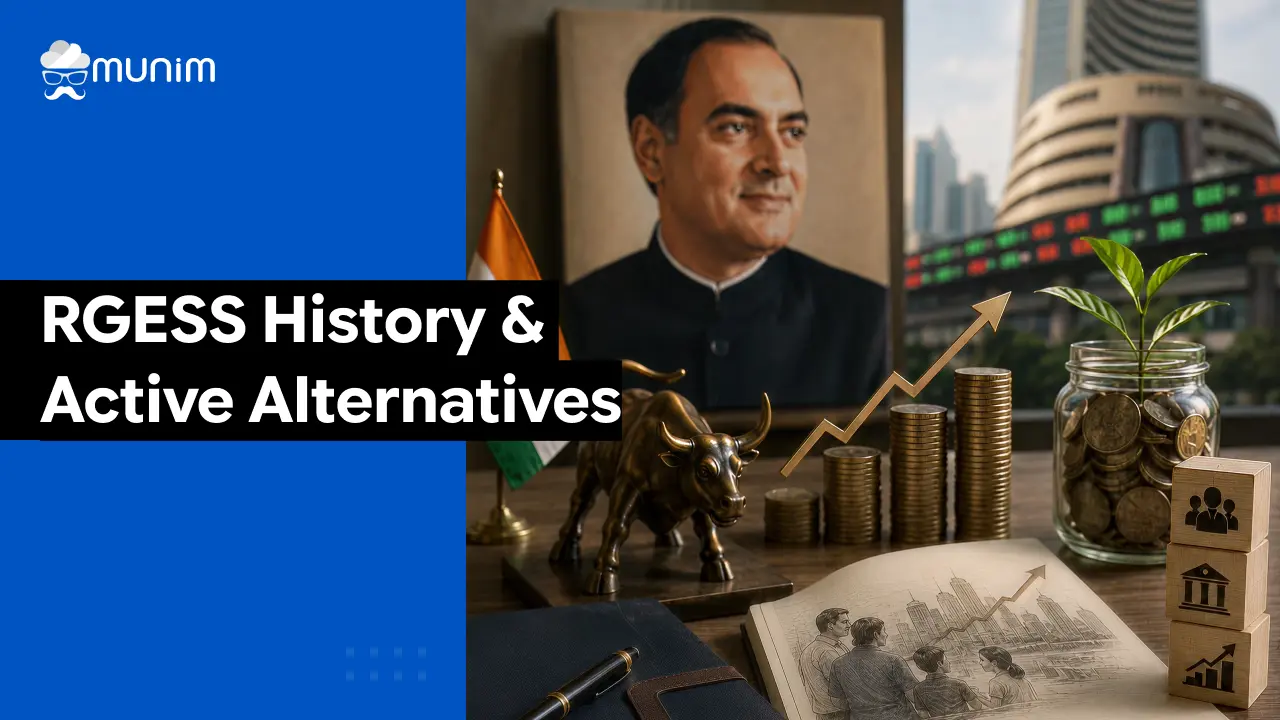
The Rajiv Gandhi Equity Savings Scheme (RGESS) launched in 2012 to help first-time investors enter the stock market. It offered special tax benefits under Section 80CCG. However, the lock-in rules were highly complex. As a result, the government officially closed the RGESS scheme in 2017.
Today, Section 80CCG is completely obsolete. You can no longer use it to claim tax deductions. Instead, modern taxpayers use Equity Linked Savings Schemes (ELSS) under Section 80C. Read on to explore the history of RGESS and discover the best active alternatives to save on taxes today.
Have you heard of the Rajiv Gandhi Equity Savings Scheme? It was a unique tax-saving option. The government created it specifically for first-time investors. The main goal was to build an equity culture in India.
However, the scheme was discontinued in 2017. You can no longer invest in it.
Even so, the RGESS scheme remains an important part of India’s financial history. It explains how early retail investing grew. It also shows why modern options like ELSS exist today.
Here is a simple guide to how it worked, its benefits under Section 80CCG of Income Tax Act, and why it ultimately ended.
Manage accounting, expenses, and financial reports easily with Munim’s smart business accounting software.
The History and Purpose of the RGESS Scheme
The government announced the scheme in the 2012–13 Union Budget. The objective was simple. It wanted to move middle-class savings into the stock market.
To attract people, the government offered a special tax break. This was the 80CCG Section.
This deduction was for brand-new equity investors only. Best of all, it was an extra benefit. It applied above the standard Section 80C limit. This made it very popular for young taxpayers at the time.
Eligibility: Who Could Invest?
The government wanted to protect new investors from high market risks. So, the rules were strict.
- First-Time Investors Only: The investor must not have had a history of trading in the equity or derivatives market prior to opening an RGESS-designated Demat account.
- Income Ceiling: Initially, the gross total income limit was capped at ₹10 Lakhs in 2012–13. This was subsequently raised to ₹12 Lakhs per annum in the 2013–14 Budget to widen the investor net.
- Residency: The scheme was only open to Resident Individuals. Non-Resident Indians (NRIs), Hindu Undivided Families (HUFs), and corporate entities were ineligible.
Why Was the Scheme Discontinued?
The scheme officially ended on April 1, 2017. Why did it fail to catch on?
- Complexity: The flexible lock-in rules confused people. It was too hard for beginners to track.
- High Risk: Direct stock investing is still risky. It was too volatile for many first-time investors.
- Strict Rules: The ₹12 Lakhs income cap left out many people. The strict Demat rule blocked others.
Legacy and Current Alternatives
Today, the 80CCG Section is totally obsolete. You cannot use it to save taxes anymore.
Instead, taxpayers use the Equity Linked Savings Scheme (ELSS). ELSS falls under Section 80C. It is much easier to understand and use.
RGESS vs. ELSS: A Quick Look
| Feature | Rajiv Gandhi Equity Savings Scheme (Defunct) | ELSS Mutual Funds (Active) |
| Tax Section | Section 80CCG | Section 80C |
| Max Deduction | ₹25,000 (50% of ₹50k investment) | Up to ₹1.5 Lakhs |
| Lock-in Period | 3 Years (1 Fixed + 2 Flexible) | 3 Years (Strict Fixed Lock-in) |
| Eligibility | First-time investors earning under ₹12 Lakhs | All investors, no income caps |
The Rajiv Gandhi Equity Savings Scheme is now closed. However, it did its job. It introduced millions of Indians to the stock market. It paved the way for the mutual fund boom we see today.
Simplify Your Business Operations
Designed to give you speed, control, and accuracy in daily accounting tasks.
 Save time with automated accounting workflows
- Get 35+ detailed business reports easily
- Access your business anytime, anywhere
 Save time with automated accounting workflows
Tax Benefits Under Section 80CCG of Income Tax Act
The tax deduction structure was one of the most unique aspects of the scheme:
- Maximum Investment: Investors could invest up to ₹50,000 in eligible securities.
- Deduction Limit: The 80CCG Section allowed a deduction of 50% of the invested amount.
- Maximum Tax Saving: The maximum deduction from taxable income was ₹25,000 in a single financial year.
- Duration: Investors could claim this benefit for three consecutive assessment years.
Learn How Accounting Software Saves Time in Tax Season. Read Now!
Where Could the Money Be Invested?
To reduce risk, the scheme limited your choices. You could not buy risky penny stocks. You had to choose safe, large-cap options. Eligible securities included:
- Blue-Chip Stocks: Shares belonging to the BSE-100 or CNX-100 indices.
- Public Sector Undertakings (PSUs): Government enterprises categorised as Maharatna, Navratna, or Miniratna.
- RGESS Mutual Funds: Specially compliant RGESS mutual funds and ETFs that invest exclusively in the eligible securities mentioned above.
The Complex 3-Year Lock-in Period
One of the defining features and a major point of confusion for many was the lock-in period. The total lock-in duration was three years, split into two phases:
- Fixed Lock-in (Year 1): From the date of purchase until the end of the first year, the securities were completely frozen. You could not sell, pledge, or trade them.
- Flexible Lock-in (Years 2 and 3): During the second and third years, investors were permitted to trade the securities. But there was a catch. If you sold, you had to reinvest the money back into eligible stocks. If you didn’t, you lost your tax benefits.
The Bottom Line: Moving Forward
The RGESS scheme was a bold financial experiment. It aimed to make equity investments popular. While its complex lock-in rules led to its closure, it left behind an important lesson. It proved that retail investors prefer simple, well-structured financial products.
If you want to grow your wealth and save taxes, use modern alternatives to the old 80CCG Section. In 2026, you can invest in ELSS mutual funds, which offer higher deduction limits. It comes with professional fund management and a simpler three-year lock-in structure.
Frequently Asked Questions (FAQs)
What is Section 80CCG of the Income Tax Act?
Section 80CCG, also known as the Rajiv Gandhi Equity Savings Scheme (RGESS), was a tax-saving provision. It allowed first-time retail investors to claim a 50% tax deduction on investments up to ₹50,000 in approved large-cap stocks and mutual funds.
Is the 80CCG Section still valid?
No. The government discontinued the Rajiv Gandhi Equity Savings Scheme starting April 1, 2017. You can no longer claim tax deductions under Section 80CCG for any new investments.
What is the 80CCG income tax notice?
An 80CCG income tax notice is sent to taxpayers who violated the strict lock-in rules of the scheme. If an investor sold their RGESS shares during the flexible lock-in period but failed to reinvest, the tax department sends a notice to reverse the tax benefit.
What happened to existing RGESS investments after the scheme closed?
If you invested in the scheme before it was discontinued, your investments remained safe in your Demat account. Once the mandatory three-year lock-in period expired, the shares became regular equity holdings. You can sell or trade them freely without tax penalties.
Disclaimer: "This blog post is for informational purposes only. For specific tax advice related to your business, please consult a qualified Chartered Accountant or GST practitioner."
About the author

Jayant is a senior content writer and digital marketer, known for his extensive experience in commercial SEO writing, blog content, website copy, and B2B communication. Since 2019, he has worked on diverse freelance projects across industries. His portfolio includes articles, landing pages, social media content, and web development collaborations. Blending clarity, creativity, and strategic messaging, he specialises in crafting professional, audience-focused content for themunim.com.
Related Articles
Explore the latest market news, useful resources for business, and Munim updates.