
How to Start a Grocery Store Business in India: A Complete Guide
 AuthorMehul Jagwani
 Reviewed ByMadhav Bhayani



Summary:
Starting a clothing business in India needs a clear idea, the right products, and understanding your target customers. From choosing a business model to GST registration, sourcing materials, and setting up sales channels, each step is important. Managing pricing, branding, and daily operations properly helps your business grow smoothly.
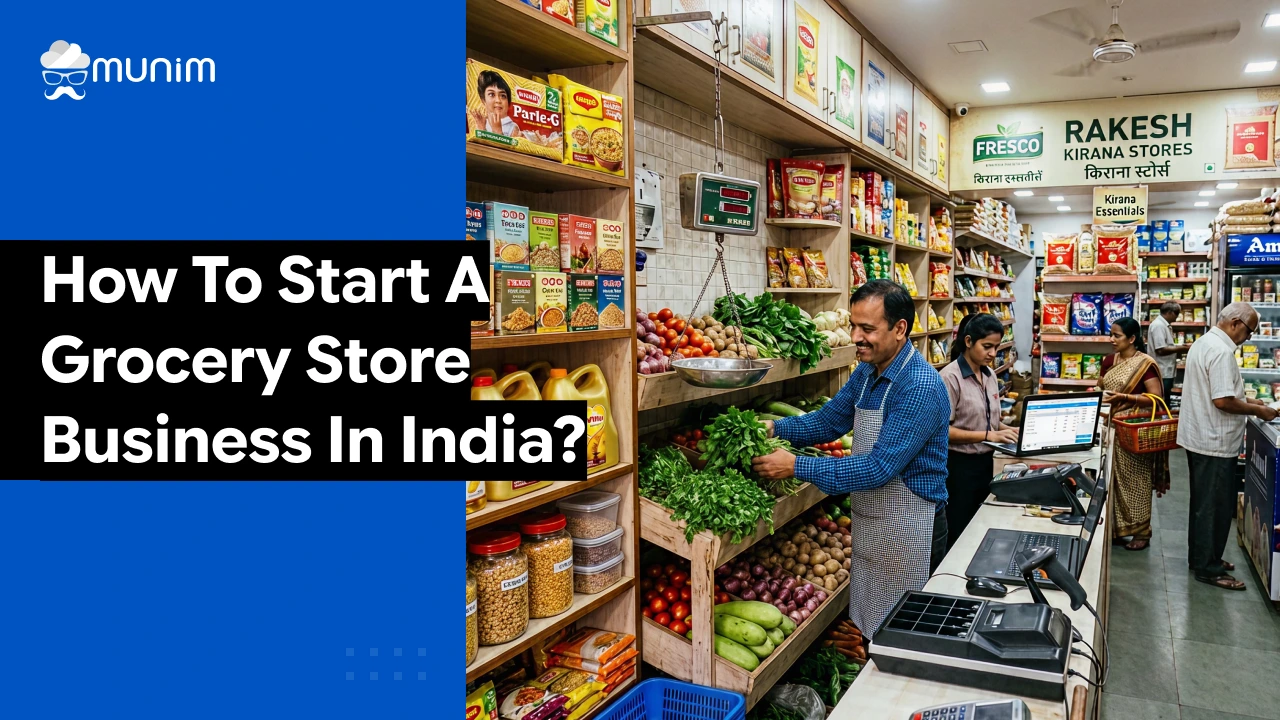
India runs its neighbourhood grocery stores. Whether it is the corner kirana shop in a small town or a well-organised grocery outlet in a metro city, the demand for daily essentials never slows down. If someone is thinking about how to start a grocery store business in India, the timing has never been better.
This guide breaks down the entire process, step by step, so anyone from a first-time entrepreneur to someone expanding an existing business can follow along without confusion.
Track sales, stock & GST in one place with Munim.
Step-By-Step Process to Start a Grocery Store in India
Starting a grocery store involves a logical sequence of decisions and actions. Following these steps in order ensures that the foundation is solid before moving to operational details.
Step 1: Research the Market and Choose Your Niche
Before anything else, proper market research is non-negotiable. Anyone wondering how to open a small grocery store should start by understanding the local demand in their target area.
What to look at during market research:
- Who are the existing competitors in the area?
- What products do local residents buy most frequently?
- Is there a gap, such as organic products, imported items, or a focus on specific regional staples?
- What is the average spend per household in that locality?
Step 2: Write a Grocery Store Business Plan
A grocery store business plan is not just a formality. It is the document that keeps the business focused, helps in securing loans, and sets realistic expectations for growth.
A solid grocery store business plan should include:
- Business Overview
- Target Market
- Products and Pricing
- Investment and Financial Projections
- Marketing Approach
Step 3: Decide the Business Structure
Before applying for any licence or opening a bank account, the business needs a legal structure. The most common options for a grocery store in India are:
- Sole Proprietorship
- Partnership Firm
- Limited Liability Partnership (LLP)
- Private Limited Company
Step 4: Arrange Capital and Funding
One of the first practical questions anyone has when starting a grocery store business is: how much does it cost?
The answer depends on the size and location of the store.
| Store Type | Estimated Setup Cost |
| Small neighbourhood kirana (under 200 sq ft) | Rs. 2 to 5 lakhs |
| Medium self-service store (200 to 800 sq ft) | Rs. 5 to 15 lakhs |
| Large supermarket-style outlet | Rs. 20 lakhs and above |
Step 5: Choose the Right Location
Location can make or break a grocery store. The best spot is one with high foot traffic, easy accessibility, and ideally limited direct competition nearby.
Key factors to evaluate before finalising a location:
- Residential density
- Parking and access
- Visibility
- Proximity to competitors
- Rental cost vs expected revenue
Once the location is finalised, a proper lease agreement with the landlord should be signed and registered.
Step 6: Obtain the Required Licenses and Registrations
This is one of the most important steps in the entire process. Running a grocery store without the right licenses puts the business at legal risk. Here is what is required:
- Trade License
- FSSAI License
- Shop and Establishment License
- GST Registration
- Professional Tax Registration
Step 7: Set Up the Store
Once the legal groundwork is in place, it is time to set up the physical store.
Store Layout
A well-planned store layout helps customers navigate easily and encourages them to buy more. Keep essentials like grains, oil, and dairy at the back of the store so customers walk through other product sections to reach them. Place high-margin items at eye level.
Storage and Refrigeration
Adequate storage for dry goods, proper refrigeration for dairy and perishables, and ventilation are all essential for maintaining product quality.
Billing and POS System
A billing system is not optional. It handles sales, generates invoices, tracks inventory, and is essential for filing GST returns accurately. A good billing software should ideally integrate inventory management with GST-compliant invoicing.
Staff
For a small store, one or two employees are enough to start. For a larger store, plan for a cashier, floor staff, and someone to manage stock replenishment.
Step 8: Source Products and Build Supplier Relationships
The profitability of a grocery store depends heavily on the margins available on products. Good supplier relationships translate into better purchase prices, credit terms, and reliable supply.
Sources for inventory:
- Wholesale markets: APMC mandis for staples like grains, pulses, and vegetables
- Direct brand distributors: For FMCG brands like Amul, Britannia, ITC, Parle, and HUL
- C&F agents: Carrying and forwarding agents who supply products on behalf of manufacturers in a specific region
- Online B2B platforms: JioMart Partner, Udaan, and similar platforms that offer wholesale pricing directly to retailers
Step 9: Market the Store and Build a Customer Base
A grocery store cannot survive on foot traffic alone in today’s environment. A simple but consistent marketing approach is necessary, especially in the first few months.
Practical marketing ideas for grocery stores in India:
- Google Business Profile: List the store on Google Maps with address, phone number, and photos. This is free and drives local discovery.
- WhatsApp Business: Create a broadcast list of regular customers. Share daily offers, new arrivals, and festive deals.
- Loyalty programs: Simple points-based systems or flat discount cards for regular buyers encourage repeat visits.
- Housing society tie-ups: Many residents’ welfare associations in urban areas are open to tie-ups with local grocery stores for bulk orders or weekly delivery.
- Festival offers: Diwali, Holi, Eid, Christmas, and other festivals are high-spending periods. Plan ahead with targeted promotions.
Closing Notes
Starting a grocery store business in India is a practical, proven, and rewarding path for entrepreneurs at all levels. The demand is real, the business model is well understood, and the support ecosystem for small retailers is stronger than ever. The key is to plan carefully, stay legally compliant from the start, and use the right tools to manage billing, inventory, and GST without letting operations become overwhelming.
Run Your Grocery Store Without Operational Hassles. Request a Demo Today!
FAQs: How to Start a Grocery Store Business in India
What licenses are required to open a grocery store in India?
A grocery store needs a Trade License from the local municipal authority, an FSSAI license for selling food products, a Shop and Establishment License under state rules, and GST registration once the annual turnover crosses the applicable threshold.
Is GST registration mandatory for a small grocery store?
GST registration becomes mandatory when the store’s annual turnover exceeds Rs. 40 lakhs (or Rs. 20 lakhs in special category states like those in the Northeast).
Can I start a grocery store with Rs. 1 lakh?
Starting with Rs. 1 lakh is possible but it limits the scope significantly. It can fund a very small home-based or roadside setup with a narrow product range.
How do I manage GST compliance for a grocery store?
A registered grocery store needs to file GSTR-1 (sales return), GSTR-3B (summary return with tax payment), and GSTR-9 (annual return). Using billing software that is integrated with GST filing, like Munim, makes this process significantly easier.
Is a grocery store profitable in India?
Yes, Most grocery stores in India with a considerable footfall are profitable.
What is the 3 3 3 rule for groceries?
The 3-3-3 rule is a retail inventory principle: products should turn over (sell completely) every 3 days, shelf space should be restocked every 3 hours during peak times, and prices should be checked against competitors every 3 weeks.
How much profit margin is in kirana stores?
Kirana stores typically operate on 8-15% profit margins on average products. Branded FMCG items yield 5-10%, while unbranded staples, spices, and dry fruits offer 12-20%.
Disclaimer: "This blog post is for informational purposes only. For specific tax advice related to your business, please consult a qualified Chartered Accountant or GST practitioner."
About the author

Mehul is a seasoned content writer with a passion for simplifying complex accounting and GST topics. With a keen interest in entrepreneurship and business management, he specializes in creating informative and engaging content for themunim.com. His goal is to help businesses understand and implement accounting and GST software solutions effectively. When he's not crafting content, Mehul enjoys exploring new places and spending time with his Golden Retriever.
Related Articles
Explore the latest market news, useful resources for business, and Munim updates.