How to Start a Hardware Store Successfully in India
 AuthorMehul Jagwani
 Reviewed ByMadhav Bhayani



- Step 1: Create a Business Plan
- Step 2: Estimate Your Investment
- Step 3: Choose a Business Structure
- Step 4: Obtain All Required Licenses and Registrations
- Step 5: Select the Right Location
- Step 6: Source Reliable Suppliers
- Step 7: Stock the Right Products and Manage Inventory
- Step 8: Set Up the Store Layout
- Step 9: Hire and Train Staff
- Step 10: Market the Store Locally
- Closing Notes
- Frequently Asked Questions on Hardware Store
Summary:
Starting a hardware store in India requires a suitable location, a well-planned product range, reliable suppliers, and sufficient investment for inventory and working capital. Register the business, obtain applicable licences such as Shop and Establishment registration, GST registration, and a local trade licence, and use billing software to manage sales, GST invoices, and stock. Focus on products that match local demand and build relationships with contractors, plumbers, electricians, and homeowners.
For anyone wondering how to start a hardware store, this is arguably one of the best times to enter the business. The demand for tools, building materials, plumbing supplies, electrical fittings, and paints is not slowing down anytime soon. In fact, rapid urbanization and a boom in Tier 2 and Tier 3 cities have opened up opportunities that did not exist even five years ago.
This guide breaks the entire process into clear, manageable steps so that first time entrepreneurs and seasoned business owners alike can make informed decisions.
Step 1: Create a Business Plan
- Define your product range (specialized vs general hardware)
- Identify the target market (homeowners, contractors, builders, industries)
- Estimate startup costs including rent, inventory, licenses, and working capital
- Outline a pricing strategy based on local competition
- Set revenue targets and a realistic break even timeline (12 to 24 months typical)
- A written plan is essential for securing business loans from banks or NBFCs
Simplify Your Business Operations
Designed to give you speed, control, and accuracy in daily accounting tasks.
 Save time with automated accounting workflows
- Get 35+ detailed business reports easily
- Access your business anytime, anywhere
 Save time with automated accounting workflows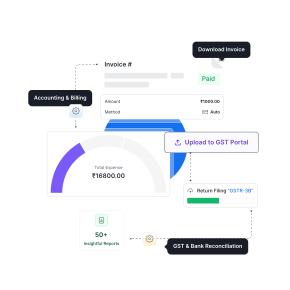
Step 2: Estimate Your Investment
- Shop rent and deposit: ₹50,000 to ₹3,00,000
- Interior setup and fixtures: ₹1,00,000 to ₹3,00,000
- Initial inventory: ₹3,00,000 to ₹15,00,000 (biggest expense)
- Licenses and registrations: ₹5,000 to ₹20,000
- GST Billing software / POS system: ₹5,000 to ₹30,000 per year
- Marketing and branding: ₹20,000 to ₹1,00,000
- Working capital (3 to 6 months): ₹1,00,000 to ₹5,00,000
- Total: Small store ₹5 to 8 lakh | Medium ₹10 to 20 lakh | Large ₹25 to 50 lakh+
- Avoid overstocking in the beginning; start lean and expand with demand
Step 3: Choose a Business Structure
- Sole Proprietorship: Simplest, lowest compliance, ideal for most small stores
- Partnership Firm: When two or more people pool resources; needs a clear partnership deed
- LLP: Offers limited liability with simpler compliance than a company
- Private Limited Company: Best for large operations or external funding plans
- Most first time owners should start with a sole proprietorship
Step 4: Obtain All Required Licenses and Registrations
- Shop and Establishment Act Registration (mandatory, from local municipal body)
- GST Registration (mandatory above ₹40 lakh turnover; voluntary registration recommended)
- GST registration is free on the government portal
- GST 2.0 (September 2025) restructured several slab rates
- E invoicing mandatory from April 2026 for turnover above ₹5 crore
- New invoice series mandatory from April 2026
- Trade License (from local municipal corporation)
- MSME / Udyam Registration (free, online, unlocks subsidies and priority lending)
- Fire Safety Certificate (if stocking paints, thinners, solvents)
- Signage Permission (check local municipal rules)
Step 5: Select the Right Location
- Near construction sites or developing areas (natural contractor traffic)
- In residential neighbourhoods (steady homeowner demand)
- Close to industrial zones (factory and workshop customers)
- Near existing hardware market clusters (walk in traffic advantage)
- Store size: Small 300 to 500 sq ft | Medium 800 to 1,500 sq ft | Large 2,000+ sq ft
- Ensure parking access and easy loading/unloading for bulk buyers
Step 6: Source Reliable Suppliers
- Visit local wholesale markets (Chawri Bazaar in Delhi, Lohar Chawl in Mumbai, etc.)
- Buy directly from manufacturers to cut middlemen and improve margins
- Attend trade shows like India International Hardware Fair, ACETECH, BuildTech India
- Use online B2B platforms like IndiaMART and TradeIndia
- Start with 3 to 5 reliable suppliers for core categories
- Negotiate 15 to 30 day credit terms with regular suppliers
- Always verify product quality before placing large orders
Step 7: Stock the Right Products and Manage Inventory
- Key product categories: Hand tools, power tools, fasteners, plumbing supplies, electrical items, paints, door/window fittings, adhesives, safety equipment
- Use billing software with inventory tracking
- Track fast moving and slow moving items monthly
- Set reorder points for essential items to avoid stockouts
- Conduct physical stock audits quarterly
- Avoid overstocking seasonal or slow moving products
Step 8: Set Up the Store Layout
- Display high demand items at eye level near the counter
- Use clear labels and price tags on all products
- Keep the store clean, well lit, and organized
- Create a separate section for premium or branded products
- Invest in a visible signboard with the store name and key product categories
- A clutter free, well organized store builds customer trust
Step 9: Hire and Train Staff
- A small store needs 1 to 2 helpers; larger stores need dedicated billing and inventory staff
- Prioritize people with basic familiarity with hardware products
- Train staff on product knowledge, pricing, billing system usage, and customer service
- Good customer service is the strongest differentiator in a competitive local market
Step 10: Market the Store Locally
- Google My Business listing (free, essential for “hardware store near me” searches)
- Distribute visiting cards and flyers at construction sites and housing societies
- Build relationships with local plumbers, electricians, and carpenters
- Use WhatsApp Business to share catalogues and offers with regular customers
- Create a basic Facebook and Instagram page
- Offer loyalty discounts or credit terms to repeat customers and contractors
Closing Notes
Starting a hardware store in India is a practical, grounded business opportunity. The demand is consistent, the barriers to entry are manageable, and the market continues to grow year after year. The key is to approach it with a clear plan, realistic cost expectations, proper compliance, and a genuine focus on serving customers well.
Frequently Asked Questions on Hardware Store
How much does it cost to start a hardware store in a small town?
In a small town, the total investment can range from ₹4 to 10 lakh. Rent is typically lower, and the initial inventory requirement is smaller because the product range can be more focused on local demand.
What licenses are required to open a hardware store in India?
The key licenses include Shop and Establishment Act registration, GST registration, a trade license from the local municipal body, and MSME/Udyam registration. If the store handles flammable products like paints and thinners, a fire safety certificate may also be required.
Is GST registration mandatory for a hardware store?
GST registration is mandatory if the annual turnover exceeds ₹40 lakh (₹20 lakh for special category states).
What is the profit margin in a hardware store business?
Profit margins generally range from 10 to 30 percent. Branded products have thinner margins, while unbranded or locally sourced items can yield higher returns.
What are the best products to sell in a hardware store?
High demand products include hand tools, power tools, fasteners (nuts, bolts, screws), plumbing fittings, electrical wires and switches, paints, door fittings, and adhesives. The product mix should be tailored to local demand.
Disclaimer: "This blog post is for informational purposes only. For specific tax advice related to your business, please consult a qualified Chartered Accountant or GST practitioner."
About the author

Mehul is a seasoned content writer with a passion for simplifying complex accounting and GST topics. With a keen interest in entrepreneurship and business management, he specializes in creating informative and engaging content for themunim.com. His goal is to help businesses understand and implement accounting and GST software solutions effectively. When he's not crafting content, Mehul enjoys exploring new places and spending time with his Golden Retriever.
Related Articles
Explore the latest market news, useful resources for business, and Munim updates.