
MSME 45-Day Payment Rule: What Buyers Should Check Before Delaying Supplier Payments
 AuthorMehul Jagwani
 Reviewed ByAjay Savani




Summary:
Buyers must pay eligible micro and small enterprise suppliers within 15 days when no written agreement exists, or within the agreed period of up to 45 days. Munim helps businesses record MSME vendor details, track purchase bill due dates, review outstanding payments and plan vendor payments before they become overdue.
This guide is for business owners and accounts teams that purchase goods or services from small suppliers. If their vendor list includes eligible micro or small enterprises, delaying an invoice may create compliance and cash flow issues.
Under the MSME 45-Day Payment Rule, the agreed payment period cannot exceed 45 days from the acceptance or deemed acceptance of goods or services. If there is no written agreement, payment is due within 15 days.
For Munim users, the practical challenge is clear: are the correct vendor details, credit terms and purchase bill due dates recorded in the account? Checking these records early can help the business identify upcoming MSME payments before they become overdue.
Late payment may lead to compound interest, affect the timing of an income tax deduction and create reporting requirements. A CA or tax adviser should confirm the legal and tax treatment where required.
What Is the MSME 45-Day Payment Rule?
Section 15 of the Micro, Small and Medium Enterprises Development Act, 2006 sets the payment timeline. It applies when an eligible micro or small enterprise supplies goods or services to a buyer.
The deadline depends on whether both parties have recorded the payment period in writing.
| Payment arrangement | Maximum payment period |
| No written agreement | 15 days from acceptance or deemed acceptance |
| Written agreement for 15 days | 15 days |
| Written agreement for 30 days | 30 days |
| Written agreement for 45 days | 45 days |
| Written agreement for more than 45 days | Limited to 45 days for MSMED Act purposes |
The rule does not automatically give every buyer 45 days to pay. If the purchase order or contract requires payment within 15 or 30 days, the shorter agreed period applies.
Clear invoice payment terms help both parties identify the due date and reduce disputes over when payment became due.
What Should Existing Munim Customers Check Today?
Before reviewing the full workflow, an existing Munim customer should check the following records in their account:
- Are eligible micro and small suppliers correctly identified in Party Master?
- Are Udyam Registration Numbers and supplier declarations recorded or available?
- Does each MSME vendor have the correct default credit period?
- Do open purchase bills show accurate bill dates, terms and due dates?
- Are any MSME invoices already overdue or approaching their deadline?
- Have completed vendor payments been recorded and allocated against the correct bills?
- Are customer receivables available to fund urgent supplier payments?
This review helps the accounts team find missing information before it affects payment planning. Munim supports record keeping and payment tracking, but the business must verify the supplier’s MSME eligibility and applicable statutory deadline.
Track MSME Supplier Payments With Munim Billing & Accounting
The MSME 45 day rule becomes difficult to manage when vendor details, purchase bills, due dates and payments are stored in separate files. Munim Billing & Accounting brings these records into one accounting workflow, helping the accounts team identify upcoming vendor payments and arrange cash before they become overdue.
Practical Workflow in Munim Billing & Accounting
- Create the MSME vendor
Open Party Master > Vendor and create the supplier account. Record the vendor’s legal name, GSTIN, PAN, contact details and default credit period.
Munim also supports custom fields. A business can use them to record information such as:- Udyam Registration Number
- MSME classification
- Registration date
- Supplier declaration status

- The Udyam certificate should still be verified separately because Munim does not determine the supplier’s MSME eligibility automatically.
- Record the purchase bill and due date
Go to Purchase > Purchase Bill > ‘+’ and select the vendor. Enter the supplier’s bill number, bill date and purchase details.
In the Terms (Days) field, enter the applicable credit period. Munim automatically calculates the due date from the entered terms.

For MSME compliance, the accounts team should ensure that:
- The terms do not exceed 45 days for an eligible micro or small supplier
- A 15 day period is used when there is no written agreement
- The date entered in the system aligns with the legally relevant acceptance or deemed acceptance date.
- Review purchase bills
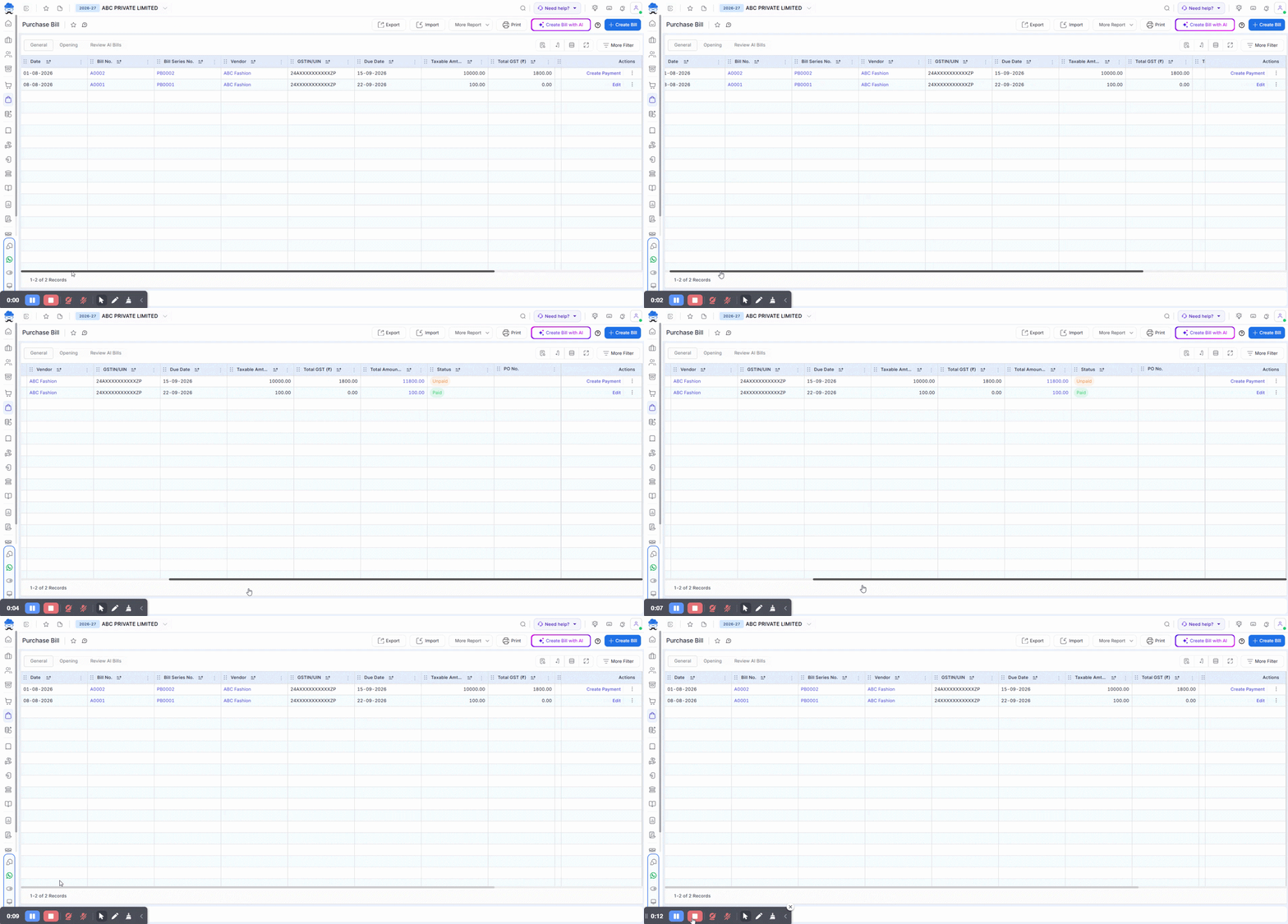
Go to Purchase > Purchase Bill and filter the invoice by their due dates.
Create a payment voucher, once the payment has been transferred to the vendor successfully.
What Should Buyers Check Before Delaying a Supplier Payment?
A buyer should complete these checks before approving any deferment. The review should happen before the payment deadline, not during the statutory audit.
| Check | Question to answer | Evidence required |
| Supplier identity | Is the supplier micro, small, medium or non MSME? | Udyam certificate and declaration |
| Registration validity | Was the relevant status effective for the transaction? | Registration and classification dates |
| Nature of activity | Is the supplier a manufacturer, service provider or trader? | Udyam activity and vendor documents |
| Acceptance date | When were the goods or services accepted? | GRN, delivery challan or service approval |
| Written terms | Is there a valid written credit period? | Contract, PO or accepted invoice terms |
| Statutory deadline | Is the limit 15 days or an agreed period of up to 45 days? | Due date calculation |
| Dispute | Was a genuine objection raised within 15 days? | Email, debit note or dispute log |
| Invoice balance | Is the amount fully or partly unpaid? | Vendor ledger and payment allocation |
| Tax impact | Could the deduction move to the year of payment? | Tax computation schedule |
| Interest exposure | Has the applicable statutory interest been calculated? | Interest working |
| Cash availability | Which customer receivables can fund the payment? | Receivable ageing report |
Munim can help the business maintain and review the accounting records behind these checks. Questions involving eligibility, disputes, statutory interest or tax deductions should be confirmed with a CA or qualified adviser.
Frequently Asked Questions
Is the MSME payment limit always 45 days?
No. The limit is 15 days when there is no written payment agreement.
A written agreement may set a payment period of up to 45 days. If the agreed period is shorter, the buyer should follow that shorter period.
From which date are the 45 days calculated?
The period starts from the date of acceptance or deemed acceptance of the goods or services.
The invoice date should not be used automatically unless it is also the correct acceptance date.
What happens if the buyer pays late but within the same tax year?
The expense may generally remain deductible in that tax year if the actual payment is made before the year ends.
However, delayed payment interest and other consequences under the MSMED Act may still apply. The business should confirm the tax treatment with its CA.
Does the rule apply if the buyer is not registered under Udyam?
Yes. The buyer’s Udyam registration is not the deciding factor.
The relevant consideration is whether the supplier qualifies as an eligible micro or small enterprise.
Disclaimer: "This blog post is for informational purposes only. For specific tax advice related to your business, please consult a qualified Chartered Accountant or GST practitioner."
Related Articles
Explore the latest market news, useful resources for business, and Munim updates.