How to Avoid Small Business Payment Scams: A Practical Guide for Indian Businesses
 AuthorMehul Jagwani
 Reviewed ByCA Ajay Savani



Summary:
Small business payment scams are on the rise across India, targeting shop owners, traders, freelancers, and MSMEs who often lack dedicated fraud monitoring systems. From fake UPI callbacks to counterfeit purchase orders, fraudsters are finding new ways to exploit payment processes.
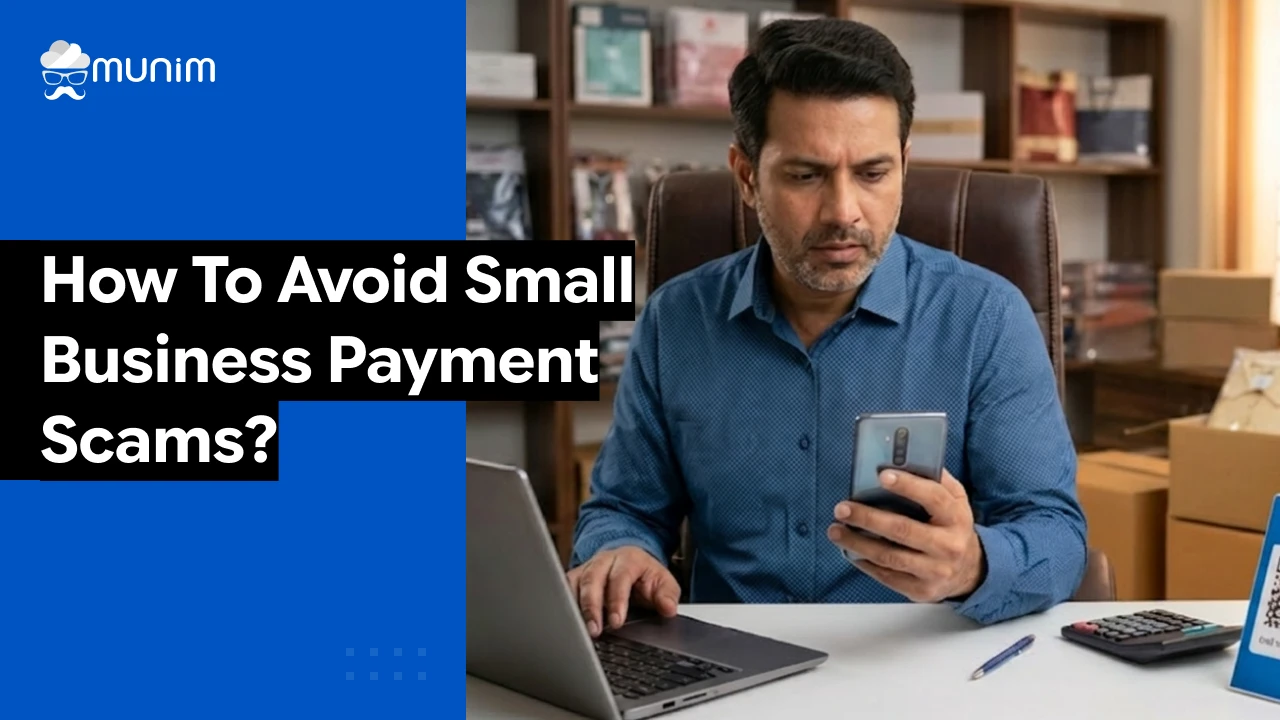
Small business payment scams are not limited to large corporations or e-commerce platforms. They happen every day to kirana store owners, textile traders, service providers, and small manufacturers across India. A fake NEFT confirmation. A forged purchase order. A “customer” who vanishes after receiving goods. These incidents are more common than most business owners realise.
Knowing how to avoid payment scams for small businesses is not just about being careful. It requires building systems, habits, and verification checks that make fraud significantly harder to pull off.
Protect Your Business Payments with Smart Billing & Accounting Controls. Read Now!
Most Common Small Business Payment Scams in India
Understanding the types of fraud is the first step in business payment fraud prevention. Here are the scams that affect Indian small businesses most frequently.
1. Fake UPI Payment Screenshots
This is perhaps the most widespread scam affecting small retailers today. A buyer shows a screenshot of a completed UPI transfer on their phone. The seller, assuming the payment has gone through, hands over the goods. The money never actually arrives.
How to protect yourself: Never release goods or complete a service based on a screenshot. Always verify that the amount has actually appeared in your bank account or UPI app. For high-value transactions, wait for an SMS alert from your bank.
2. Counterfeit or Bounced Cheques
This is an older fraud but still surprisingly common, particularly in B2B transactions between traders and suppliers. A buyer issues a post-dated or immediately payable cheque that later bounces due to insufficient funds or a closed account.
By the time the business owner realises the cheque has bounced, the buyer may have already received and moved the goods.
How to protect yourself: For new or unverified buyers, avoid releasing goods or services until the cheque clears. For large amounts, insist on NEFT, RTGS, or demand drafts. You can also verify the status of a cheque by calling the issuing bank before dispatch.
3. Advance Payment Fraud (Supplier Scam)
In this variation, a fraudster poses as a legitimate supplier offering raw materials or goods at below-market prices. They request an advance payment to “confirm the order” or “book the stock.” Once the payment is made, the supplier becomes unreachable.
This scam is common in commodity trading, garment wholesale, and electronics procurement.
How to protect yourself: Always verify the supplier’s GST registration number on the GSTN portal before making any advance. Check for reviews, references, and a physical address. Be particularly cautious when a deal appears significantly cheaper than the prevailing market rate.
4. Impersonation of Government Officials or Auditors
A fraudster calls a business owner claiming to be from the GST department, Income Tax department, or a government audit body. They allege a compliance issue and demand immediate payment to avoid a penalty or legal action.
These calls are often designed to create panic and urgency, pressuring the business owner into transferring money quickly.
How to protect yourself: No legitimate government department collects tax dues, penalties, or fees over a phone call or through UPI. Always verify any such demand by visiting the official portal directly or consulting a Chartered Accountant. Report such calls to the Cyber Crime helpline at 1930.
Simplify Your Business Operations
Designed to give you speed, control, and accuracy in daily accounting tasks.
 Save time with automated accounting workflows
- Get 35+ detailed business reports easily
- Access your business anytime, anywhere
 Save time with automated accounting workflows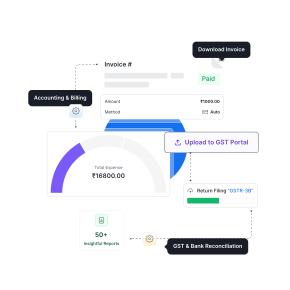
5. Overpayment Scam
A buyer deliberately sends more money than the invoice amount and then requests a refund of the “excess.” The original payment was made through a fraudulent or chargeable account. By the time the refund is processed, the original payment gets reversed or disputed.
The business owner ends up refunding real money for a payment that was never genuine.
How to protect yourself: Never process a refund for an overpayment until you are completely certain the original payment has settled and cleared in your account. Treat overpayments with caution and contact your bank before initiating a reversal.
6. Fake Purchase Order Scam
A professional-looking purchase order arrives from what appears to be a well-known company or a government entity. The business owner fulfils the order on credit expecting a proper invoice payment later. The buyer then disputes the order, delays payment indefinitely, or disappears entirely.
How to protect yourself: Verify purchase orders independently by calling the company on a number you find yourself, not one listed on the purchase order. Check if the company is registered on the MCA portal (Ministry of Corporate Affairs) and cross-reference the GSTIN. Do not extend credit to first-time buyers without some form of verification.
7. Phishing Emails and Fake Invoice Requests
Fraudsters send emails that appear to come from a known client or vendor, requesting updated bank account details or asking the business to pay an invoice to a “new account.” The email address looks almost identical to the real one, with just a letter or character changed.
This is often called Business Email Compromise (BEC) and has caused significant financial losses globally.
How to protect yourself: Whenever a vendor or client sends a request to change bank account details, verify it through a separate phone call before making any payment. Do not rely on contact information provided in the same email. Train any accounting or payment staff to follow this protocol without exception.
Conclusion
Payment fraud is a real and growing risk for small businesses in India. The methods used by fraudsters have evolved considerably, from simple cheque bounce games to sophisticated digital deception. But the fundamentals of protection remain straightforward: verify before you pay, verify before you deliver, keep proper records, and respond quickly when something feels wrong.
Staying informed about the types of scams targeting businesses today is a genuine business advantage. Combine that awareness with structured financial records and a reliable accounting system, and a business becomes a much harder target.
Frequently Asked Questions
How do I verify if a UPI payment has actually been received?
Open your own UPI application or check your bank account statement directly. Never rely on a screenshot sent by the payer. Look for the transaction to appear in your actual bank balance or UPI transaction history. SMS alerts from your bank are also a reliable confirmation.
Is scanning a QR code sent by a customer safe?
No. A QR code is used to make payments, not to receive them. If a buyer or customer asks you to scan a QR code they have sent in order to receive money, that is a scam. Block and report such contacts immediately.
What should I do if I receive a cheque that bounces?
Under Section 138 of the Negotiable Instruments Act, you have the right to send a legal demand notice to the issuer within 30 days of receiving notice of dishonour from your bank. If the issuer does not pay within 15 days of receiving the notice, you can file a complaint in a magistrate’s court. Consult a lawyer for the exact procedure.
How can I verify a supplier’s legitimacy before making an advance payment?
Check the supplier’s GSTIN on the official GST portal at gstin.gov.in. Look up the company’s registration on the MCA portal at mca.gov.in. Ask for references from other buyers and call them independently. Be cautious if the price being offered is significantly below the market rate.
Can I recover money lost in a UPI scam?
There is no guarantee of recovery, but acting quickly improves the chances. Report the fraud immediately at cybercrime.gov.in or call 1930. Contact your bank to freeze the transaction if possible. The sooner it is reported, the better the chance that the recipient account can be flagged before funds are withdrawn.
What is the National Cyber Crime Helpline number for reporting payment fraud?
The National Cyber Crime Helpline number is 1930. You can also register a complaint online at cybercrime.gov.in. For UPI fraud in particular, reporting within the first few hours gives the best chance of the amount being traced or the recipient account being flagged.
Disclaimer: "This blog post is for informational purposes only. For specific tax advice related to your business, please consult a qualified Chartered Accountant or GST practitioner."
About the author
Related Articles
Explore the latest market news, useful resources for business, and Munim updates.