Letter of Authorisation for GST Registration: Format, Sample & Requirements
 AuthorMehul Jagwani
 Reviewed ByCA Madhav Bhayani



- What Is a Letter of Authorisation for GST?
- Who Needs a Letter of Authorisation for GST Registration?
- Authorisation Letter, Acceptance Letter and Consent Letter: Do Not Mix Them Up
- What Should a GST Authorised Signatory Letter Contain?
- Letter of Authorisation for GST Registration Format
- Is a Board Resolution Compulsory for a Private Limited Company?
- Does the GST Authorisation Letter Need Stamp Paper or Notarisation?
- How to Upload the Letter of Authorisation on the GST Portal
- Common Mistakes That Hold Up GST Registration
- Authorised Signatory and Authorised Representative Are Not the Same
- After the GSTIN Is Issued: Add the Client to Munim GST
- Frequently Asked Questions

Summary:
A letter of authorisation for GST appoints a person to act as an authorised signatory for a business during GST registration and related GST activities. The current GST registration requirements ask applicable entities to provide proof of appointment of their authorised signatory. Depending on the business structure, this can be an authorisation letter or a Board/Managing Committee resolution with acceptance.
This guide is for CAs, accountants and GST practitioners who file GST registrations for clients.
Think over Think over this. PAN is ready. Address proof is checked. Then you reach the Authorised Signatory section of FORM GST REG-01 and the authorisation letter is missing. Or the client has sent an old template that doesn’t fit. This small document can hold up an otherwise complete application.
In this guide, we share when you need this letter, what to put in it, the right format, a filled sample and how to upload it.
What Is a Letter of Authorisation for GST?
A letter of authorisation for GST is a document through which a business appoints a person to act as its authorised signatory for GST purposes.
Depending on the authority given, that person may be able to sign or verify GST applications, interact with the GST portal and perform GST-related actions on behalf of the business.
The GST Portal allows details of up to 10 authorised signatories to be entered in the registration application, with one selected as the Primary Authorised Signatory.
Who Needs a Letter of Authorisation for GST Registration?
Whether you need a separate authorisation document depends mainly on the constitution of the business and who is acting as the signatory.
| Business Type | Typical Position |
| Proprietorship | If the proprietor is acting personally, a separate authorisation letter is generally not required. |
| HUF | The Karta normally acts for the HUF. |
| Partnership Firm | An authorisation form is required where an authorised partner/signatory is appointed. |
| LLP | The prescribed authorisation documentation is required for the authorised/designated signatory. |
| Private/Public Limited Company | Authorisation documentation is required. A letter of authorisation or applicable Board resolution may be used. |
| Society, Trust, Club or AOP | Authorisation should come from the competent managing committee, trustees or governing body. |
| Government Department/PSU/Local Authority | The prescribed authorisation or appointment documentation is required for the person acting on behalf of the entity. |
Read more: GST Registration Turnover Limit
What if the Proprietor Is Appointing Someone Else?
Yes, a proprietor can appoint someone else as the authorised signatory. In that case, give a proper letter of authorisation. Don’t rely only on the proprietor’s business documents.
Authorisation Letter, Acceptance Letter and Consent Letter: Do Not Mix Them Up
These three documents solve different GST registration requirements.
| Document | Purpose |
| Letter of Authorisation | Appoints a person to act as the business’s authorised signatory. |
| Acceptance Letter | Records the appointed person’s acceptance of the authorised-signatory role. |
| Consent Letter | Gives permission to use somebody else’s premises as the business’s principal or additional place of business. |
The GST document checklist separately lists a Letter of Authorisation and a Board/Managing Committee resolution with Acceptance Letter as proofs of appointment of an authorised signatory. A consent letter, on the other hand, is listed under proof of business premises.
That distinction is important when you are preparing several registration documents for the same client.
What Should a GST Authorised Signatory Letter Contain?
The instructions to FORM GST REG-01 contain a prescribed authorisation structure and require a separate declaration for each authorised signatory.
We recommend including these points in your GST authorised signatory letter:
- Legal name of the business.
- Constitution of the business.
- Name and designation/status of the person granting authority.
- Name and designation of the authorised signatory.
- Clear statement appointing the person as authorised signatory.
- Resolution number and date, where a resolution has been passed.
- Statement that actions performed within the granted authority will bind the business.
- Signature and designation of the competent person granting authority.
- Acceptance by the authorised signatory.
- Place and date.
Letter of Authorisation for GST Registration Format
The following format follows the structure required under the instructions to FORM GST REG-01 while keeping it practical for a new registration application.
GST Authorisation Letter Format
[Business Letterhead, where available]
Date: [DD/MM/YYYY]
Subject: Authorisation of Signatory for GST Registration
We, [name of proprietor/partners/directors/trustees/competent persons], being [designation/status] of [legal name of business], hereby authorise [name of authorised signatory], [designation/status], to act as an authorised signatory for our business for the purpose of GST registration and GST-related actions permitted under the applicable GST law.
Where applicable, this appointment has been approved through Resolution No. [number] dated [date].
Actions undertaken by the authorised signatory within the authority granted through this authorisation shall be binding on the business.
For [Legal Name of Business]
Signature: ____________________
Name: _______________________
Designation/Status: __________
Date: ________________________
Place: _______________________
Acceptance by the Authorised Signatory
I, [name of authorised signatory], accept my appointment as authorised signatory for the above business and agree to act within the authority granted to me.
Signature: ____________________
Name: _______________________
Designation/Status: __________
Date: ________________________
Place: _______________________
Important: Where more than one authorised signatory is being appointed, the FORM GST REG-01 instructions specify a separate authorisation declaration for each signatory.
Example: Filled-In Letter of Authorisation for GST
Here’s how the letter looks when it’s filled in. Mehta Packaging Private Limited is a made-up company, used only as an example.
Mehta Packaging Private Limited (letterhead)
Date: 05/11/2026
Subject: Authorisation of Signatory for GST Registration
We, Anil Mehta and Priya Mehta, being Directors of Mehta Packaging Private Limited, hereby authorise Ravi Shah, Accounts Manager, to act as an authorised signatory for our business for the purpose of GST registration and GST-related actions permitted under the applicable GST law.
This appointment has been approved through Board Resolution No. 12 dated 01/11/2026.
Actions undertaken by the authorised signatory within the authority granted through this authorisation shall be binding on the business.
For Mehta Packaging Private Limited
Signature: (Anil Mehta)
Name: Anil Mehta
Designation: Director
Date: 05/11/2026
Place: Ahmedabad
Acceptance: I, Ravi Shah, accept my appointment as authorised signatory for the above business and agree to act within the authority granted to me.
Signature: (Ravi Shah)
Name: Ravi Shah
Designation: Accounts Manager
Date: 05/11/2026
Place: Ahmedabad
Is a Board Resolution Compulsory for a Private Limited Company?
No. For GST, a simple letter of authorisation also works.
The GST registration document checklist recognises:
- a Letter of Authorisation; or
- a copy of the resolution passed by the Board of Directors/Managing Committee together with the acceptance letter.
However, a company should also follow its Articles, internal delegation rules and applicable company-law requirements when determining who has authority to appoint the GST signatory.
For routine GST registration work, we recommend checking both the GST documentation requirement and the company’s internal approval process instead of treating them as the same issue.
Does the GST Authorisation Letter Need Stamp Paper or Notarisation?
The GST registration checklist and prescribed authorisation format do not state that the authorisation letter itself must be executed on stamp paper or notarised.
A business can normally prepare the authorisation on its letterhead where available and have it signed by the competent person.
Do not confuse this with other GST registration documents for which a specific affidavit, undertaking or stamp-paper requirement may apply.
How to Upload the Letter of Authorisation on the GST Portal
While completing FORM GST REG-01:
- Go to Services → Registration → New Registration on the GST Portal.
- Complete Part A and proceed to Part B.
- Open the Authorised Signatory tab.
- Enter the authorised person’s personal, identity and residential details.
- Select the Primary Authorised Signatory where applicable.
- Upload the authorised signatory’s photograph and Proof of Appointment of Authorised Signatory.
- Save the section and continue with the registration application.
Common Mistakes That Hold Up GST Registration
Watch out for these when you prepare the letter.
- Filling in a GSTIN on a new registration. Old templates often have a GSTIN field, and some clients fill it in anyway. For a fresh registration, there is no GSTIN yet. Use the legal business name instead.
- Leaving the acceptance unsigned. The authorised signatory has to sign the acceptance part too, not just the person giving authority.
- The wrong person signing. The letter must be signed by someone who has the power to appoint, like the partners, directors or trustees.
- Names that don’t match. The signatory’s name in the letter should match the details entered on the GST portal.
- One letter for many signatories. If you appoint more than one signatory, prepare a separate authorisation for each one.
Authorised Signatory and Authorised Representative Are Not the Same
This is another common source of confusion during registration.
The GST Portal provides separate tabs for Authorised Signatory and Authorised Representative. An authorised signatory acts for the registered person in GST-related portal actions, whereas the Authorised Representative section can contain details such as a GST Practitioner or another representative.
After the GSTIN Is Issued: Add the Client to Munim GST
Once your client’s GSTIN is issued, you can move the client into your regular return-filing workflow in Munim GST.
For existing Munim GST users:
My Clients → Create Client → Enter GSTIN → Review fetched company name/details → Create
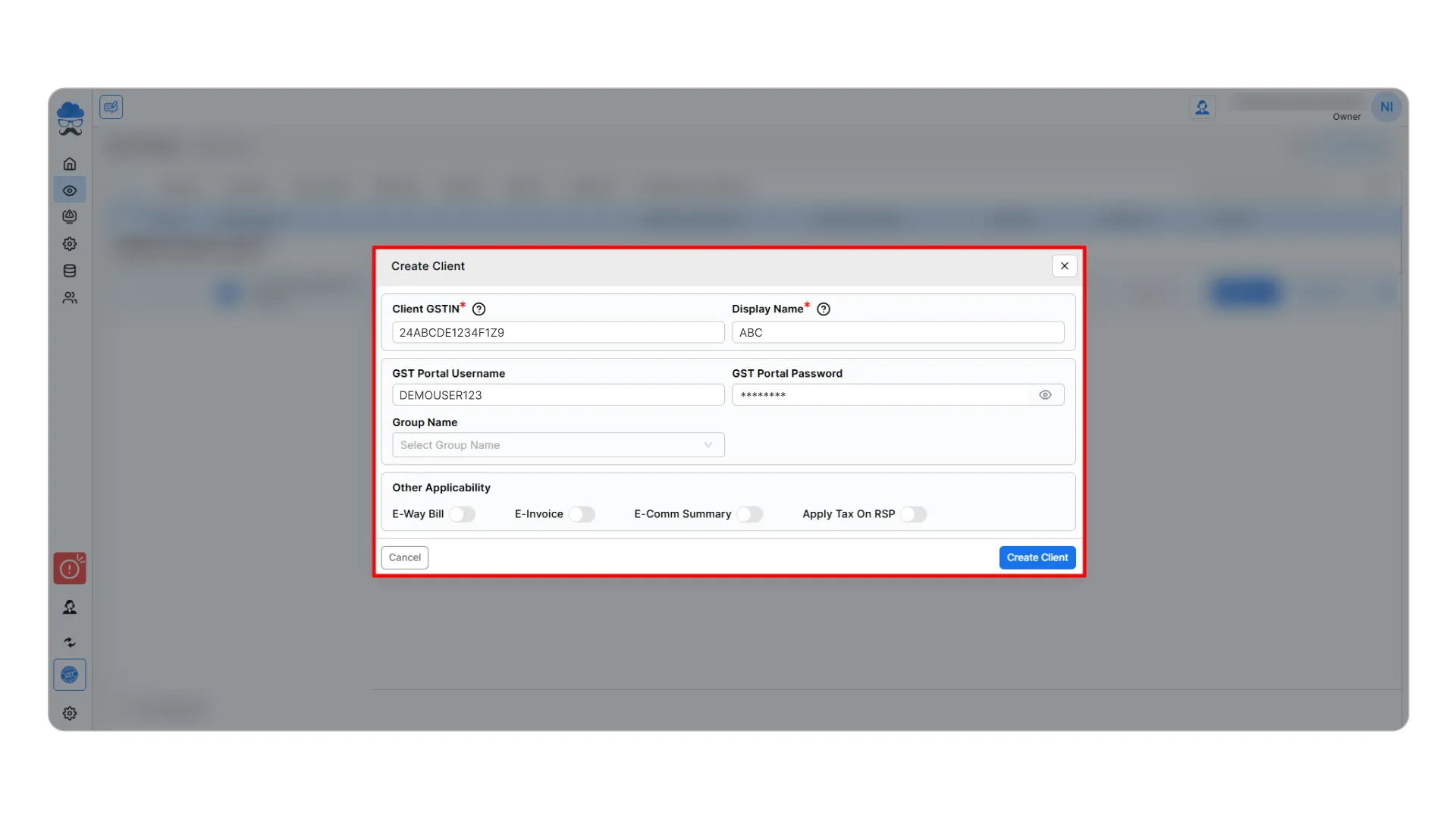
Munim GST can fetch the company name after you enter the GSTIN. Once the client is created, you can access its return filing options, GST reports and filing status from the My Clients page.
If you handle many registrations, this gives you a clean handover. Register the client correctly first. Then add them to Munim GST and handle return preparation, GST reports, filing status and client management in one place. Start your 7-day free trial of Munim GST.
Frequently Asked Questions
Is a letter of authorisation mandatory for GST registration?
Not always. A proprietor filing for their own business usually doesn’t need one. Partnership firms, LLPs, companies, trusts and societies do. They can give a letter of authorisation, or a board or managing committee resolution with an acceptance letter.
Can an employee become an authorised signatory under GST?
Yes. The GST registration FAQs allow a company employee other than a promoter, director, partner or proprietor to be added as an authorised signatory.
Does a GST authorisation letter need to be notarised?
The prescribed GST authorisation requirements do not specify notarisation for the standard authorisation letter. Ensure it is properly signed by the competent authority and accepted by the authorised signatory.
How many authorised signatories can be added to a GST registration?
You can add up to 10 authorised signatories, including the Primary Authorised Signatory.
Can a CA be the authorised signatory for a client?
Yes, a Chartered Accountant (CA) can be appointed as an authorised signatory for a client on the GST Portal. The client must provide a valid Letter of Authorisation and add the CA’s details under the Authorised Signatory section.
Can I change the authorised signatory after GST registration?
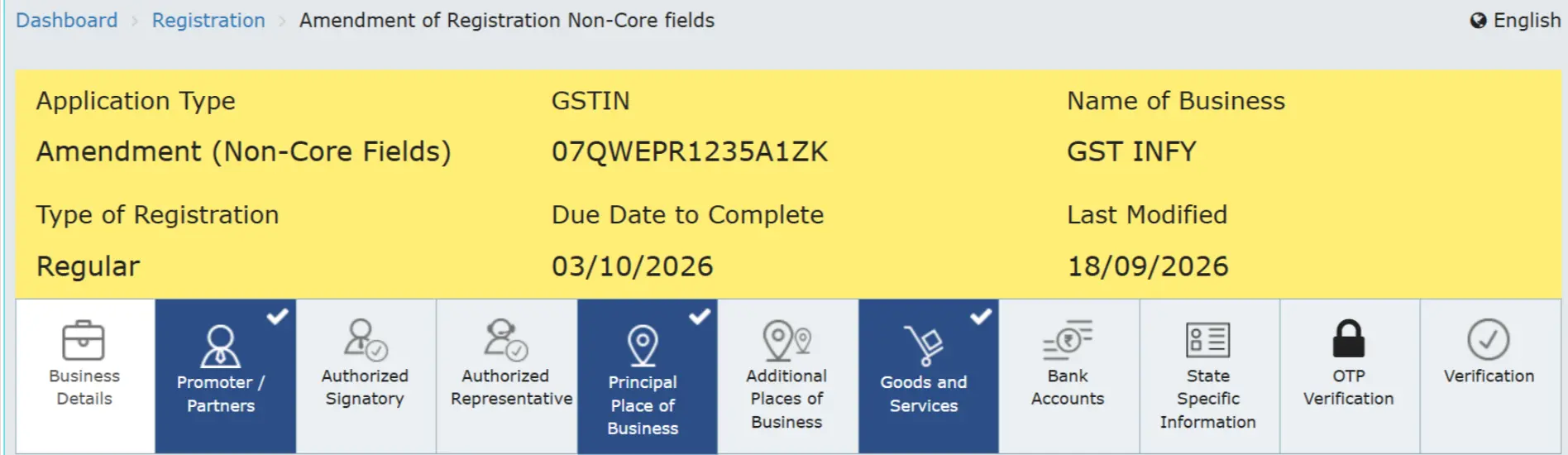
Yes, you can add, remove or change an authorised signatory after GST registration. Log in to the GST Portal and go to Services > Registration > Amendment of Registration Non-Core Fields to update the details. You do not need a new GST registration.
Disclaimer: "This blog post is for informational purposes only. For specific tax advice related to your business, please consult a qualified Chartered Accountant or GST practitioner."
About the author

Mehul is a seasoned content writer with a passion for simplifying complex accounting and GST topics. With a keen interest in entrepreneurship and business management, he specializes in creating informative and engaging content for themunim.com. His goal is to help businesses understand and implement accounting and GST software solutions effectively. When he's not crafting content, Mehul enjoys exploring new places and spending time with his Golden Retriever.
Related Articles
Explore the latest market news, useful resources for business, and Munim updates.