E-Invoicing 2026: Mandatory ₹5 Cr AATO Limit & Impact On ITC
 AuthorJayant Surana
 Reviewed ByMadhav Bhayani



- GST E-Invoicing in 2026: The ₹5 Crore Turnover Limit and Its Impact on ITC
- Crucial Impact on Input Tax Credit (ITC)
- Key E-Invoicing & Technical Rules Active in 2026
- Historical Compliance Rules (2020 Launch Phase)
- Other Major GST Rule Updates You Must Know
- Government Objectives: Why Tighten the E-invoicing Rules?
- 2026 GST Compliance Checklist for Finance Teams
- Get Ready with Solutions for Your GST E-invoicing
- Frequently Asked Questions (FAQs)
Summary:
The April 2026 e-invoicing framework mandates strict compliance for businesses exceeding ₹5 crore. Sellers must report their B2B transactions through the official government portal. This process ensures accurate tax credits and prevents severe financial penalties.
Mastering basic GST compliance in India is essential before tackling the official tax portal. The April 2026 landscape introduces automated tax validations for businesses. These mandatory checks have a direct impact on your cash flow.
The Central Board of Indirect Taxes and Customs (CBIC) expanded the e-invoicing mandate. This policy ensures the integration of MSMEs into the formal economy. Small and medium enterprises must follow these updated digital reporting rules.
GST E-Invoicing in 2026: The ₹5 Crore Turnover Limit and Its Impact on ITC
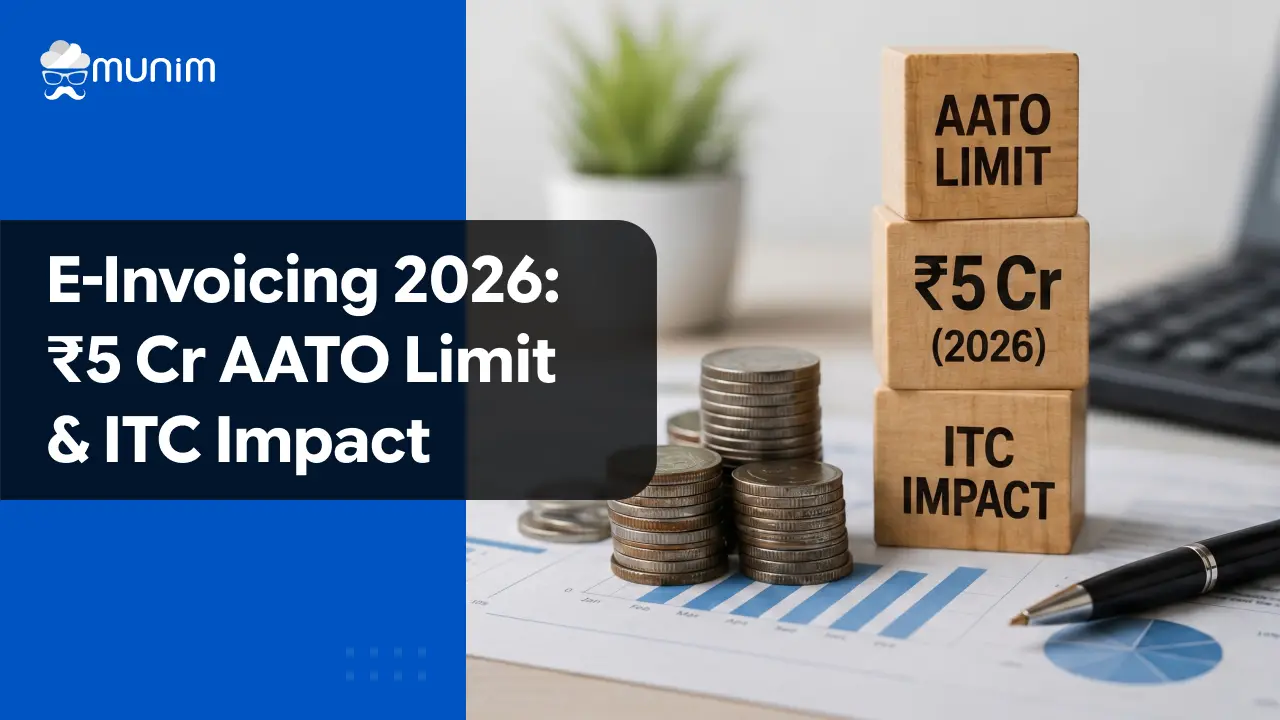
Tax compliance applies to your Aggregate Annual Turnover (AATO). The corporate threshold covers any company exceeding ₹5 crore and this parameter tracks financial records from the 2017-18 period onward.
The tax department enforces different rules for specific revenue brackets. Generating electronic invoices remains mandatory above the ₹5 crore threshold. The rigid 30-day reporting window only affects businesses exceeding ₹10 crore.
Eligible taxpayers must upload records to the Invoice Registration Portal (IRP). Generating these digital validation codes is a mandatory requirement for commerce. You need a valid Invoice Reference Number (IRN) to complete a B2B sale.
Without a valid QR code, your invoice remains unregistered. Such an invoice holds no legal value for any business that surpasses the compliance threshold. Further, this compliance failure prevents your buyer from claiming their tax credit.
Designed for Modern Tax Professionals
A premium filing solution for CAs and tax consultants who need speed, scale, and operational clarity.
 Handle multiple clients with ease
- Reconcile and validate with confidence
- Overcome the limitations of the GST portal
 Handle multiple clients with ease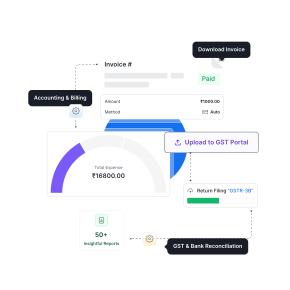
Evolution of E-invoicing Turnover Criteria
The government reduced the e-invoicing threshold in structured phases over recent years. This systematic approach helps tax authorities gather granular data for policy formulation and successfully brings more B2B sellers into the formal economy.
The historical timeline below details the active lowering of turnover limits. We have sorted this table starting from the current baseline mandate. You must review these specific legal entries to verify your compliance status.
| Turnover Exceeding | Applicable Date | Legal Notification Reference No. |
| ₹5 crore | 01/08/2023 | Notification 10/2023 – Central Tax |
| ₹10 crore | 01/10/2022 | Notification 17/2022 – Central Tax |
| ₹20 crore | 01/04/2022 | Notification 01/2022 – Central Tax |
| ₹50 crore | 01/04/2021 | Notification 05/2021 – Central Tax |
| ₹100 crore | 01/01/2021 | Notification 88/2020 – Central Tax |
| ₹500 crore | 01/10/2020 | Notification 61/2020 – Central Tax |
Note: The ₹5 crore limit remains the active standard in 2026. Authorities enforce this baseline for all B2B supplies. Retail sellers must learn specific e-invoicing rules for B2C transactions.
Crucial Impact on Input Tax Credit (ITC)
Manual tax reconciliation is a thing of the past for modern finance teams. The GST network uses automated matching to weed out fraudulent claims. This system caught thousands of fake tax credit claims in recent years.
- Strict Section 16 Conditions: Your business must navigate specific operational hurdles to claim input tax credit. Section 16 of the tax act outlines clear legal conditions for eligibility. You must possess a valid tax invoice from a compliant taxpaying supplier.
- The November 30 Deadline: The government formalised the November 30 deadline through Notification 18/2022. This central tax amendment modified the legal boundaries of Section 16(4). Taxpayers must secure their input tax credits before this statutory limit.
- Invoice Management System (IMS): The new Invoice Management System handles your tax credit eligibility tracking. Users must accept or reject their supplier invoices on the live portal. These mandatory actions dictate your final eligible input tax credit numbers. (Refer to the Official GSTN IMS Advisory)
Claiming your eligible credit is just the first operational step. You must then follow the strict order of ITC utilisation. This legal sequence prevents offset errors during your final return filing.
Key E-Invoicing & Technical Rules Active in 2026
Crossing the turnover threshold triggers your basic generation mandate under the GST law. Finance teams must also adopt specific technical protocols on the national portal. These detailed operational rules prevent complex system errors during routine billing.
The national tax network actively enforces several critical system advisories. These updates regulate exactly how and when your business generates documents.
- 30-Day Reporting Window: Taxpayers above ₹10 crore face a rigid new time limit. You must report new electronic documents within thirty days of creation. The system automatically rejects any late document submissions beyond this window. (Effective April 1, 2025)
- Case-Insensitive Invoices: The registration portal converts all document numbers into uppercase letters. This background normalisation process helps prevent duplicate record uploads. Rejections happen when distinct invoice numbers become identical after uppercase conversion. (Effective June 1, 2025)
- Multi-Factor Authentication (MFA): The national portal requires mandatory security authentication for access. This verification step applies to all registered taxpayers without exception. It protects your sensitive financial data from unauthorised login attempts. (Effective April 1, 2025)
- E-Invoice Schema Updates: The government relies on a standardised data schema for all documents. The current format ensures uniform data collection across all business sectors. Developers must build software systems matching the exact official schema version. (Base Notification 60/2020)
Historical Compliance Rules (2020 Launch Phase)
The government established the original e-invoicing framework through this base notification. It laid the operational groundwork for electronic reporting across India. Later amendments modified these original rules to expand coverage. (Base Notification 13/2020)
Large businesses must print dynamic QR codes on retail consumer receipts. Early notifications waived initial non-compliance penalties to ease system adoption. This mandate ensures clear tracking for high-value retail transactions. (Notification 70/2020 & Notification 89/2020)
The network granted a brief relaxation during the initial launch month. Taxpayers received thirty extra days to generate their technical codes. This transitional rule is no longer active for modern filers. (Notification 73/2020)
Other Major GST Rule Updates You Must Know
The national tax network relies on automated blockages to enforce reporting timelines. Finance and logistics teams must monitor these three operational boundaries:
- Three-Year Filing Limit: The government enforces a strict three-year time limit on all GST returns. This rule became active through Notification 28/2023. The official portal blocks monthly return submissions after this statutory period expires.
- E-Way Bill Restrictions: Logistics teams face document age restrictions for active transit tracking. The December 2024 GSTN Advisory prevents generating new transit bills from old invoices. You can only generate an e-way bill within 180 days of invoice creation.
- Document Extension Cap: The portal limits total document validity extensions to 360 days maximum. Long transit shipments require proactive monitoring from your compliance team.
- Ship-To GSTIN Requirements: The system captures specific destination tax numbers during complex transit scenarios. The portal introduces voluntary closure options for active transit documents. This logistics update takes effect around August 2026.
Government Objectives: Why Tighten the E-invoicing Rules?
The tax council continues to tighten digital oversight to eliminate systemic leakages. The transition to a real-time reporting framework serves three primary goals:
- Granular Economic Data: Expanding coverage gives authorities accurate sector data for policy formulation. Officials analyse financial details at the four-digit HSN code level to spot market trends.
- Automated Tax Matching: Automated data construction removes the operational need for manual invoice matching. This architecture creates a transparent, fraud-free tax network across the country.
- Server Load Management: The council panel approved additional registration portals to handle high trade volumes. Multiple active portals provide uninterrupted invoice services to taxpayers.
2026 GST Compliance Checklist for Finance Teams
Finance departments must embed clean operating habits into weekly close cycles. Use this checklist to verify your organisational readiness:
- Clear Return Backlogs: Review historical tax records for potential filing gaps. Clear all pending returns to prevent sudden portal blocking.
- Standardise Invoice Numbering: Enforce consistent invoice numbering governance across all billing systems and regional subsidiaries.
- Execute Same-Day Workflows: Train your staff to process invoice registrations immediately. Fast generation avoids compliance breaches under the strict 30-day rule.
Get Ready with Solutions for Your GST E-invoicing
New portal restrictions can disrupt your routine business cash flow and finance teams cannot afford manual errors or slow invoice matching processes. Modern compliance demands automated systems for daily data reporting.
Munim accounting software provides fast electronic invoice generation within seconds. Our platform updates your current compliance status against the latest network regulations. Automated tools handle your complex portal reconciliations without any hassle.
Protect your input tax credits and prevent unexpected tax penalties. You can contact our support team at Munim for complete accounting solutions anytime. Let us secure your corporate tax compliance architecture today.
Frequently Asked Questions (FAQs)
What is the GST e-invoice turnover limit for 2026?
The mandatory electronic invoicing limit remains at ₹5 crore for the 2026 financial year. This threshold applies to all your B2B sales and export supplies. Authorities calculate this turnover limit based on your permanent account number.
What is IRN in e-invoicing, and how does it work?
The Invoice Reference Number (IRN) is a unique digital code for your tax document. The registration portal creates this tracking number upon successful invoice validation. The system uses your GSTIN and invoice details to generate it.
How does e-invoicing help curb tax evasion?
Real-time portal reporting stops businesses from issuing fake tax documents. The system validates transactions before buyers can claim their tax credits. This strict digital trail prevents backdated entries and fraudulent refund claims.
Does the 30-day reporting rule apply to a business with ₹5 Crore turnover?
No, this specific time restriction does not affect smaller business entities. The strict 30-day reporting window applies to businesses above ₹10 crore. Smaller taxpayers can report their invoices outside this rigid time limit.
Is e-invoicing mandatory for ₹5 crore turnover?
Yes, generating portal-validated documents is a strict legal requirement. Businesses above the ₹5 crore mark must comply with mandatory e-invoicing norms for all B2B transactions. You face severe financial penalties for skipping this mandatory registration process.
What is the penalty for not generating an e-invoice?
The tax department imposes heavy fines for missing document registrations. You must pay ₹10,000 or the total tax amount, whichever is higher. This penalty applies to every single unregistered commercial transaction.
Which entities are exempted from e-invoicing under GST?
The government exempts specific service sectors from these generation rules. Exempted entities include banking institutions, insurance providers, and passenger transport services. Special Economic Zone (SEZ) units and local government departments also enjoy exemptions.
Which transactions are exempted from e-invoicing under GST?
Retail sales to unregistered consumers do not require portal validation. Businesses can skip registration for exempt goods and non-taxable supply shipments. Import transactions and delivery challans also fall outside this reporting mandate.
Will the e-invoicing limit drop to ₹2 crore soon?
Industry experts note ongoing proposals to lower the current business threshold. The limit might drop toward the ₹2 crore mark later. This reduction remains unconfirmed and is not yet an active law.
Disclaimer: "This blog post is for informational purposes only. For specific tax advice related to your business, please consult a qualified Chartered Accountant or GST practitioner."
About the author

Jayant is a senior content writer and digital marketer, known for his extensive experience in commercial SEO writing, blog content, website copy, and B2B communication. Since 2019, he has worked on diverse freelance projects across industries. His portfolio includes articles, landing pages, social media content, and web development collaborations. Blending clarity, creativity, and strategic messaging, he specialises in crafting professional, audience-focused content for themunim.com.
Post Tags
Related Articles
Explore the latest market news, useful resources for business, and Munim updates.