
Accounts Payable Vs Accounts Receivable: A Complete Guide!
 AuthorPriyanka Chaudhari
 Reviewed ByAjay Savani




Accounts payable and accounts receivable are the crux of every business model. When revenues are in healthy equilibrium with expenditures, the company unlocks growth opportunities, expands customer relationships, and establishes long-term partnerships.
Let’s quickly explore the two terms.
What are Accounts Payable?
Accounts payable also abbreviated as AP is a critical component of an organization’s financial management process. It refers to the outstanding debts and obligations a company owes to its suppliers, vendors, or creditors for goods and services received but not yet paid for. In simpler terms, accounts payable represent the money a company owes to others for various business-related transactions.
Normally, it doesn’t comprise the payrolls and long-term debts. These obligations are to be recorded as monthly payments for debts. Additionally, wages are processed separately in this system.
Accounts Payable Process
Accounts payable is a crucial part of a company’s working capital management. Timely payment of suppliers helps maintain good relationships and can sometimes lead to early payment discounts, while late payments can strain relationships and even result in penalties or disruptions to the supply chain.
Efficient management of current liability accounts is essential for financial stability and liquidity within an organization. It ensures that the company’s obligations are met promptly while optimizing cash flow and maintaining good business relationships with suppliers.
Here’s how the accounts payable process typically works within an organization:
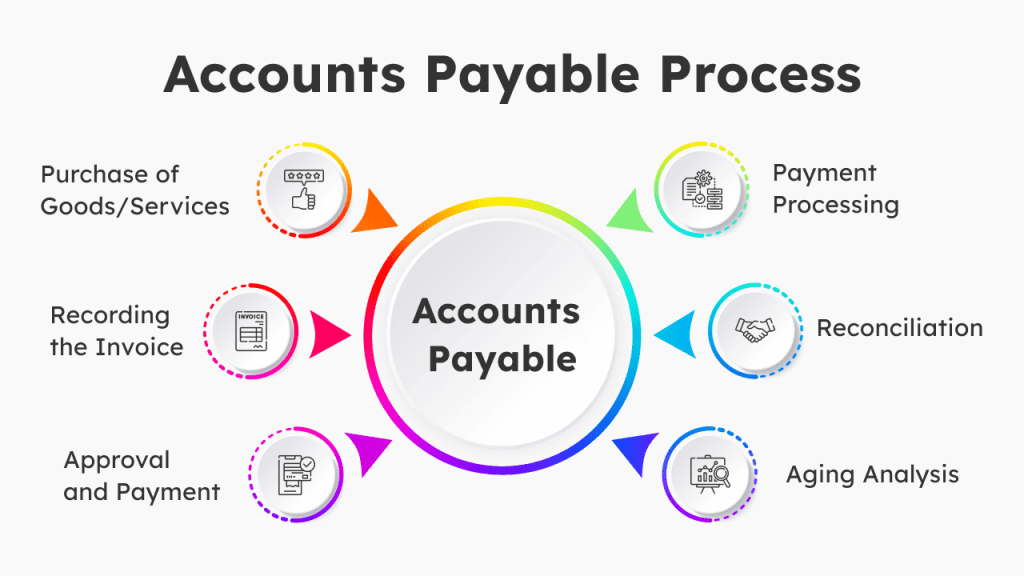
- Purchase of Goods/Services: When an organization purchases goods or services from a supplier or vendor, an invoice is generated. The invoice contains details of the products or services provided, their quantities, prices, and the total amount owed.
- Recording the Invoice: The accounts payable department receives the invoice and enters it into the accounting system. This step involves verifying the accuracy of the invoice, ensuring that the goods or services were received and that the prices and quantities are correct.
- Approval and Payment: The invoice is then sent for approval to the appropriate personnel within the organization. Once approved, the accounts payable team schedules the payment based on the agreed-upon payment terms with the supplier.
- Payment Processing: Depending on the payment terms, the current liability account processes the payment, which could be done via check, electronic funds transfer (EFT), wire transfer, or other methods. The payment is then sent to the supplier or vendor.
- Reconciliation: The accounts payable department regularly reconciles its records with supplier statements to ensure that all payments are accurately accounted for and that there are no discrepancies.
- Aging Analysis: The current liability account team monitors the aging of outstanding invoices to keep track of how long each payment has been pending. This helps identify any overdue payments and manage cash flow effectively.
What are Accounts Receivable?
Accounts Receivable (AR) is another crucial aspect of financial management in a business. It refers to the money owed to a company by its customers or clients for goods or services provided on credit. A few examples of cash inflow are payments or bills that are yet to be cleared by the clients or consumers for the services rendered.
Accounts Receivable Process
Efficient management of pending payments is crucial for maintaining healthy cash flow and financial stability. Companies often use online accounting software and customer relationship management (CRM) systems to streamline the accounts receivable process and ensure timely collections.
The accounts receivable process involves several steps, from generating invoices to collecting payments. Here’s an overview of the typical accounts receivable process:
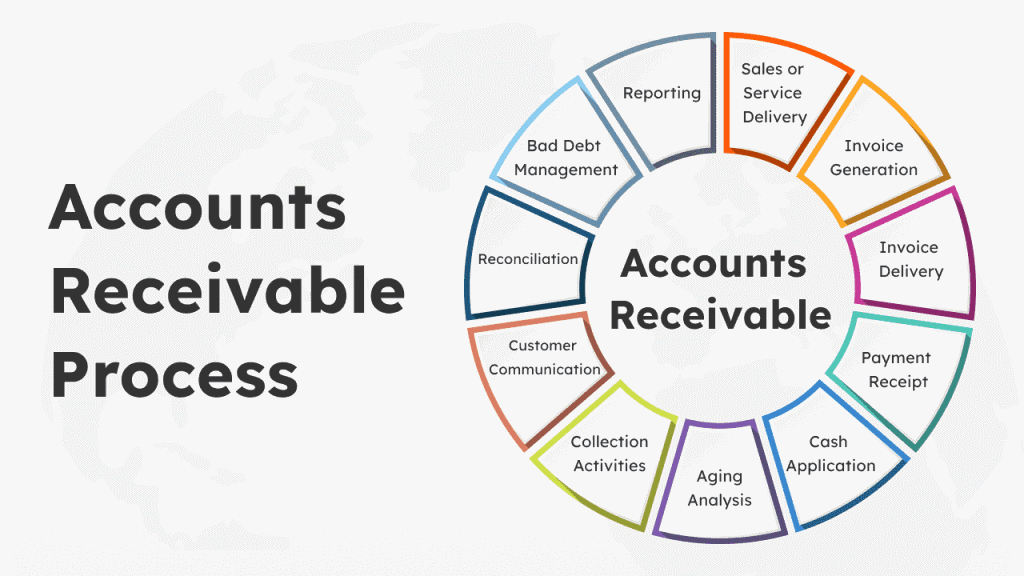
- Sales or Service Delivery: The accounts receivable process begins with the sale of goods or the provision of services to customers. The terms of the sale, including the credit period and payment due date, are agreed upon at this stage.
- Invoice Generation: After the goods are delivered or the services are provided, the company generates an invoice detailing the transaction’s specifics, such as the items sold, quantities, prices, and payment terms. The invoice is then sent to the customer for accounts receivable.
- Invoice Delivery: The billing receipt is delivered to the customer, either through e-invoice or through traditional mail. In some cases, a piece of remittance advice may accompany the invoice, providing instructions to the customer on how to make the payment and which invoices to include.
- Payment Receipt: The customer reviews the invoice and processes the payment according to the agreed-upon payment terms. Payments can be made through various methods, such as cash, checks, credit cards, electronic funds transfer (EFT), or other online payment platforms.
- Cash Application: Once the payment is received, the company records the transaction in its accounting system, matching the payment to the corresponding invoice. This process is called cash application and helps maintain an accurate accounts receivable ledger.
- Aging Analysis: The company regularly generates an aging report that categorizes outstanding invoices by their age (e.g., current, 14 days past due, 60 days past due, etc.). This report helps monitor the status of cash inflows and identifies overdue invoices that require follow-up.
- Collection Activities: If an invoice becomes overdue, the company initiates collection activities to remind the customer of the outstanding payment. These activities may include sending reminder emails, making phone calls, or issuing formal collection letters.
- Customer Communication: Throughout the accounts Receivable process, maintaining good communication with customers is essential. Addressing any concerns or disputes promptly can help expedite payment and improve customer relationships.
- Reconciliation: Regularly reconciling accounts receivable balances with customer statements helps ensure the accuracy of records and identify any discrepancies.
- Bad Debt Management: In some cases, customers may be unable or unwilling to pay their outstanding invoices, leading to bad debts. Companies may need to write off these uncollectible amounts and make adjustments to their financial statements.
- Reporting: Ensuring regular reviews reports related to customer pending payments, including aging reports, collection progress, and other key performance indicators (KPIs). This helps identify areas for improvement and supports strategic decision-making.
Accounts Payable Vs Accounts Receivable
| Accounts Payable | Accounts Receivable |
| Accounts payable is defined as the money to be disbursed by a company to the suppliers and vendors. | Accounts receivable is defined as the money to be received from customers or consumers for the services availed. |
| It is recorded as the current liability on the balance sheet. | It is recorded as a current asset on the balance sheet. |
| It is recognized as a liability until paid. | It is identified as an income unless written off. |
| Accounts payable belong to the client’s record. | Accounts receivable belong to the vendor’s record. |
Let’s Wrap
Hopefully, the blog has enlightened your knowledge of accounts payable and receivable. If you are looking for accounting software, check out Munim now!
FAQs
What are Accounts Payable on a Balance Sheet?
Accounts Payable means the money a business has to pay to suppliers for goods or services bought on credit. It is shown under current liabilities because it is usually paid within one year.
What are Accounts Receivable on a Balance Sheet?
Accounts Receivable means the money customers owe to a business for goods or services sold on credit. It is shown under current assets because the company expects to receive the payment soon.
What is the Accounts Payable Turnover Ratio?
The accounts payable turnover ratio shows how quickly a company pays its suppliers. A higher ratio means faster payments, while a lower ratio may show delayed payments or cash flow problems.
What is the Accounts Receivable Turnover Ratio?
The accounts receivable turnover ratio shows how quickly a company collects money from customers. A higher ratio means better and faster collection of payments.
What is the Accounts Payable Cycle?
The accounts payable cycle is the process of buying goods or services and making payment to suppliers. It includes ordering, receiving goods, checking invoices, and paying bills.
What is the Accounts Receivable Cycle?
The accounts receivable cycle is the process of selling goods or services on credit and collecting payment from customers. It includes creating invoices, sending them, and receiving payments.
Disclaimer: "This blog post is for informational purposes only. For specific tax advice related to your business, please consult a qualified Chartered Accountant or GST practitioner."
About the author
Related Articles
Explore the latest market news, useful resources for business, and Munim updates.