Tax Invoicing: A Complete Roadmap for Your Success!
 AuthorPriyanka Chaudhari
 Reviewed ByAjay Savani



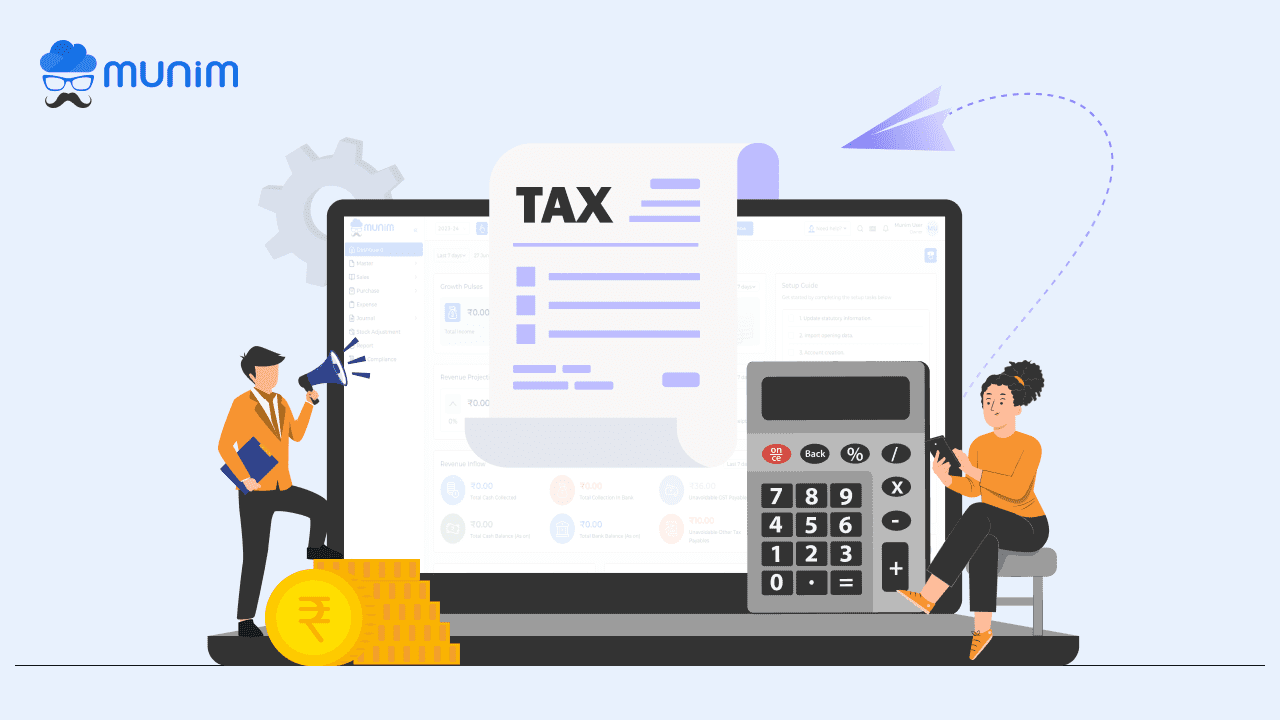
A tax invoice serves as a formal record of a transaction between a seller and a buyer, providing details such as the items or services purchased, their quantities, prices, and any applicable taxes. This document is essential for accounting, tax reporting, and legal purposes. It enables businesses to claim input tax credits and helps buyers verify expenses. By clearly outlining the financial transaction, a tax invoice promotes transparency, compliance with tax regulations, and accurate financial record-keeping for both parties involved.
Let’s quickly try to understand what the tax invoice means.
What is a Tax Invoice Under GST?
A tax invoice under GST is a formal document issued by a seller to a buyer in commercial transactions, providing a comprehensive breakdown of the goods or services exchanged, their associated costs, and the applicable taxes or levies. This document serves as a crucial financial record for both parties and plays a pivotal role in accounting, taxation, and legal compliance.
Typically utilized in business-to-business (B2B) and business-to-consumer (B2C) transactions, a tax invoice format contains essential details such as the names, addresses, and contact information of the buyer and seller. It also includes a unique invoice number, issuance date, description of the items or services provided, unit prices, quantities, any discounts or deductions applied, and the grand total payable.
Moreover, a tax receipt delineates the tax components involved, such as value-added tax (VAT), goods and services tax (GST), or other relevant taxes. For businesses, invoices hold substantial importance as they aid in accurate financial reporting, enable proper calculation of taxable income, and facilitate tax deductions where applicable. Additionally, tax authorities rely on these tax statements to ensure adherence to tax regulations and combat tax evasion.
What are the types of Tax Invoices?
1. Full Tax Invoice
A full tax invoice is a comprehensive record issues by a register supplier to a recipient under GST regulations. It includes essential details such as supplier and recipient information, a unique invoice number, issuance date, description, quantities, unit prices of supplied goods or services, applicable GST rates, and the total amount payable.
It facilitates transparent and accurate financial reporting, enables recipients to claim an input tax credit, and helps suppliers fulfill their tax obligations. The invoice plays a pivotal role in maintaining proper accounting, supporting compliance, and minimizing disputes. It outlines the taxable value, GST amounts (CGST, SGST, or IGST), HSN or SAC codes, and discounts if applicable. It is crucial for establishing the authenticity of transactions in the GST framework.
2. Simplified Tax Invoice
This is a concise document issued by a registered supplier to a recipient for supplies involving a transaction value up to a specified threshold, as permitted by GST regulations. It includes essential information like supplier and recipient details, a unique invoice number, date of issue, a brief description of goods or services, total amount payable, and applicable GST rates. Unlike a full tax receipt, it may not include detailed itemized information.
Simplified tax invoices are designed to streamline documentation for smaller transactions, making compliance more straightforward. While they do not permit recipients to claim input tax credits, they still serve as valid records for business transactions within the defined value limit. These simplified tax invoices aim to balance regulatory requirements with administrative efficiency for low-value transactions under GST.
Simplify Your Business Operations
Designed to give you speed, control, and accuracy in daily accounting tasks.
 Save time with automated accounting workflows
- Get 35+ detailed business reports easily
- Access your business anytime, anywhere
 Save time with automated accounting workflows
3. Electronic Tax Invoice
This is a digital document issue by a seller to a buyer during a transaction, serving as evidence of the sale and payment of goods or services. It contains essential details such as the seller’s and buyer’s information, item description, quantity, price, and any applicable taxes. Unlike traditional paper invoices, electronic invoices are created, sent, received, and stored electronically, streamlining record-keeping processes.
E-invoices adhere to legal and regulatory requirements, providing the necessary proof for tax purposes. Electronic invoices offer several advantages, including reduced paperwork, faster processing, and improved accuracy. They contribute to efficiency in business operations and aid in maintaining transparent and accountable financial records.
Why Are Tax Invoices Important?
- Legal Compliance
Tax statements are often requires by law to document sales transactions. They help a business comply with tax regulations and provide evidence of proper taxation.
- Input Tax Credit
Businesses can claim input tax credits by using GST to prove that they have paid taxes on purchases. This reduces their overall tax liability and boosts cash flow.
- Transparency
Tax invoices provide a clear breakdown of the items or services sold, their quantities, prices, and taxes applied. This transparency helps in building trust with customers and other stakeholders.
- Audit Trail
Properly maintained GST invoices create a solid audit trail for financial transactions. This is essential for internal audits, external audits, and tax authorities’ assessments.
- Record-Keeping
GST invoices contribute to accurate and organized record-keeping, which is vital for financial management, budgeting, and forecasting.
- Dispute Resolution
In case of disputes with customers or suppliers, invoices under GST can serve as evidence of the agreed-upon terms and transaction details.
- Business Reputation
Maintaining accurate tax statements enhances a business’s reputation and professionalism, as it demonstrates adherence to regulations and ethical practices.
- Cross-Border Transactions
For international trade, GST are essential for customs clearance, import/export documentation, and complying with international tax rules.
- Business Analysis
Tax invoices provide valuable data for analyzing sales patterns, customer preferences, and product performance, aiding in strategic decision-making.
Read More: Pro Forma Invoice Vs. Tax Invoice
How to Issue a GST Tax Invoice?
- Gather Information: Collect all relevant details, including your business name, address, tax identification number, customer’s name and address, invoice number, date of issue, and a clear description of goods/services provided.
- Invoice Template: Create or use a standardized GST tax invoice format. Many accounting software tools offer pre-designed templates.
- Itemize Products/Services: List the products or services provided, along with quantities, unit prices, and total amounts. Indicate any applicable taxes.
- Calculate Totals: Calculate the subtotal, any applicable taxes (such as sales tax, VAT, GST), and the final total amount due.
- Include Tax Details: Clearly state the tax rates and amounts charged. Provide any necessary tax identification numbers for your business.
- Due Date and Payment Information: Specify the due date for payment and the accepted payment methods (bank transfer, credit card, etc.).
- Contact Information: Include your contact details in case the customer has any questions or concerns.
- Sequential Invoice Number: Use a unique and sequential tax invoice number for easy tracking and reference.
- Terms and Conditions: Include any relevant terms and conditions, such as payment terms, return policies, and late fees.
- Review and Send: Double-check the accuracy of all information before sending the invoice to the customer via email, mail, or an invoicing platform.
Read More Articles
What is Proforma Invoice?
Ultimate Guide to Sales Invoice
GST Invoice Rules
FAQs for Tax Invoice
1. When can a Tax Invoice be issued?
A tax invoice is issued when goods are sold or services are provided. It includes details like business name, customer details, product/service details, tax amount, and invoice number.
2. Does a Tax Invoice mean a receipt?
No, a tax invoice and a receipt are different. A tax invoice shows tax and transaction details, while a receipt only confirms that payment has been received.
3. What is the difference between a Commercial Invoice and a Tax Invoice?
A commercial invoice is used for international trade and customs purposes. A tax invoice is used for domestic sales and GST/tax compliance.
4. What is the difference between a Pro-forma Invoice and a Tax Invoice?
A pro-forma invoice is a draft or estimated bill shared before the sale. A tax invoice is the final official bill issued after the sale is completed.
5. What is the difference between a Bill of Supply and a Tax Invoice?
A bill of supply is issued for exempt goods/services or by composition dealers, and it does not include tax. A tax invoice is issued for taxable sales and includes GST details.
Disclaimer: "This blog post is for informational purposes only. For specific tax advice related to your business, please consult a qualified Chartered Accountant or GST practitioner."
About the author
Related Articles
Explore the latest market news, useful resources for business, and Munim updates.