List of Accounting Systems in India for Startups and SMEs in 2026
 AuthorMehul Jagwani
 Reviewed ByAjay Savani



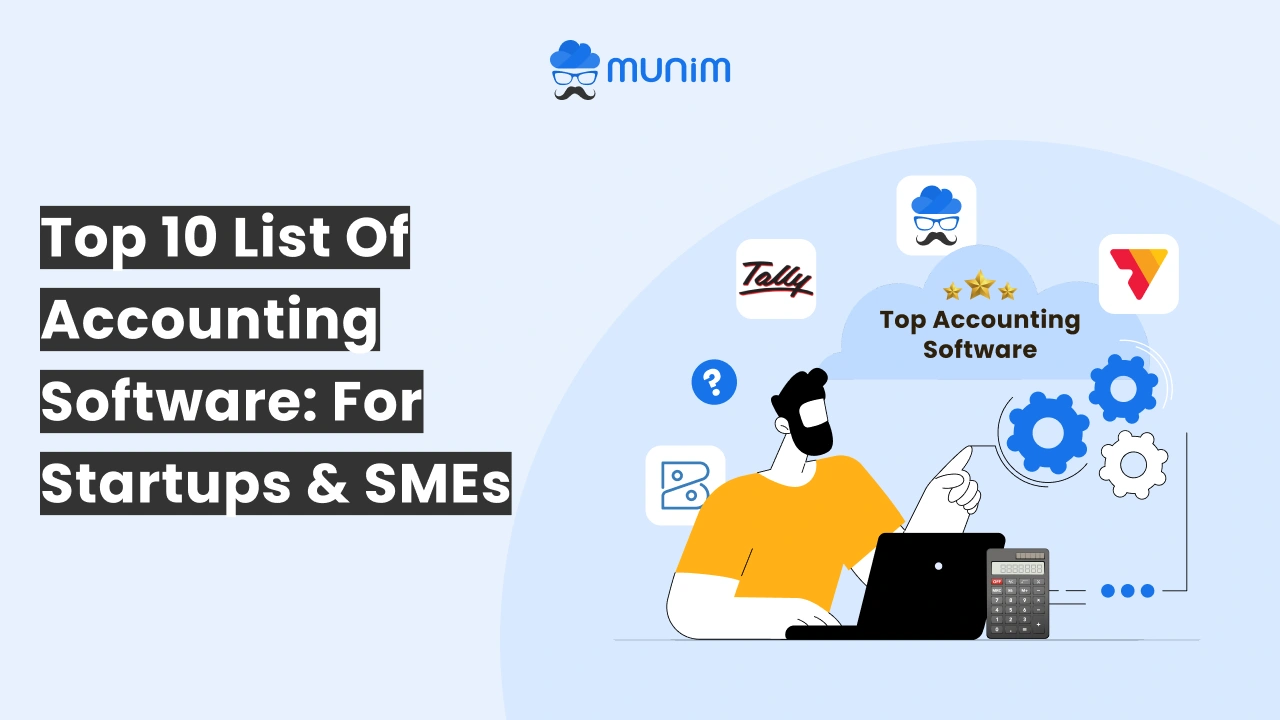
We have prepared this list of accounting systems for Indian startups, SMEs, retailers, manufacturers and accounting professionals. The comparison covers deployment, features, usability, scalability and suitable use cases.
Top 10 Accounting Systems in India for 2026
The following accounting systems list in India compares ten popular platforms based on their target users, deployment models and primary use cases.
| Accounting System | Best suited for | Deployment focus | Key strength |
| Munim Billing and Accounting | Startups and SMEs | Cloud-based | Accounting, billing, inventory and financial reporting |
| TallyPrime | SMEs with established financial processes | Desktop-first with connected services | Accounting, GST, inventory and banking |
| Refrens | Startups, agencies and service businesses | Cloud-based | Accounting, invoicing, CRM and workflow automation |
| Zoho Books | Startups and growing businesses | Cloud-based | Financial automation and GST workflows |
| BUSY | Traders, distributors and manufacturers | Desktop and cloud-access options | Inventory-intensive accounting and GST |
| Vyapar | Retailers and small businesses | Mobile, desktop and cloud | Billing and day-to-day business management |
| Marg ERP | Pharmacy, FMCG and distribution businesses | Desktop and connected services | Industry-specific inventory management |
| myBillBook | Micro and small businesses | Mobile and desktop | Billing, inventory and AI reconciliation |
| VasyERP | Retail chains and larger businesses | Cloud-based ERP | Multi-store, warehouse and manufacturing management |
| RealBooks | Growing and multi-entity businesses | Cloud-based | High-volume, multi-branch and e-commerce accounting |
Feature availability note: Features may differ by plan, edition, deployment method and subscription level. Check the provider’s current plan before purchasing.
Accounting Tool Comparison for Indian Businesses
1. Munim Billing and Accounting Software
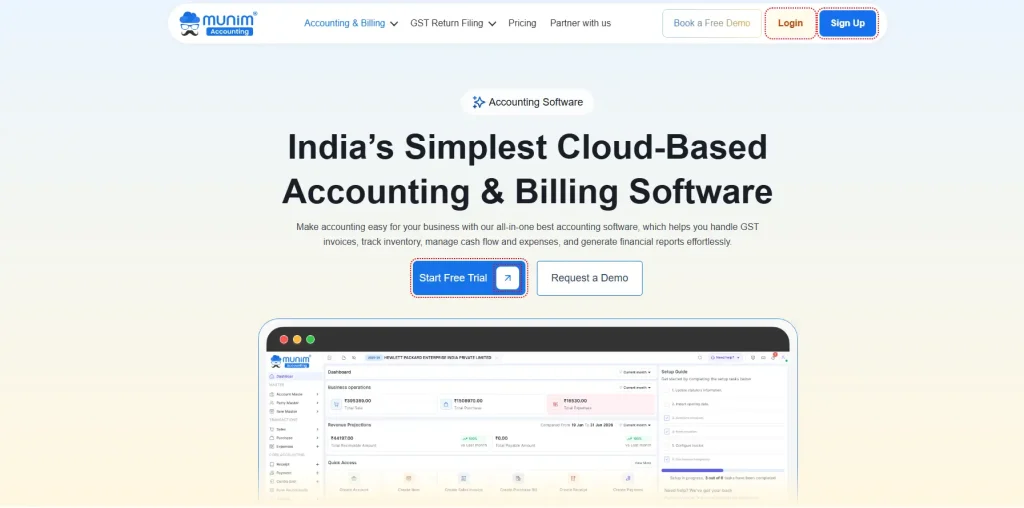
Best for: Startups, SMEs, retailers, manufacturers and business owners
Munim Billing and Accounting is a cloud-based accounting software developed for Indian businesses. It combines accounting, billing, inventory, banking and financial reporting in one platform.
The system can be accessed through web and mobile devices, making it suitable for business owners who need to monitor invoices, stock, expenses, receivables and reports from different locations.
Why it stands out:
- Cloud-based accounting, billing and inventory management
- AI-powered purchase bill entry using OCR
- GST-ready invoicing and financial reporting
- Mobile and web accessibility
- Multi-business and multi-user management
- Suitable for users with limited accounting knowledge
Key features:
- Accounting and bookkeeping
- GST-compliant invoicing
- AI-powered purchase bill upload and OCR extraction
- Inventory and stock management
- Low-stock alerts
- E-invoice and e-way bill generation
- Barcode generation and scanning
- Bank reconciliation
- Accounts payable and receivable tracking
- Quotations and delivery challans
- WhatsApp invoice sharing
- Multi-company management
- Role-based user access
- Profit and loss statement
- Balance sheet and trial balance
- More than 35 business and financial reports
- Mobile and web access
- Automatic cloud backups
Pros:
- Simple and beginner-friendly interface
- Combines daily accounting functions in one platform
- Cloud access for remote collaboration
- Suitable for startups and growing SMEs
- Responsive customer support
- Seven-day free trial
Cons:
- Businesses with highly complex enterprise resource-planning requirements may need a more specialised ERP platform
Reviews:

2. TallyPrime

Best for: SMEs and accounting teams with established financial processes
TallyPrime is one of the most widely recognised accounting tool in India. It supports accounting, inventory, GST, payroll, banking and business reporting.
Recent versions have expanded connected banking, invoice automation, cloud backup and GST-related capabilities. It remains especially relevant for businesses whose accountants already understand Tally-based workflows.
Why it stands out:
- Familiar workflows for Indian accountants
- AI-assisted invoice creation and data entry
- Connected Banking capabilities
- Detailed GST and inventory functions
- Customisable invoices and business reports
Key features:
- Financial accounting
- AI-powered invoice automation
- Customisable invoice templates
- GST invoicing and return-related workflows
- HSN and SAC validation
- E-invoice and e-way bill generation
- Connected Banking
- Real-time bank balance access for supported banks
- Direct payment capabilities through supported banks
- Bank reconciliation
- Inventory and warehouse management
- Payroll management
- Cloud backup
- SmartFind business-data search
- Business dashboards
- Financial and statutory reports
- Multi-user access
Pros:
- Widely used by Indian accountants and businesses
- Suitable for detailed accounting and inventory records
- Extensive GST-related capabilities
- Strong ecosystem of trained users and implementation partners
Cons:
- The interface and configuration may feel complex to first-time users
- Some connected capabilities depend on the version, licence or supported bank
You can check the latest version and capabilities on the official TallyPrime website.
Reviews:

3. Refrens Cloud Accounting Software
Best for: Startups, SMEs, service businesses, and IT companies
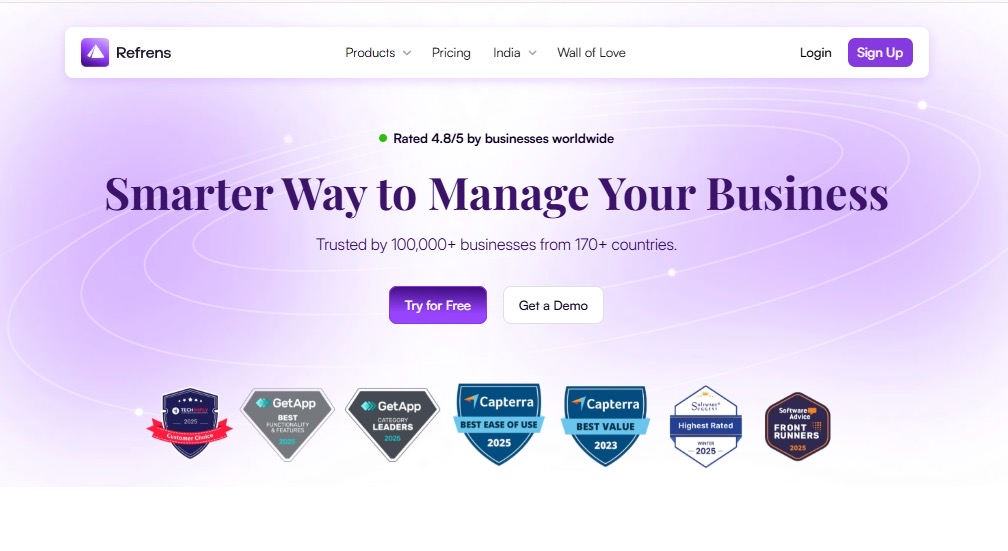
Refrens cloud accounting software built for startups and SMEs that want to automate their finances without managing multiple tools. It combines accounting, invoicing, inventory, GST compliance, CRM, and workflow automation in one platform. Designed for service businesses, IT companies, and agencies, Refrens simplifies financial operations with AI-powered automation, helping businesses save time and make better financial decisions.
Why it stands out:
- AI-powered accounting with FREYA for instant financial insights
- Complete accounting with built-in CRM, approvals, and workflow management
- Real-time business insights for smarter financial decision-making
- OCR-powered invoicing and billing that reduces manual work by up to 90%
- Connects with Claude and ChatGPT for AI-assisted workflows
- Extremely easy to use with exceptional customer support and affordable pricing
Features:
- GST-compliant invoicing with e-Invoicing, e-Way Bills, GSTR reports, and automated GST calculations
- AI-powered bookkeeping, bank reconciliation, OCR bill scanning, and GSTR-2B reconciliation
- Profit & Loss, Balance Sheet, Trial Balance, cash flow reports, and business analytics
- Inventory management, role-based access, recurring invoices, payment reminders, and multi-business management
Pros:
- Comprehensive platform with AI-powered automation, advanced GST compliance, and integrated business management
Cons:
- Limited third-party integrations, with more integrations currently under development.
Reviews:

4. Zoho Books
Best for: Startups, freelancers and cloud-first businesses
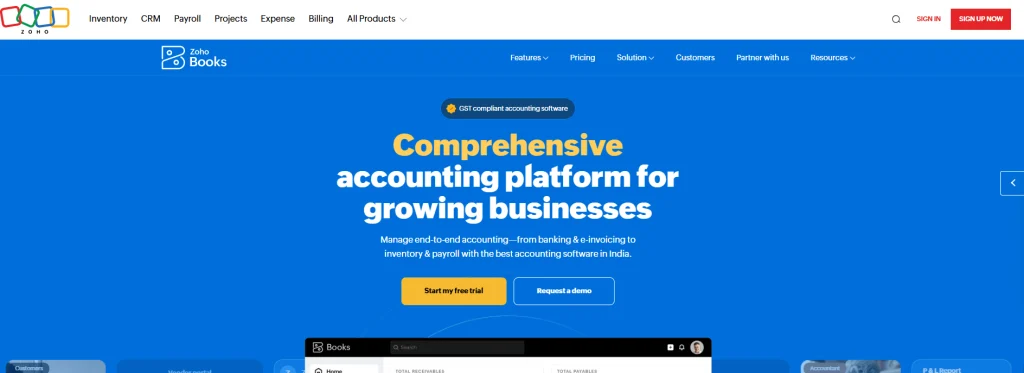
Zoho Books is a cloud-based accounting system that integrates with applications across the Zoho ecosystem. It provides invoicing, expense management, banking, inventory, GST workflows and financial reporting.
Its Indian offering includes direct GST return filing, Invoice Management System support and multiple banking automation features.
Why it stands out:
- Direct GST return filing
- Invoice Management System support
- Automated banking and reconciliation
- Receipt autoscanning
- Integration with the wider Zoho ecosystem
Key features:
- GST-compliant invoicing
- GST portal integration
- Direct GST return filing
- GST reconciliation and return-ready reports
- Invoice Management System
- E-invoice generation with IRN and QR code
- E-way bill generation
- Place-of-supply-based GST calculation
- HSN and SAC management
- Automated bank feeds
- CSV, XLS, OFX, QIF and PDF bank-statement imports
- Bulk transaction matching
- Bank transaction rules
- Receipt autoscanning
- Approval workflows
- Inventory management
- Sales and purchase orders
- Payment reminders
- Customer portal
- More than 50 business and financial reports
Pros:
- Strong reporting and workflow automation
- Suitable for remote and distributed teams
- Integrates with other Zoho products
- Provides extensive GST-related functionality
Cons:
- Some advanced capabilities are available only in higher plans
- Businesses may need additional Zoho applications for broader operational requirements
Review:

5. Busy Accounting Software
Best for: Traders, distributors, retailers and manufacturers
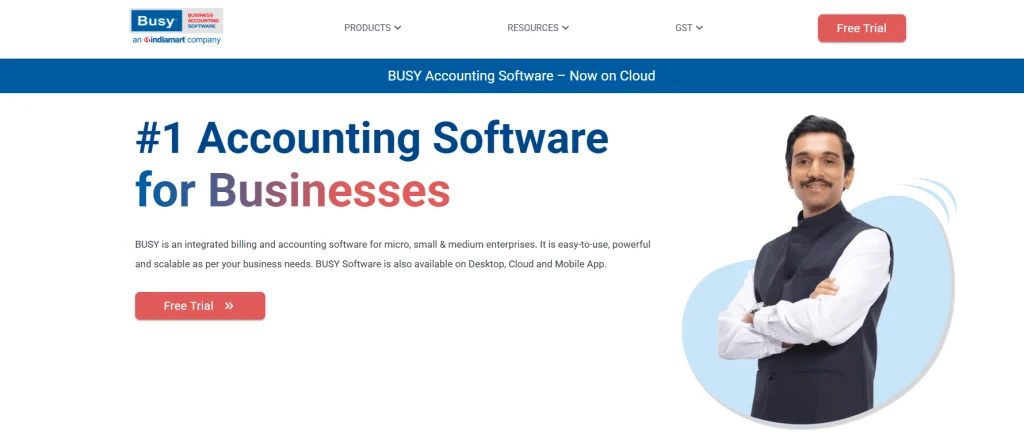
BUSY is an accounting and GST billing tool designed for Indian MSMEs. It offers accounting, invoicing, GST reconciliation, inventory management and compliance-related capabilities.
Different editions are available for small, growing and larger businesses. BUSY also provides cloud-access and mobile-reporting options.
Why it stands out:
- Strong inventory and GST capabilities
- Editions for businesses of different sizes
- Multi-company and multi-branch management
- Suitable for traders, distributors and manufacturers
- Industry-oriented operational features
Key features:
- Financial accounting
- GST billing and reporting
- Automated e-invoice generation
- Automated e-way bill generation
- GSTR-1, GSTR-2A, GSTR-2B and GSTR-3B reconciliation
- ITC mismatch tracking
- Receivables and payables management
- Advanced inventory control
- Warehouse management
- Multi-company accounting
- Multi-user access
- Multi-currency support
- Bank reconciliation
- Payroll management
- Point-of-sale billing
- Customisable business reports
- Mobile reports and business information
- BUSY On Cloud access
- Ecommerce sync and reconciliation through relevant products
Pros:
- Suitable for inventory-intensive businesses
- Supports GST and operational reporting
- Provides options for multi-branch businesses
- Offers products for several industries
Cons:
- Smaller businesses may find its advanced configurations complex
- Features vary significantly across editions and related products
Reviews:

6. Vyapar
Best for: Shop owners, retailers, wholesalers and small businesses
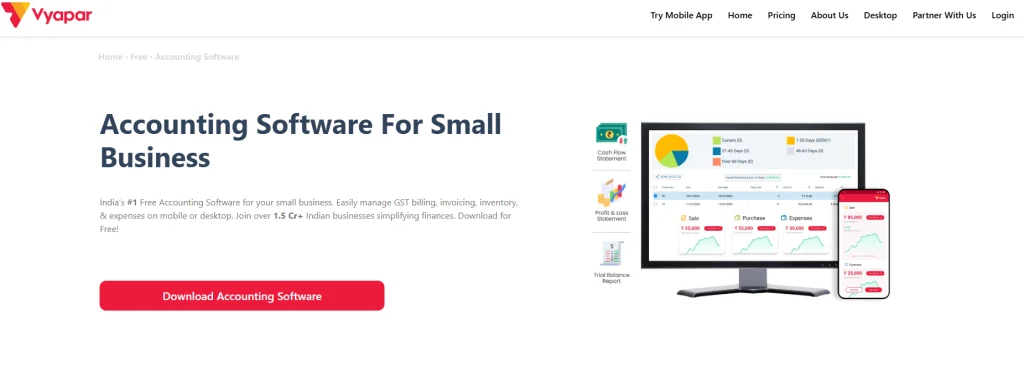
Vyapar is one of the popular accounting systems in India for businesses that need billing, inventory and day-to-day financial management. It supports mobile, desktop and cloud-based workflows, including offline billing.
The system is relevant for small businesses that want to create invoices, track stock, monitor payments and access records from multiple devices.
Why it stands out:
- Offline and online working modes
- Mobile, desktop and cloud accessibility
- GST, inventory and barcode capabilities
- Suitable for retailers and wholesalers
- Multi-outlet business support
Key features:
- GST and non-GST invoicing
- Automated GST calculation
- E-invoice generation
- E-way bill generation
- GSTR-related reports
- Inventory management
- Barcode scanning and generation
- Low-stock alerts
- Batch and expiry-date tracking
- Payment reminders
- Expense tracking
- Bank reconciliation
- Online payment collection
- Point-of-sale billing
- WhatsApp invoice sharing
- Multi-device synchronisation
- Multi-outlet accounting
- Consolidated reports
- Offline billing with subsequent synchronisation
Pros:
- Suitable for shops and small businesses
- Convenient mobile access
- Supports offline billing
- Covers routine billing and inventory requirements
Cons:
- Advanced features may require a paid plan
- It may not meet complex enterprise reporting or consolidation requirements
Reviews:

7. Marg ERP
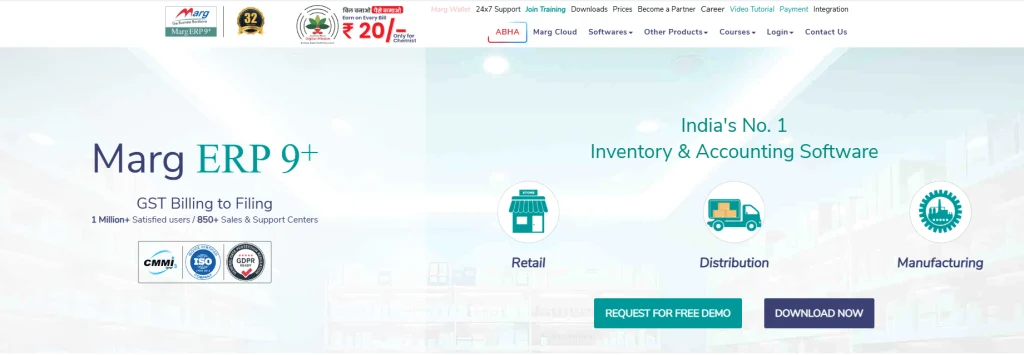
Best for: Pharmacy, FMCG, wholesale, distribution and manufacturing businesses
Marg ERP is an industry-focused business system designed for companies with specialised inventory and distribution requirements. It is especially relevant for pharmacies and FMCG businesses that need batch-wise stock, expiry management and ordering controls.
Why it stands out:
- Specialised pharmacy, FMCG and distribution capabilities
- Batch-wise stock and expiry management
- Connected Banking and automated reconciliation
- Industry-specific ordering and inventory workflows
- Detailed stock and distribution controls
Key features:
- GST billing and return-related workflows
- E-invoicing and e-way bill support
- Batch-wise inventory management
- Expiry and near-expiry stock tracking
- Substitute medicine management
- Reorder-level automation
- Automated purchase import
- ERP-to-ERP ordering
- Connected Banking
- Automated bank reconciliation with supported banks
- Multi-currency accounting
- Multi-user access
- WhatsApp and SMS invoice sharing
- Reports up to the balance sheet
- Pharmacy, FMCG, wholesale and manufacturing modules
Pros:
- Suitable for industries with batch and expiry requirements
- Provides specialised distribution capabilities
- Supports detailed inventory management
- Relevant for pharmacies and FMCG businesses
Cons:
- Its industry-specific depth may be unnecessary for service businesses
- Setup and training may be required for advanced workflows
Reviews:

8. myBillbook
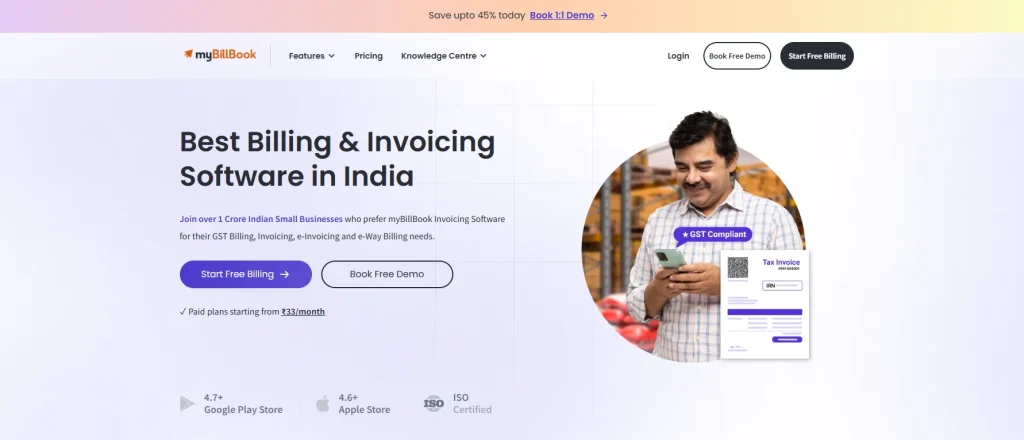
Best for: Micro businesses, shop owners and small businesses
myBillBook is designed for Indian SMEs that want to manage invoices, inventory, expenses and payments through mobile and desktop devices. Its newer functionality includes AI-powered sales reconciliation for matching bank transactions with unpaid invoices.
Why it stands out:
- AI-powered sales reconciliation
- Batch and expiry-date inventory management
- Mobile and desktop access
- GST billing for small businesses
- Straightforward day-to-day workflows
Key features:
- GST and non-GST invoicing
- Automatic tax calculation
- HSN and SAC management
- Quotations and purchase orders
- Point-of-sale billing
- E-invoice and e-way bill generation
- Inventory management
- Real-time stock updates
- Batch and expiry-date tracking
- Low-stock alerts
- Payment and outstanding tracking
- AI-powered sales reconciliation
- Bank and cash management
- Bulk and recurring invoicing
- Expense and cash-flow tracking
- Mobile and desktop access
- Business and financial reports
Pros:
- Straightforward billing and inventory management
- Suitable for micro and small businesses
- Accessible through mobile and desktop devices
- AI reconciliation can reduce manual payment matching
Cons:
- It may not provide the depth of consolidation and reporting required by larger enterprises
Reviews:

9. VasyERP
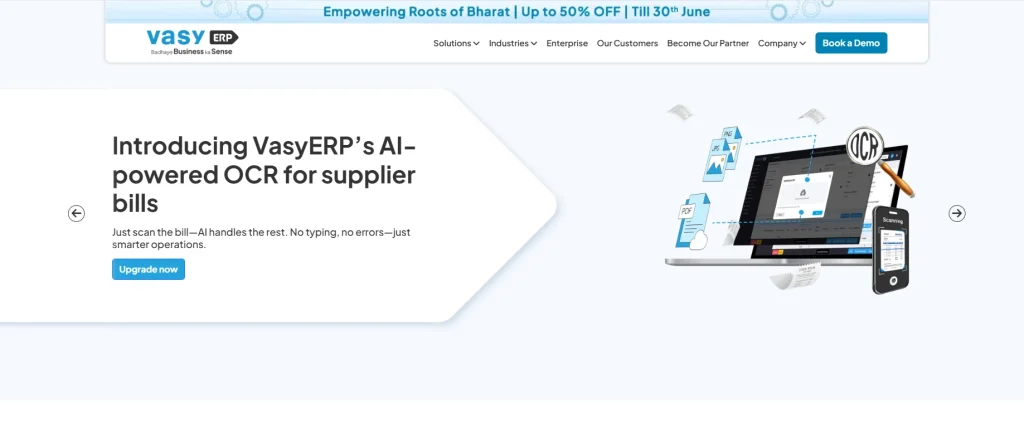
Best for: Retail chains, distributors, manufacturers and multi-location businesses
VasyERP combines accounting, point-of-sale billing, inventory, warehouse management, manufacturing and CRM capabilities. It is intended for medium and large organisations that need centralised control over multiple stores, warehouses or operating units.
Why it stands out:
- AI-assisted stock prediction
- Centralised multi-store control
- Integrated retail, warehouse and manufacturing management
- Built-in customer loyalty management
- Production-planning capabilities
Key features:
- Accounting and GST-compliant billing
- E-invoicing
- Point-of-sale billing
- Real-time stock tracking
- AI-based stock prediction
- Automated purchase orders
- Barcode integration
- Batch and expiry management
- Multi-store inventory management
- Multi-warehouse control
- Inter-branch stock transfers
- Customer loyalty management
- CRM connectivity
- Bill of Materials management
- Production scheduling
- Material Requirement Planning
- Work-order management
- Mobile and cloud access
- Ecommerce integrations
- Payment-gateway integrations
- Business analytics
- Location-wise reporting
Pros:
- Suitable for complex retail and manufacturing operations
- Supports multiple stores and warehouses
- Combines operational and financial functions
- Provides production and warehouse management
Cons:
- May be unnecessarily complex for small businesses
- Implementation may require onboarding and workflow configuration
Reviews:

10. RealBooks
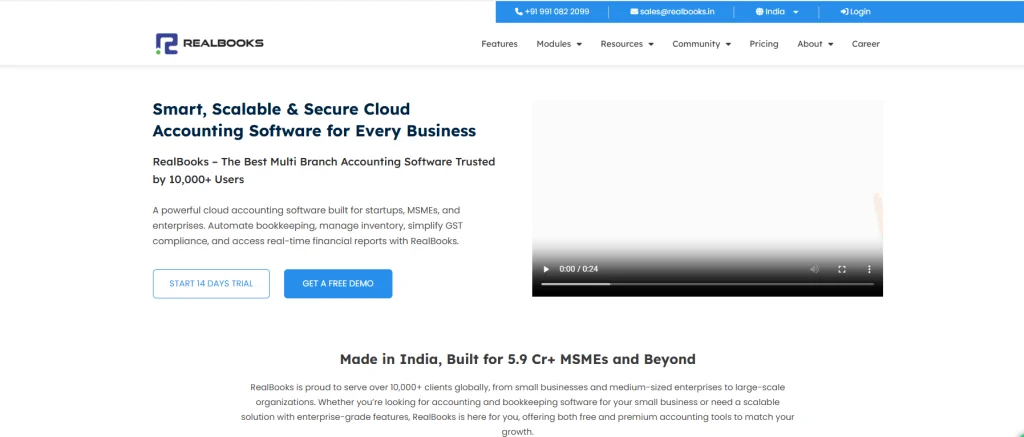
Best for: Growing, multi-branch, ecommerce and multi-entity businesses
RealBooks is a cloud-based accounting software for organisations that require multi-branch controls, GST reconciliation, high-volume transaction processing and detailed reporting.
Its ecommerce capabilities make it relevant for businesses selling through marketplaces such as Amazon and Flipkart.
Why it stands out:
- Multi-branch and multi-entity accounting
- High-volume transaction processing
- Ecommerce marketplace reconciliation
- Role-based access and approval workflows
- Real-time branch consolidation
Key features:
- Cloud-based accounting
- GST return preparation and reconciliation
- Multi-GSTIN management
- GSTR-1 and GSTR-3B filing support
- GSTR-2B reconciliation
- E-invoice and e-way bill generation
- Banking and automated reconciliation
- Inventory and warehouse management
- Fixed Asset Register
- Multi-branch accounting
- Segment-level accounting
- Real-time branch consolidation
- Role-based access controls
- Approval workflows
- Document attachments
- Voucher management
- Amazon and Flipkart data integration
- Marketplace order, return and payout reconciliation
- SKU-, brand-, marketplace- and region-wise profitability
- High-volume bulk data import
- API and Excel-based integrations
- Custom dashboards and reports
Pros:
- Suitable for multi-branch and ecommerce businesses
- Supports high transaction volumes
- Provides detailed access controls
- Offers marketplace reconciliation and profitability reporting
Cons:
- Its broader feature set may be unnecessary for micro businesses
- Advanced configurations may require implementation support
Reviews:

Explore accounting software designed to simplify invoicing, inventory, GST compliance and financial reporting for Indian startups and SMEs.
How These Accounting Systems Were Selected
We considered the following factors while preparing this list of accounting systems:
- Business suitability: Whether the system serves startups, SMEs or larger organisations.
- GST readiness: Availability of GST invoicing, reconciliation and compliance functions.
- Inventory management: Support for stock, warehouses, batches and expiry dates.
- Deployment: Cloud, desktop, mobile and remote-access availability.
- Banking: Bank feeds, statement imports and reconciliation capabilities.
- Automation: OCR, AI-assisted entry, transaction matching and workflow automation.
- Scalability: Support for additional users, branches, companies and transaction volumes.
- Reporting: Availability of financial, inventory, tax and operational reports.
- Ease of use: How easily owners and accounting teams can adopt the system.
- Customer support: Access to onboarding, training and technical assistance.
- Pricing: Overall suitability for the intended business segment.
The Verdict
After reviewing this list of accounting systems, shortlist the options that match your business size, industry, GST requirements, inventory complexity and budget.
Avoid selecting a platform only because it is popular. The right system should simplify existing workflows, reduce manual work and support the business as it grows.
Start your seven-day free trial and manage your accounts, invoices, inventory and business reports from one integrated platform.
Discover More Related Blogs
- Accounting System for Restaurants
- Top Accounting Systems for Ecommerce Businesses
- Cost-Efficient Accounting Systems for Startups in India
Note:- Image Source (Reviews): SoftwareSuggest
Disclaimer: "This blog post is for informational purposes only. For specific tax advice related to your business, please consult a qualified Chartered Accountant or GST practitioner."
About the author

Mehul is a seasoned content writer with a passion for simplifying complex accounting and GST topics. With a keen interest in entrepreneurship and business management, he specializes in creating informative and engaging content for themunim.com. His goal is to help businesses understand and implement accounting and GST software solutions effectively. When he's not crafting content, Mehul enjoys exploring new places and spending time with his Golden Retriever.
Related Articles
Explore the latest market news, useful resources for business, and Munim updates.